


Power consumption trends indicate de-industrialization in full swing


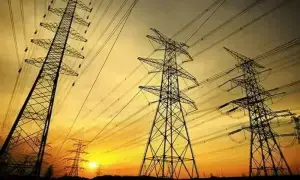
LAHORE: Power generation and consumption trends indicate that deindustrialization is in full swing, said sources.
It may be noted that power generation has been falling since October 2023, hitting 33-month low in Nov 23, down by 8.2% YoY in Dec 23 and 2.5% YoY in Jan 24, they added.
Similarly, said the sources, power consumption is down by 8-10% across the country, driven by a decline in industrial and high-end domestic consumption.
It may be noted that Pakistan Institute of Development Economics (PIDE) has already warned that changes in energy prices are generally likely to have implications for the competitiveness of economies. The fear is that the energy price policies impede the capacity of the domestic industry to compete in export markets, predominantly for energy-intensive sectors.
Beyond that, a more profound concern is the disparity in the availability and price of energy might erode the productive efficiency in industrial units of some regions, eventually leading to deindustrialization, says a study conducted recently.
Both industrial and high-end domestic consumers are considered to be major contributors to power sector fixed costs. Decline in consumption of these consumers means fixed costs are spread over a smaller pool of consumption necessitating tariff increase for all consumers through QTAs and higher tariffs cause consumption to decline further, necessitating yet more increases in power tariffs and so on.
Power sector experts have feared that this cycle will eventually lead to the collapse of the power sector and decimate industry along the way.
The sources said the industrial representatives have recently made a detailed presentation to the Special Investment Facilitation Council (SIFC) to this effect where the competent authority has pledged to ensure power supply to them at 9 cents/kWh against TGE present level of over 14 cents/kWh ahead.
Similarly, in another development, Chief Executive Officer (CEO) LESCO has also explained to the NEPRA authorities that exorbitant power tariffs, and not TGE phenomenon of tripping, was the prime cause behind low consumption of electricity in the LESCO region.
High cost power tariff is impacting the industrial growth negatively in terms of its contribution to the total production cost.
Copyright Business Recorder, 2024














Comments
Comments are closed for this article.