




Where the upward momentum in home remittances continues with 7MFY22 aggregate at all-time high of $18 billion up by 9.5 percent year-on-year, the monthly tally has been showing a declining trend recently. Remittances of $2.1 million in January 2022 were the lowest since August 2020 and were down by 5 percent year-on-year and 15 percent month-on-month.
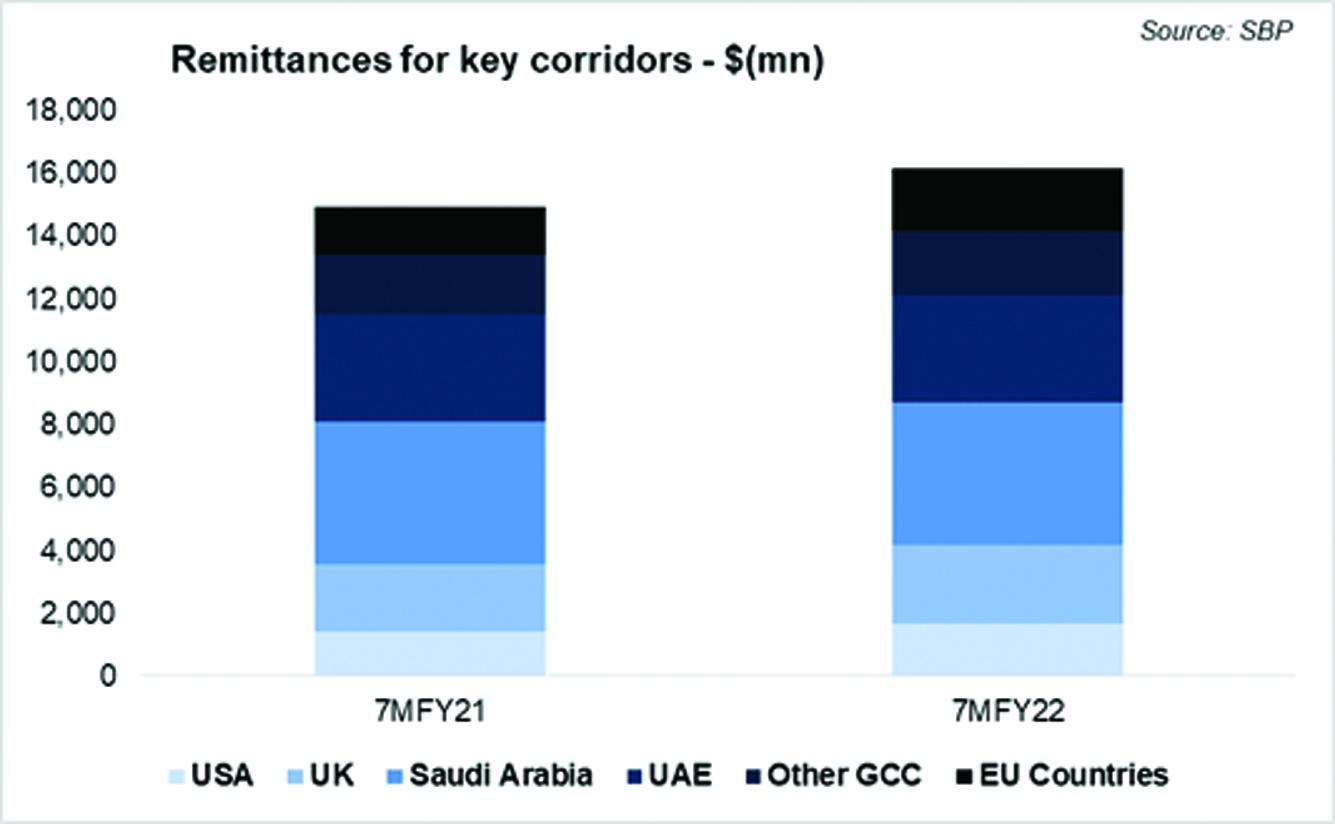
No doubt that the remittances have been growing phenomenally over the last two years primarily since the beginning of the global pandemic where incentives by the authorities have played their role in boosting up these foreign inflows. PRI and SBP efforts along with the global and country dynamics in terms of travel restrictions, money transfer, FATF efforts, layoffs and lockdowns, currency depreciation and fiscal support in advanced economies have all contributed to rising trend in remittance flows in the last 20 plus months. All these factors resulted in people sending more money back home and much more through formal banking channels as informal channels were curbed.

However, for long this space has argued that most if not all of these factors were temporary, and the resumption of normalcy in the global economy after the pandemic would mean that the remittances have peaked and would start coming down. This is now beginning to show as the world gradually returns to normal and restrictions ease.

Remittance from key destinations such as Kingdom of Saudi Arabia, and the UAE have also been on a downward trajectory month-on-month – especially in the last 5 months. Remittance from Saudi Arabia in January 2022 were lowest since February 2021; while remittance from UAE in January 2022 have been the lowest since June 2019. The growth that has been seen in overall remittances has largely come from double digit growth from the western world including UK and the USA.
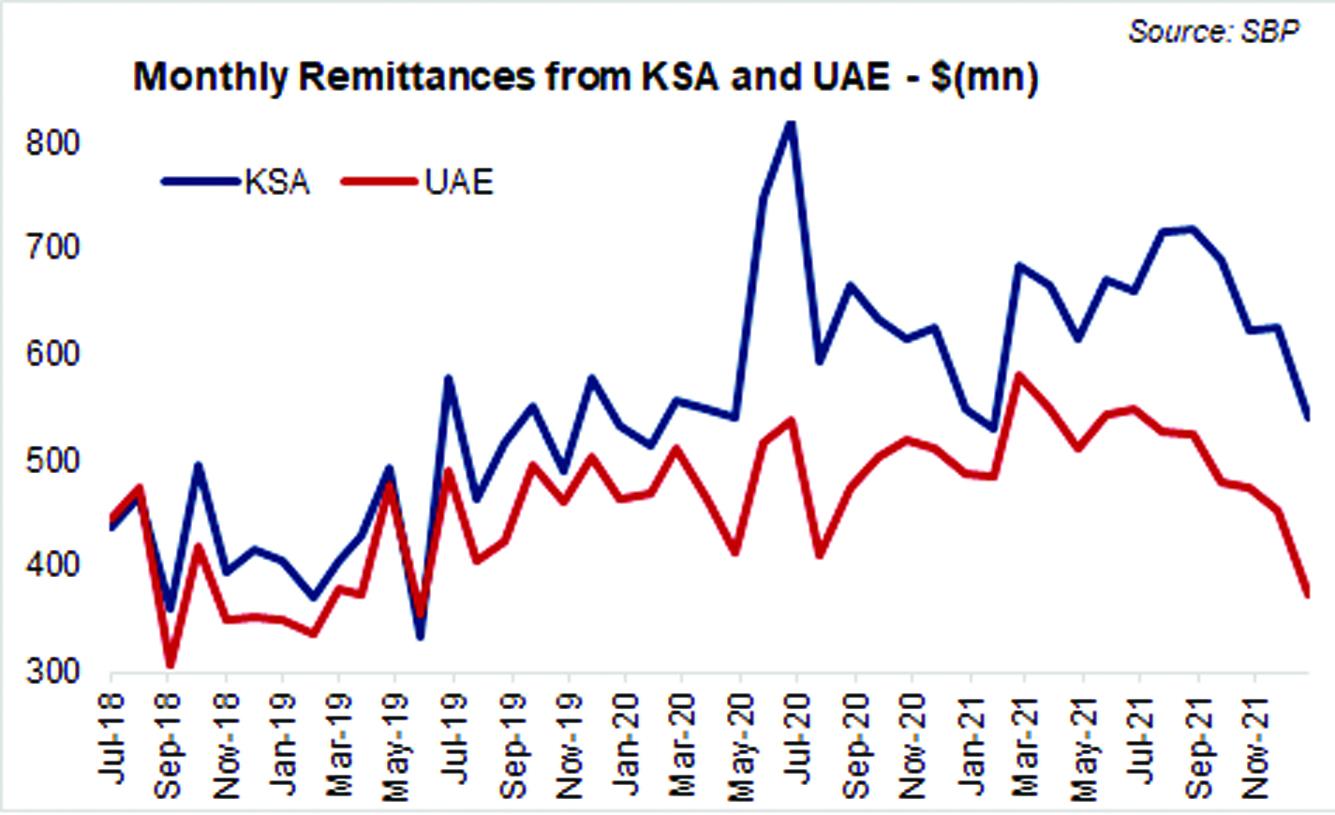
Remittances drop is clear. The central bank highlights that the moderation in remittances year-on-year is due to easing travel restrictions, while month-on-month decline is due to seasonality. Even then, if travel restrictions continue to lessen, remittance growth will be affected. Hajj and Umrah re-opening are also not good omen for remittances too – if that’s how we would like to continue. It is important that other labor markets are explored to diversify remittances.

























Comments
Comments are closed for this article.