


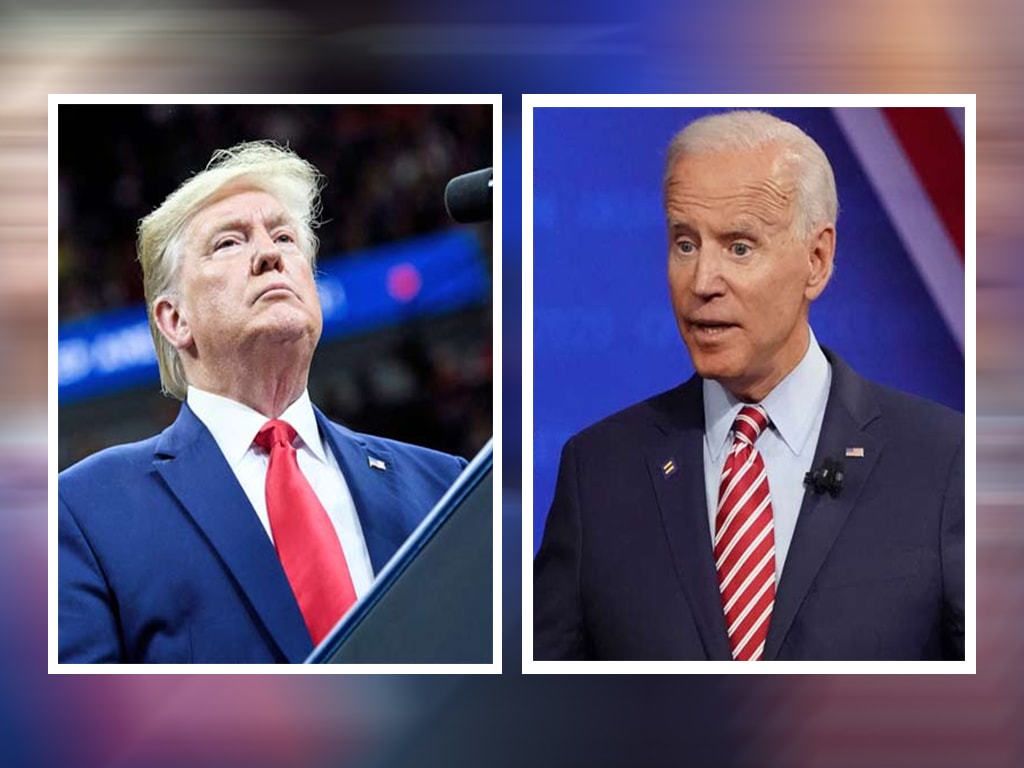

The race for the White House between US President Donald Trump and former Vice President Joe Biden has made history even before polling day. More than 91 million people had cast their ballots by the weekend before Election Day. That’s about 43 percent of all registered voters in the country and two-thirds of the total vote count in the 2016 polls. Never before have so many voted early using mail-in ballots, to make sure their voice counts. Seemingly, Americans believe the two candidates present a stark choice. But could the outcome of this contest be just as instrumental for Pakistan?
When the Trump administration took office, bilateral relations between Washington and Islamabad were in the doldrums. They remained such for at least Trump’s first two years in office. But a reset was in the works by the end of 2018. And by July of the following year, Prime Minister Imran Khan sat in the White House as President Trump praised Pakistan’s efforts to bring peace to Afghanistan and announced his intent to boost bilateral trade by 20 times its current level.
But the big talk has yielded little, if anything. Obsessed with cutting the runaway US trade deficit, the Trump administration has taken no practical measures to increase trade with any of its trading partners, including Islamabad. Pakistan’s exports to the US have remained buoyed around the same range for a decade, aid flows to Pakistan have dwindled while imports from the US have ticked up. Expected investment flows, like Exxon Mobil’s re-entry in the domestic market after a two-decade absence, are also appearing dicey. The company’s plans for offshore oil and gas exploration have stalled and it’s pulled out of a LNG terminal project. To top it off, there is not much appetite for any door-busting deals, at least among Pakistani businesses. The Pakistan Business Council recommends a limited trade deal that could help US soybean farmers and Pakistani textile firms. The trade body does not endorse an all-encompassing free trade agreement which it says would open the flood gates for imports but not lead to a proportional boost in overseas sales for Pakistani businesses. In a nutshell, diplomatic ties have improved markedly in the Trump era but that hasn’t had a major positive impact on economies ties.

Can this trend change significantly if Biden were in charge? After all, he differs with Trump on a number of policies. Trump lowered taxes for people and companies and wants to extend those cuts from 2025 to 2030. He’s pulled the US out of the Paris Climate Agreement and debilitated the World Trade Organisation. On the other hand, Biden wants to raise taxes, especially for the rich and says his administration would honour US commitments on climate change.
But the incumbent and the challenger are not far apart in their views on foreign trade. President Trump has appeared a lot more confrontational with China. His first presidential campaign focused heavily on scapegoating Beijing for US’ declining competitiveness in manufacturing. During his tenure, Washington has slapped higher tariffs on more than $350 billion worth of Chinese exports. The Trump administration has also taken aim at Chinese technology giants like Huawei which is a front runner in global 5G technology.
Yet getting tough on China, is not just Trump’s doctrine. Biden has shown no intent to go softer either. Although he says he wants to engage US allies in dealing with China, he has made no commitment to roll back US tariffs or other measures against China that were taken during the Trump era. Biden’s is also in no rush to sign trade deals or hand out more concessions to trade partners. He says he will prioritise improving the competitiveness of domestic companies before signing more international trade deals.
In a recent interview with the German publication, Der Spiegel, Prime Minister Imran Khan was asked who he would prefer to deal with as the next US President. Khan responded by drawing similarities between his own political career and his American counterpart. But he did not name favourites. Was it a diplomatic response? Maybe, but as far as economic ties are concerned, it’s an accurate assessment.













Comments
Comments are closed for this article.