


Govts should assist low-income families instead of subsidising energy: WB president
- David Malpass says governments should use technology to track those in need and provide them financial benefits.
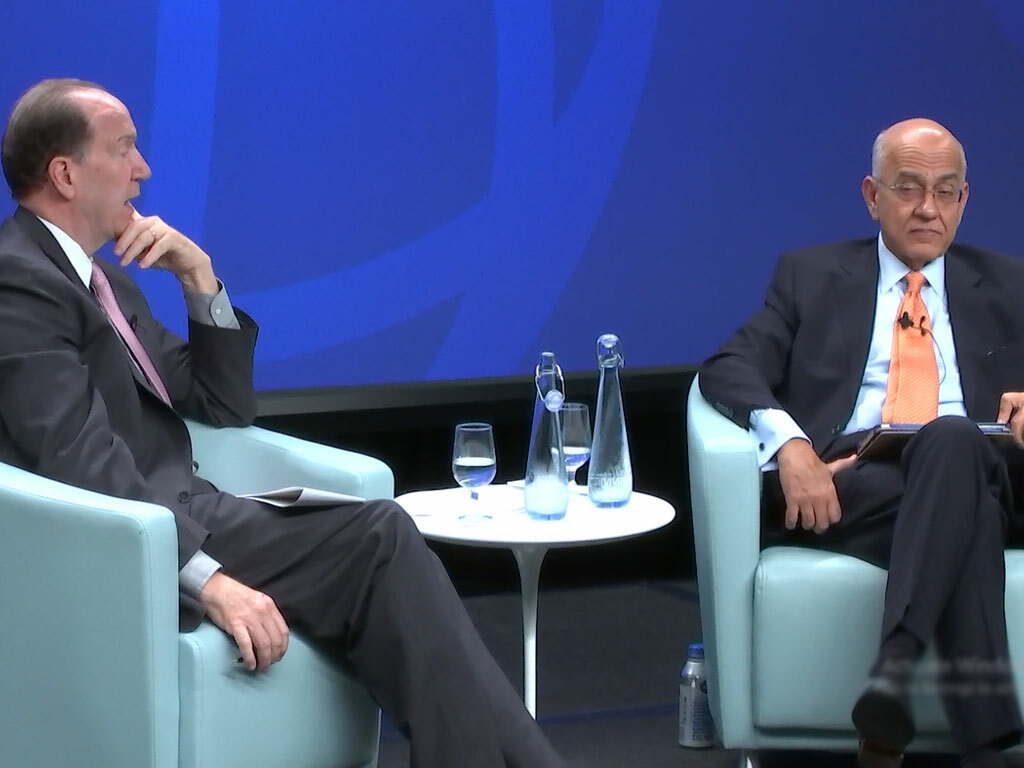

World Bank President David Malpass said on Thursday that governments across the world, especially the developing countries, should financially assist the low-income households instead of subsidising energy products.
David made these remarks during a discussion with President of the Centre for Global Development Masood Ahmed. The two discussed the array of global shocks, their impact on the most vulnerable communities—and the response they urgently demand.
"The economists are very clear that what you don’t want to do is to put a cap on a price spike. You should let the price go up at least to some [extent] and then try to cushion the cost on people," he said.
To a question about how the countries could effectively help their people during the post-Covid times when energy and food prices are skyrocketing, the World Bank president said that the governments should use technology to track those in need and provide them financial benefits.
"Technology is giving us now something new in the developing community. The didn't use to be a way of giving cash benefits to targeted people because you couldn't take physical suitcases of money to a village and distribute it in a fair way. This just didnt work," he said.
David said that the technology has also helped empower the women of poor countries.
"We now have, through technology, someone's phone with digital money on it, which means women can also get money, and it is the most valuable thing that women getting the money in developing countries."
The World Bank president also stressed the need for energy transition for the European countries so that they could end their dependency on Russia for energy resources.
“After World War II, Europe was facing the challenge of how to rebuild. Now, Europe is facing the challenge of how to realign away from this huge dependency on Russian energy,” David said.
He added that these development calls for a frank discussion about having a cleaner set of energy.
“The G7 communique explicitly talked about the need for transition fuels, which means Africa is willing to have natural gas production, which by the way, is so much cleaner than what’s being today.
“As Europe absorbs the remaining available natural gas in the world, it cuts out the developing countries, and their alternative is diesel and bunker fuel unless there is more production.”
He said that the developing countries cannot afford to burn diesel and bunker fuel to produce electricity, therefore, Europe has to be more explicit in the energy transition and realignment.


























Comments
Comments are closed for this article.