



 Most emerging Asian currencies broadly weakened on Wednesday, with the South Korean won sliding to a more than 1-1/2-year low, as robust U.S. economic data supported the greenback.
The market's appetite for dollars was boosted after data on Tuesday showed sales of new U.S. single-family homes jumped to a near 1-1/2-year high in March, easing concerns of a sharp slowdown in the world's largest economy.
The dollar index, a gauge of its value against a basket of six key rivals, stood at 97.660 after rising to 97.777 overnight, hovering near a 22-month peak.
Leading declines in the region, the South Korean won depreciated 0.6 percent to 1,149.20 per dollar, in tandem with the domestic equity benchmark index.
Asia's fourth-largest economy is due to release first quarter growth figures on Thursday, which is expected to haveslowed to its weakest pace in more than a year, a Reuters poll showed, as it continues to grapple with sluggish exports and muted inflation.
Among other regional players, the Thai baht weakened as much as 0.4 percent to 32.045 per dollar, touching its weakest point since Jan. 9, while the Indian rupee eased 0.3 percent.
The baht, which began the year on a strong footing and outperformed most of its regional peers has weakened 0.9 percent so far this month, amid continuing uncertainty surrounding its election at the end of March. Final results of the Thai election will be announced on May 9.
The Malaysian ringgit declined 0.2 percent after data showed consumer prices in March rose 0.2 percent from a year earlier, below analyst forecasts for 0.3 percent growth. The index was negative in January and February.
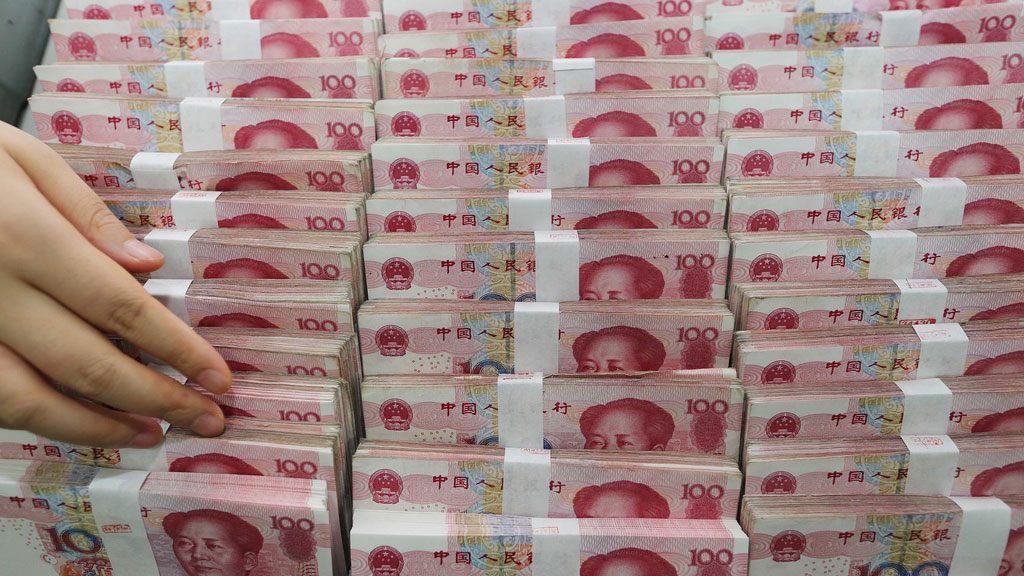
Meanwhile, the Chinese yuan edged higher and was the sole outlier on the day bolstered by improving views of the world's second-largest economy as the government maintained targeted policy support.
China's central bank extended 267.4 billion yuan ($39.8 billion) to some commercial banks on Wednesday via its targeted medium-term lending facility to ensure struggling smaller companies will have continued access to affordable financing.
However, the central bank put the lending facility's one-year interest rate at 3.15 percent, the same as the previous operation.
RUPIAH DIPS
The Indonesian rupiah weakened 0.3 percent, ahead of the central bank meeting on Thursday, where it is expected to keep rates on hold.
Bank Indonesia (BI) governor Perry Warjiyo said on Tuesday that policies will be maintained towards controlling the country's widening current account deficit and keeping its financial assets attractive for investors.
"Given that pressures to the rupiah have eased and inflation has slowed to the weakest level since 2000, the only factor that needs to be watched further are the trade balance and current account," DBS Bank said in a note.
Southeast Asia's largest economy had resorted to the most rigorous rate hike cycle last year to defend the rupiah amid pressure from rising U.S. interest rates and foreign outflows.
The following table shows rates for Asian currencies against the dollar at 0518 GMT.




















Comments
Comments are closed for this article.