BR100 Decreased By (-0.15%)
BR30 Decreased By (-0.74%)
KSE100 Decreased By (-0.41%)
KSE30 Decreased By (-0.67%)
BECO 5.80 Decreased By ▼ -0.23 (-3.81%)
BML 58.03 Increased By ▲ 5.28 (10.01%)
BOP 33.85 Decreased By ▼ -0.40 (-1.17%)
CNERGY 8.15 Decreased By ▼ -0.01 (-0.12%)
DCL 11.77 Decreased By ▼ -0.57 (-4.62%)
FCCL 53.35 Decreased By ▼ -0.54 (-1%)
FCSC 5.40 Increased By ▲ 0.18 (3.45%)
FFL 17.89 Decreased By ▼ -0.14 (-0.78%)
FNEL 1.31 Increased By ▲ 0.01 (0.77%)
HUMNL 11.06 Increased By ▲ 0.06 (0.55%)
KEL 8.05 Decreased By ▼ -0.06 (-0.74%)
KOSM 5.45 Increased By ▲ 0.07 (1.3%)
MLCF 87.19 Decreased By ▼ -0.86 (-0.98%)
NBP 184.60 Decreased By ▼ -1.88 (-1.01%)
PACE 11.62 Increased By ▲ 0.90 (8.4%)
PAEL 40.31 Increased By ▲ 0.37 (0.93%)
PIAHCLA 26.10 Decreased By ▼ -0.07 (-0.27%)
PIBTL 17.09 Decreased By ▼ -0.23 (-1.33%)
PPL 228.40 Decreased By ▼ -4.38 (-1.88%)
PRL 34.59 Decreased By ▼ -0.36 (-1.03%)
PTC 67.35 Decreased By ▼ -0.21 (-0.31%)
SEARL 91.00 Increased By ▲ 0.07 (0.08%)
SSGC 26.90 Decreased By ▼ -0.27 (-0.99%)
TELE 8.53 Decreased By ▼ -0.04 (-0.47%)
THCCL 66.14 Increased By ▲ 6.01 (10%)
TPLP 9.29 Increased By ▲ 0.53 (6.05%)
TREET 24.59 Increased By ▲ 0.05 (0.2%)
TRG 71.69 Decreased By ▼ -0.06 (-0.08%)
WAVES 10.98 Increased By ▲ 1.00 (10.02%)
WTL 1.28 Increased By ▲ 0.02 (1.59%)
By

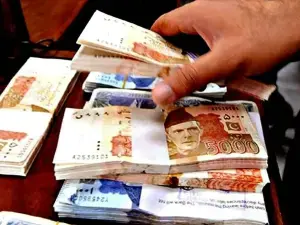
KARACHI: The International Monetary Fund (IMF) resident representative in Pakistan on Friday denied media reports that the lending body is planning to ask Pakistan to increase taxes on salaries and business income, and increase the maximum threshold for petroleum levy.

Media reports had been circulating stating that the IMF asked Pakistan to cut the number of tax slabs for the salaried and business class from the existing seven to four, increasing tax incidence on the middle and upper-middle income group.

There have also been reports of an increase in the maximum petroleum development levy. “There are no plans at this time,” Esther Perez Ruiz, IMF’s resident representative in Pakistan, told Reuters in an email.

The South Asian nation is operating under a caretaker government after an IMF loan programme, approved in July, helped avert a sovereign debt default.

Under the $3 billion standby arrangement (SBA), Pakistan received $1.2 billion from the IMF as the first tranche in July.

Pakistan was facing an acute balance of payment crisis, with its foreign exchange reserves diminished to barely three weeks of controlled imports, along with historically high inflation and an unprecedented currency devaluation.

Under the bailout deal, the IMF also got Pakistan to raise $1.34 billion in new taxation to meet fiscal adjustments. The measures fuelled all time high inflation of 38% year-on-year in May, the highest in Asia, which still is hovering above 30%.
Comments

Comments are closed for this article.

Muhammad Yahya Yahya Wasi Dec 16, 2023 11:11am
It appears that the Government machinery considers the salaried people as the main culprit of its failure. How easily and cruelly GoP ask salaried class to continue financing its incapability spread over the decades. All the burden of high taxation, removal of tax credits & inflation is being faced by salaried class who don't have any other remedy. Instead easing the unprecedented inflationary pressure, FBR and those who are actually charged with the policies/governance, keep mounting the difficulties for this class.
0
Builder Dec 16, 2023 10:55pm
We haven't learnt any lessons from this deep financial turmoil - FBR seems clueless how to expand tax net, so if they need to increase revenues, they WILL increase salaried tax as that's a low hanging fruit. Energy sector is still in quagmire and clueless how to handle tons of IPPs with open mouth for capacity payments while distribution network can't even handle that much power. Politicians are on their usual fighting track again to get hold of elected chairs. I mean where are we heading to? Any sane person left in this country?
0