



The political temperature is heating up. In the quest for survival, the tough economic decisions are kept on the backburner. The IMF (International Monetary Fund) has reportedly shown concern on PM’s relief package and amnesty. The situation is uncertain both on the domestic political front and on the global front with the ongoing Russia- Ukraine war which is driving up global commodity prices. The longer this political uncertainty lasts, the worst will be the economic consequences of policy inaction.
The government should call the parliament session and get over with the vote of no-confidence within the week. If the government wins, it should not take much time to revise petroleum prices, given oil prices will remain high. SBP (State Bank of Pakistan) may act as well (as hinted in the monetary policy) by increasing the policy rate before the scheduled meeting in end of April. These steps might take a few weeks, and the 7th review might need to be delayed till requisite actions are being taken.
However, if the government fails to survive the vote of no-confidence, the situation will be uncertain; the IMF programme may go into limbo. There are a number of permutations, and options. In any case, the tough decisions may get delayed, and the economic consequences of delayed policy response could be more pronounced.
This political battle comes at a bad time. This is a time to have some form of economic emergency. The country doesn’t have buffers to withstand the burden of subsidies. The finance ministry argues that the tax revenues’ growth is enough to cover the subsidy. But it has failed to appreciate the fact that the problem is of dollars, not rupees. There are limited external buffers to sustain normal energy related imports at today’s prices.
The demand needs to be curtailed. There are signs of economic growth momentum moderating. But the requirement is more. It’s time to run prudent fiscal and monetary policies along with administrative measures to slash imported demand. However, the government machinery’s focus is on political survival.
The IMF is not liking it. The government is offering petroleum and electricity discounts. For electricity, the subsidy is targeted, and the Fund is fine with it if the government keeps the primary fiscal balance in check. The real issue is of petroleum where not only the government is forgoing revenues (petroleum levy and GST) but also giving subsidy as well. At current prices, there is no way the government can continue for four months.
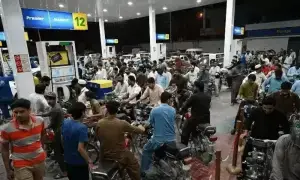
Till the petroleum prices are adjusted, the seventh review may hang in the balance. Then the oil marketing companies (OMCs) want a swift mechanism for subsidy transfer. The government has allocated Rs20 billion this month. But that might not be enough. If the prices go further up, OMCs may not import POL products– especially high-speed diesel (HSD).
HSD’s global demand is growing. The EU is replacing Russian gas with alternatives, including diesel. The global supply is tight, and OMCs may refrain from importing. That could lead to shortage close to Ramazan and wheat harvesting season. The problem is not immediate. The country has around 3-4 weeks of reserves. But time is running short. Higher the uncertainty on the political front, higher is the chance of petroleum shortage.
And if we manage to import for the full demand, the current account deficit is likely to slip further. There would be pressure on the currency and interest rates. Here a ‘surgical strike’ is required to ration the demand in urban centers to have enough supply for rural agriculture needs. For that government’s focus should be on to manage energy imports, demand, and subsidy.
Then there are challenges of raising funding for financing current account deficit and rollover of existing loan. Here the nod of the IMF is of utmost importance especially when the secondary market yield of Euro bond is high. There are multiple economic challenges and that required a coordinated effort with swift decision making. That is why the government should get done with the vote of no-confidence at the earliest and let the ball rolling one way or the other. Inaction is the killer.
Copyright Business Recorder, 2022
Ali Khizar is the Director of Research at Business Recorder. His Twitter handle is @AliKhizar



















Comments
Comments are closed for this article.