


Pakistan economy to gradually ‘recover’ in 2021: IMF
- Pakistan’s near-term economic outlook has worsened notably, and growth is estimated at –0.4 percent in FY 2020.


The International Monetary Fund (IMF) expects Pakistan economy to move towards ‘gradual recovery’ in 2021.
The IMF in its latest report titled Policy Actions Taken by Countries, was of the view that due to the coronavirus pandemic lead economic slowdown Pakistan’s near-term economic outlook has worsened notably, and growth is estimated at –0.4 percent in FY 2020.
In its report, IMF said that starting on March 23, both the federal and provincial governments have been implementing measures to contain and mitigate the spread of the virus. However, since mid-April, the federal government, in coordination with provinces, has been gradually easing lockdown arrangements, by allowing ‘low-risk industries’ to restart operation and ‘small retail shops’ to reopen with newly developed Standard Operating Procedures.
Among the measures adopted by the government, IMF report highlighted that a relief package worth PKR 1.2 trillion was announced by the federal government on March 24, under which a number of steps were taken i.e. elimination of import duties on emergency health equipment; cash transfers to 6.2 million daily wage workers (Rs75 billion); cash transfers to more than 12 million low-income families (PKR 150 billion), and a transfer to the National Disaster Management Authority (NDMA) for the purchase of COVID-19 related equipment (PKR 25 billion).
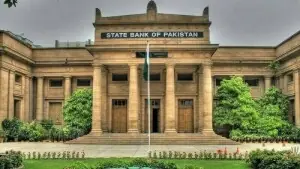
Meanwhile, the State Bank of Pakistan (SBP) has responded to the crisis by cutting the policy rate by a cumulative 625 basis points to 7.0 percent since March 17. It has also expanded the scope of existing refinancing facilities and introduced three new ones that aim at: (i) supporting hospitals and medical centers to purchase equipment to detect, contain, and treat COVID-19 (ii) stimulating investment in new manufacturing plants and machinery, as well as modernization and expansion of existing projects (iii) incentivizing businesses to avoid laying off their workers during the pandemic (1,700 SMEs , PKR 113 billion, to date).














Comments
Comments are closed for this article.