


Volatility at bourse, KSE-100 settles nearly flat
- Benchmark index settles at 180,511.02
The Pakistan Stock Exchange (PSX) experienced strong buying interest, with the KSE-100 Index gaining significantly, supported by a current account surplus and easing regional tensions.
- Pakistan Stock Exchange's significant gains and record rally.
- Pakistan's $459 million current account surplus.
- Global crude oil prices falling on potential Iranian supply.
- International market reactions to oil and geopolitical news.
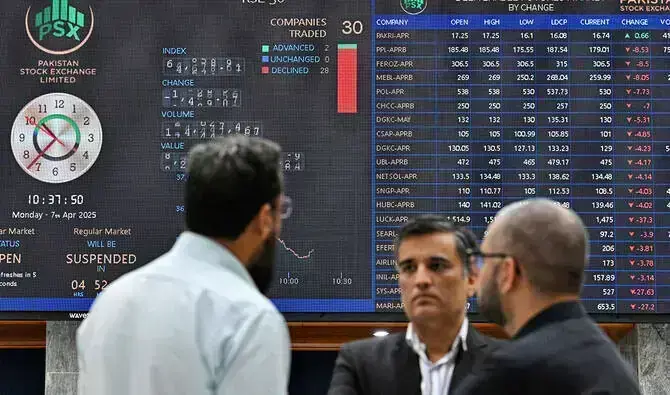
A volatile trading session was observed at the Pakistan Stock Exchange (PSX) on Wednesday, with the benchmark KSE-100 Index swinging both ways before settling on a flattish note.
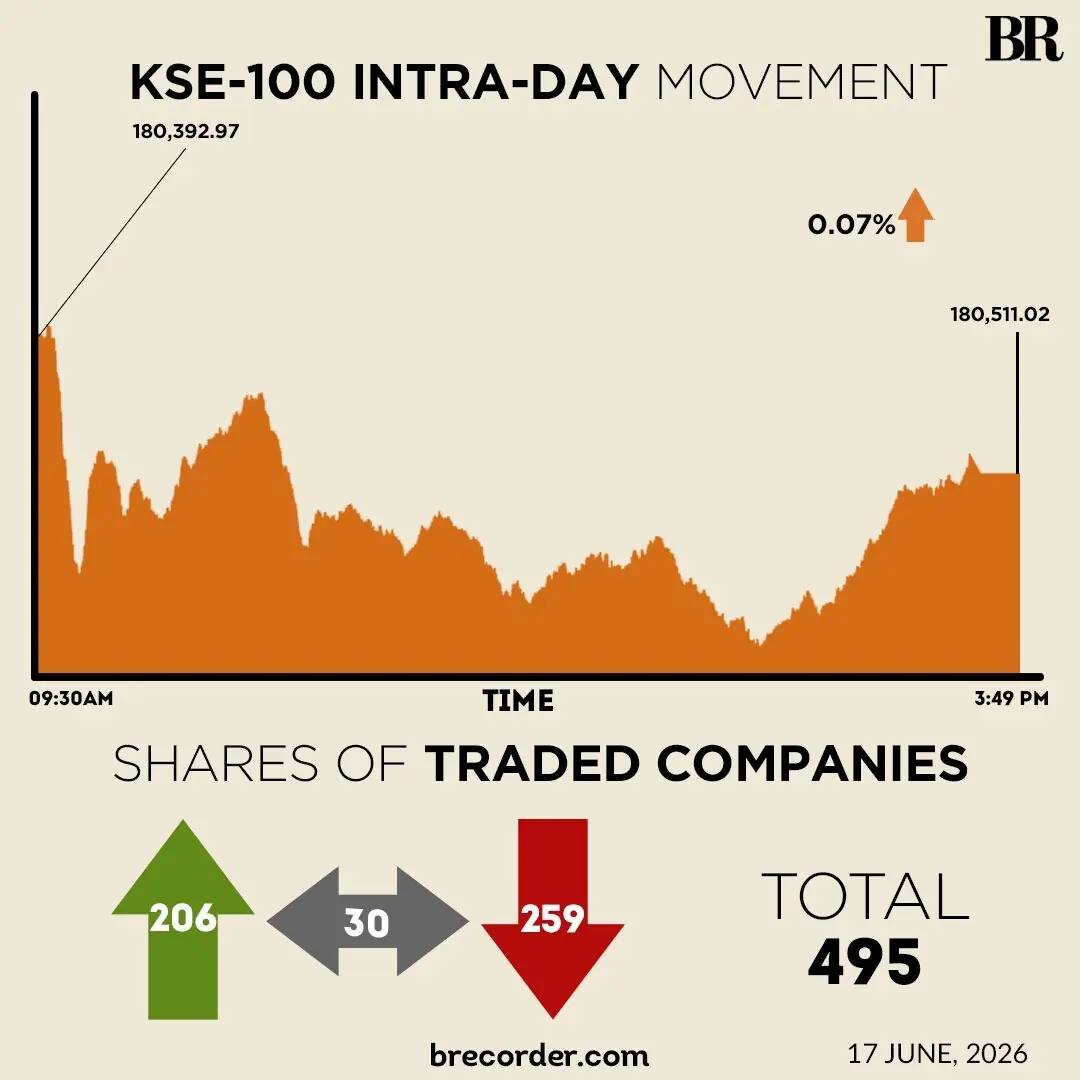
After opening near 181,000, the index slid steadily through midday to hit an intraday low of 179,564.16 as selling pressure built.
However, buying emerged in the final 90 minutes, triggering a sharp recovery that pushed the index towards an intra-day high of 181,357.70.
At close, the benchmark index settled at 180,511.02, up by 118.05 points or 0.07%.
“Investor sentiment remained supported by easing concerns over global oil prices and improving expectations regarding geopolitical stability, particularly following recent developments related to a potential US-Iran agreement and the anticipated reopening of the Strait of Hormuz. However, profit-taking in select heavyweight sectors limited overall gains,” brokerage house Topline Securities said in its post-market report.
On the index contribution front, index heavyweights FATIMA, PPL, OGDC, MTL, and SHFA emerged as the primary drivers of upside momentum, collectively contributing 611 points to the benchmark’s gain, Topline said.
In a key development, Pakistan’s current account posted a massive surplus of $459 million in May 2026, data released by the State Bank of Pakistan (SBP) showed on Wednesday.
On Tuesday, PSX extended its record-setting rally as investors maintained aggressive buying following the decision to keep the policy rate unchanged, while easing regional tensions and expectations of lower global oil prices further strengthened market sentiment. The benchmark KSE-100 Index surged by 3,353.15 points, or 1.89%, to close at 180,392.98 points.
Internationally, tumbling crude prices on news that Iranian fuel may soon hit global markets promised inflation relief and pushed bond yields lower on Wednesday, while stocks and currencies were quieter ahead of Kevin Warsh’s debut meeting as Federal Reserve chair.
Brent crude futures dived below $80 to the lowest since the opening salvos of the US-Iran conflict in March.
A senior US official said the US will waive sanctions on Iranian oil, under the deal to end the war, raising the prospect of millions of additional barrels of supply.
US bond yields dipped and rates in Asia followed suit, with 10-year Japanese yields down 1.5 basis points to 2.63% and 10-year Australian rates down almost 5 bps to 4.787%.
Few details of the US-Iran agreement, due to be signed on Friday, have been publicly confirmed, and a three-month stranglehold on the Strait of Hormuz has drained oil inventories, with U.S. reserves at the lowest since 1983.
Overnight on Wall Street, investors trimmed crowded bets on tech and semiconductor stocks, pulling the Nasdaq down 1.15%, while rising financial and industrial stocks helped the Dow notch a record high.
Futures were slightly positive in Asia, while chipmaker-heavy markets in Taiwan and South Korea inched lower and MSCI’s broadest index of Asia-Pacific shares outside Japan fell about 0.3%.
Japan’s Nikkei rose 0.4%. Stock markets in Hong Kong and Shanghai were broadly steady.
Meanwhile, the Pakistani rupee posted marginal gain, appreciating 0.01%, against the US dollar in the inter-bank market on Wednesday. At close, the local currency settled at 278.27, a gain of Rs0.03 against the greenback.
Volume on the all-share index rose to 1,230.54 million from 1,224.40 million recorded in the previous close.
The value of shares decreased to Rs69.21 billion from Rs70.22 billion in the previous session.
Service Long March was the volume leader with 189.43 million shares, followed by Kohinoor Spining with 72.28 million shares, and K-Electric Ltd with 53.63 million shares.
Shares of 495 companies were traded on Wednesday, of which 206 registered an increase, 259 recorded a fall, and 30 remained unchanged.















Comments