

Don't Miss the Latest News
Subscribing is the best way to get our best stories immediately.
Subscribing is the best way to get our best stories immediately.

ISLAMABAD: The Finance Division has initiated measures to strengthen public finance management, fiscal forecasting, budget execution and performance-based budgeting by bringing in specialised expertise to implement reforms n federal budgetary practices.
Official sources said that the initiative envisages strengthening the government’s capacity to forecast revenues and expenditures, analyse fiscal data, improve budget allocation and expenditure controls, and enhance reporting in line with national and international public finance standards.
Under the proposed arrangement, specialised support will be provided for annual, half-yearly and quarterly revenue and expenditure forecasts, as well as compilation, analysis and reporting of fiscal data required by international credit rating agencies.
The Finance Division is also seeking to strengthen analysis of budgets and expenditures of federal ministries, divisions, attached departments and autonomous bodies, with particular focus on indicative budget ceilings for civil government, defence, pensions, grants, subsidies, net lending and the Public Sector Development Programme (PSDP).
The reforms are aimed at modernising budgetary practices to improve efficiency and ensure better utilisation of public resources.
The Finance Division has also identified improvements in the budget preparation process and stronger budget execution and expenditure controls as key areas, with monthly and quarterly reviews envisaged to monitor implementation.
Another component of the reforms is revision of the Budget Manual in line with the requirements of the Public Finance Management Act and support to Chief Finance and Accounts Officers (CFAOs) in implementing the revised provisions.
The Finance Division is also focusing on greater budget transparency through fiscal risk disclosures, the Budget Strategy Paper, Mid-Year Review Report, Fiscal Policy Statement, medium-term performance-based budgeting and year-end performance monitoring reports.
The proposed reforms seek to further institutionalise Output-Based Budgeting and Performance Budgeting across federal ministries and divisions.
Under the arrangement, Principal Accounting Officers (PAOs) and CFAOs would be supported in implementing mid-year budget reporting and performance reporting against approved outputs and targets, including comparison of budgeted and actual expenditure.
The Finance Division also plans to develop mechanisms for more efficient utilisation of grants as part of the budget process and strengthen the capacity of budget officials through training and technical assistance.
The move comes amid growing emphasis on strengthening fiscal management, improving expenditure efficiency and enhancing transparency in the federal budget process.
For this purpose, the Finance Division has outlined a specialised Public Finance Management Specialist position requiring at least 10 years of relevant experience in public finance management, fiscal management, revenue management, budget allocation, and public financial planning and budgeting.
Copyright Business Recorder, 2026
LAHORE: The Punjab Industrial Estates Development and Management Company (PIEDMC) Board of Directors has approved a Rs44 billion budget for the financial year 2026-27, including Rs15 billion for development works in industrial zones managed by the company.
The approval was given at the 177th meeting of the PIEDMC Board of Directors, chaired by Chairman Shahzad Azam Khan. The board approved an additional Rs630 million for the Lahore Electric Supply Company (LESCO) for installation of a transmission line at Quaid-e-Azam Business Park. It also approved an additional Rs590 million for the Multan Electric Power Company (MEPCO) for completion of a grid station in Vehari.
The board further approved the purchase of transformers for Sundar Industrial Estate and the audited accounts of the company up to June 30, 2024. It also authorised progress on the purchase of land for expansion of Quaid-e-Azam Business Park in accordance with the rules and regulations prescribed by the Punjab Cabinet.
Addressing the meeting, Chairman Shahzad Azam Khan said the company would work collectively to promote industrial development and resolve issues faced by industrialists. “We will work together to take the company forward, and my doors will always remain open for consultation and support,” he said.
He said every decision of the board would be taken in accordance with the law while keeping the welfare of industrialists and industrial growth in view. He added that all possible efforts would be made to resolve issues relating to PIEDMC’s industrial zones, with all relevant forums and stakeholders taken on board.
The meeting was attended by board directors Sajid Saleem Manhas, Mian Nauman Kabir, Muhammad Ahmed Khan, Dr Shahid Raza and Sohail Azhar, besides PIEDMC Chief Operating Officer Ali Azam Syed and officials from the industries, finance and labour departments and TEVTA.
Copyright Business Recorder, 2026
EDITORIAL: According to a report carried by this newspaper recently, withholding tax collection by FBR from immovable property increased by 57 percent in the last fiscal year. Not only that, but to spur investment in the real estate sector the government in the budget for FY27 reduced the rate of advance tax on purchase of property by as much as 50 percent.
Experts, rightly attribute this inexplicable concession to a sharp rise in real estate prices and activity all over the country. In certain pockets of Karachi prices of plots have increased manifold over the past six months.
This inflow of money may reflect reverse capital flight from the Middle East—particularly the UAE—amid the US-Iran war, whose tremors have been felt across the region. Initially, the usual outflow of money from Pakistan appeared to have slowed.
More recently, some funds parked abroad may have also returned, as suggested by stronger remittance inflows and increased dollar supplies from exchange companies.
The news is encouraging as it is helping build forex reserves and improve the liquidity in the domestic market. However, there is a risk that this money is being channelled into unproductive assets primarily vacant plots in various localities, creating price bubbles without generating meaningful economic activity.
The funds are clearly not flowing into the stock market, as this asset class is not only considered riskier and requires active management, but it also offers limited upside now that the market has peaked. Real estate, by comparison, provides an easier avenue for parking funds, with the added advantage of fewer documentation requirements.
The worrisome part is that there is no interest in investing in real businesses—be it manufacturing or services. Pakistan’s investment-to-GDP ratio is hovering around its lowest levels, and the government is failing to attract investment despite attaining macroeconomic stability.
The Finance Minister should be questioned for failing to anticipate a reversal in capital flight and for not providing the right incentives to channel these funds into industrial sectors or other productive avenues.
The core issues are excessive taxation and slack in the industrial sector. Furthermore, the government is failing to provide a level playing field, as regulatory and taxation hurdles keep investment at bay. Consequently, our manufacturing base is losing competitiveness across multiple areas, and concrete efforts to improve the situation are entirely missing.
While some money enters the country through the Hundi-Hawala system, it may not be clean enough to be invested in documented sectors. Moreover, even when capital is documented, the fear of the tax authority deters investors from committing to formal sectors.
The government is reportedly studying the creation of an investment fund for overseas Pakistanis to finance USD 6.5 billion in Public-Private Partnership (PPP) projects; while this is a case of “better late than never,” the Finance Ministry should have anticipated this trend and introduced out-of-the-box solutions to bring this capital into the formal sector much earlier.
Our banks should also be questioned as to why they are not striving to retain this extraordinary flow within the banking sector to finance economic activity in the formal economy. It was not long ago, in 1998, when the PML(N) government froze the foreign currency accounts of resident citizens after our nuclear tests.
Shaukat Tareen, the then-president of Habib Bank Limited (HBL), immediately announced a scheme of substantial, expensive prizes to be awarded every month through lucky draws to the bank’s depositors. Other banks soon followed suit. This measure ensured that the massive rupee liquidity created by the freezing of dollar accounts remained within the banking system, rather than being channelled into unproductive sectors of the economy.
Nonetheless, it is not too late. The money keeps coming, and the flow is likely to continue, as the war is by no means over and the medium-term outlook for the Gulf region is bearish. The government, the Central Bank, and commercial banks should have a clear strategy for attracting capital into formal sectors or, at the very least, luring investors into government securities.
The government is always in need of financing, which is currently crowding out the private sector. Attracting foreign liquidity into government securities will allow the financial system’s liquidity to move toward productive assets.
The point is that there is an ongoing opportunity to attract capital into the country while retaining money that would normally flow out. The government, especially the Finance Ministry, should wake up and work on channelling this liquidity into the right avenues before it is too late.
Copyright Business Recorder, 2026
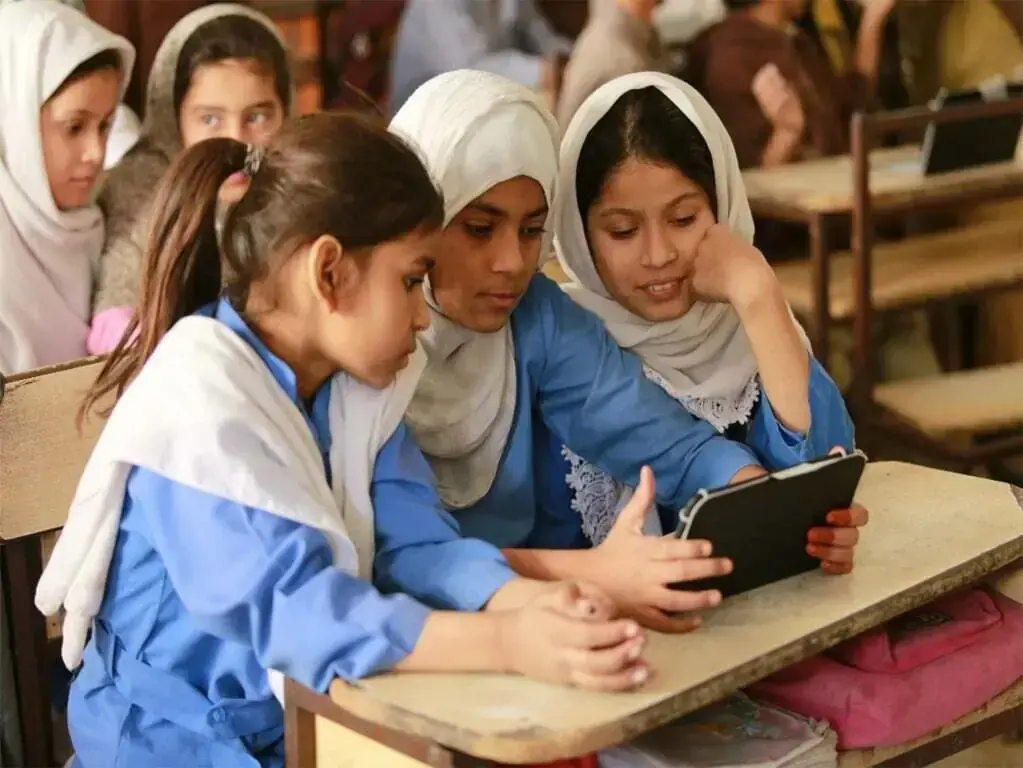
PESHAWAR: A post-budget seminar focused on the budget allocations for girls’ education in the fiscal year 2026–27, called for gender tagging of education budget and stronger oversight mechanisms to ensure effective utilisation of financial resources and address barriers to girls’ access to quality education.
The seminar was organised by the Provincial Oversight and Advisory Committee on Girls’ Education of the Khyber Pakhtunkhwa Commission on the Status of Women (KPCSW) with technical and collaborative support of Blue Veins and Malala Fund.
It brought together a diverse group of stakeholders, including Secretary Provincial Assembly of Khyber Pakhtunkhwa, Members of the Provincial Assembly (MPAs), officials from the Education Department and other relevant government institutions, civil society representatives, and young girls’ education champions.
In her welcome remarks, Dr Sumera Shams, Chairperson KPCSW, said the Committee had conducted consultations and meetings with relevant stakeholders and young girls and developed recommendations for gender-inclusive education budgeting, which were formally submitted to the Education Department for consideration in the 2026–27 education budget.
Officials from the Elementary and Secondary Education Department, Pazeer Zada, Accounts Officer, and Muhammad Ijaz Khalil, Advisor Governance, provided an overview of the provincial education budget for the fiscal 2026-27.
They said the education budget increased by 10 percent from the previous fiscal year, and stood at Rs397 billion, with Rs21 billion allocated to the development budget.
Naseem Khan, Deputy Secretary (Budget) mentioned that a Global Virtual School has also been established by the Department to support AI-enabled digital learning for students and help address geographical barriers to educational access.
Syed Wiqar Shah, Secretary Provincial Assembly of Khyber Pakhtunkhwa, noted, “Investment in girls’ education is an investment in the province’s social development”.
The seminar concluded with a call for efficient and transparent utilisation of education resources, stronger monitoring and oversight, and sustained collaboration among stakeholders to ensure that budgetary investments translate into tangible improvements in girls’ access to and quality of education.
Copyright Business Recorder, 2026
EDITORIAL: A federal government struggling to contain expenditure and repeatedly turning to foreign lenders is now being accused by a Senate subcommittee of wasting between Rs5-6 trillion every year simply because it has failed to complete a constitutional devolution process that should have been settled long ago.
The Senate Subcommittee on Devolution says ministries, institutions and functions that should have passed to the provinces or come under the Council of Common Interests (CCI) continue to be retained at the Centre despite the 18th Constitutional Amendment. If its assessment of the financial cost is correct, the scale of this failure is staggering.
The committee has identified 25 ministries and bodies that it says have been unlawfully retained by the federal government, including health, education, national food security, climate change, housing, petroleum, planning and development, railways and Wapda. It argues that faithful implementation of the 18th Amendment could reduce federal expenditure by Rs5-6trn annually.
Against a federal budget of approximately Rs19trn for FY2026-27, this is hardly an accounting footnote. It points to a potentially enormous structural failure at the heart of government.
The obvious question is how such a situation was allowed to persist. The 18th Amendment was passed in 2010 and the devolution process was formally completed by June 2011. If federal institutions have continued performing functions that the Constitution assigned elsewhere, why were the necessary red flags not raised much earlier? And if they were raised, who ignored them? Most importantly, who bears responsibility for the financial consequences?
These questions demand answers because the government cannot simultaneously plead poverty, impose austerity, pursue right-sizing and seek external financing while tolerating duplication on anything approaching the scale alleged by the Senate panel.
Successive governments have repeatedly promised to reduce the size and cost of the state. Yet the committee’s findings suggest that the machinery of government has continued consuming resources through structures whose constitutional justification it now openly questions.
This also exposes the deeper dysfunction that repeatedly undermines reform in Pakistan. Laws are passed, constitutional amendments celebrated, implementation commissions formed and deadlines declared, only for the old administrative machinery to find ways of surviving. Bureaucratic interests, political patronage and institutional inertia have proved remarkably resistant to reform.
Where such enormous sums of public money are potentially involved, questions of incompetence and possible misuse of authority cannot simply be brushed aside.
The committee’s findings must, of course, now withstand proper scrutiny. Its Rs5-Rs6trn estimate should be broken down ministry by ministry and function by function, while the constitutional status and actual expenditure of every institution it has identified should be established transparently. Such an extraordinary claim requires equally rigorous evidence. But that requirement cannot become another excuse for delaying corrective action where duplication or unconstitutional retention is established.
There is bitter irony in Pakistan borrowing repeatedly to keep the state functioning while potentially carrying trillions of rupees in avoidable expenditure within the state itself.
Debt has become embedded in the country’s fiscal architecture because expenditure consistently outruns available resources. If even a substantial part of the savings identified by the committee is achievable, failure to pursue it would be indefensible.
The government should therefore order an immediate, time-bound review of the committee’s findings and publish the results.
Every ministry and body found to be performing functions that no longer constitutionally belong to the Centre must be devolved, restructured or abolished according to law, with responsibility fixed for unjustified expenditure.
Before asking taxpayers for more money or creditors for another loan, Islamabad might finally try obeying its own Constitution.
Copyright Business Recorder, 2026
The information on fiscal operations in Pakistan in 2025-26 was released last week by the Federal Ministry of Finance, both of the Federal and the Provincial Governments.
The numbers indicate a spectacular success in containing the size of the consolidated fiscal deficit, which is the aggregation of the Federal budget deficit and the Provincial cash surplus. The budget deficit is down to the unbelievably low level of 2.6 percent of the GDP in 2025-26. This is the lowest deficit as a percentage of a deficit since 2003-04, when it stood at 2.9 percent of the GDP. There have been years afterwards when the deficit rose to above 7 percent of the GDP.
The performance is also exceptional in relation to the targeted deficit for 2025-26. This was 5.1 percent of the GDP. As such, a big deficit reduction of 2.5 percent of the GDP has been achieved in relation to the target. Further, it is a very sizeable reduction in relation to the consolidated budget in 2024-25 of 5.4 percent of the GDP.
There is need to identify if this is a once-and-for-all positive outcome or if it is a sustainable improvement. The answer rests on the size of the targeted budget deficit for 2026-27. The magnitude is 3.6 percent of the GDP. Therefore, a 1 percent of the GDP increase is anticipated in the budget deficit in 2026-27. It will not be possible to sustain the budget deficit in 2026-27 at the record low level in 2025-26.
The fundamental question is how the deficit reduction of 2.5 percent of the GDP in relation to the target deficit of 5.1 percent of the GDP was achieved? The answer will also indicate the extent of sustainability of the big improvement in the budgetary position.
The absolute magnitude of the deficit reduction in 2025-26 in relation to the level in 2024-25 is Rs 2,855 billion. A number of factors appear to have contributed to this reduction. The first factor is the rise in the level of net federal revenues, after the NFC transfer to the Provincial Governments, of Rs 573 billion. This explains 20 percent of the reduction in the size of the budget deficit.
The next major factor is the big decrease in the absolute level of federal expenditures. This is the real area of success in 2025-26, with a reduction in federal expenditure of as much as Rs 1,754 billion, contributing 61 percent to the deficit reduction.
The major contributor to this expenditure saving is the Rs 1,217 billion fall in the cost of debt servicing. The budgeted amount of debt servicing for 2025-26 was Rs 8,207 billion. The actual amount is Rs 6,947 billion, lower by as much as Rs 1260 billion. The question is how this quantum reduction was achieved when there was actually an increase in the SBP policy rate by 1 percent over the year?
There has also been a cut in development expenditure in relation to the actual level in 2024-25 of Rs 281 billion, and in relation to the budget estimate by Rs 154 million. The third source is the negative statistical discrepancy of Rs 853 billion, compared to Rs 328 billion in 2024-25.
The fourth source of reduction in the overall budget deficit is the size of the provincial cash surplus, which is higher by Rs 528 billion in relation to the level in 2024-25.
As highlighted above, the issue is the sustainability of these improvements in 2026-27. The first observation is that the targeted deficit has been raised from 2.6 percent of the GDP to3.6 percent of the GDP in 2026-27.
The quantum reduction in the debt servicing by Rs 1,217 billion in 2025-26 is not being sustained. Instead, it is expected to rise by as much as Rs 1,107 billion in 2026-27. Interest rates are likely to be somewhat higher but not enough to explain the big anticipated jump in costs of debt servicing.
The Federal Ministry of Finance needs to explain how the debt servicing was contained at Rs 6,947 billion, implying a reduction of Rs 1,260 billion in relation to the budget estimate. There is need also for explanation as to why there will be a quantum jump of debt servicing in 2026-27 by as much as16 percent.
The other issue of concern is why there was a need to curtail development spending by almost 20 percent in 2025-26, when the budgetary position was so favourable. There was a dire need for a quantum jump in project allocations, especially in the water resources sector, as a counter to likely actions by India after its withdrawal from the Indus Waters Treaty.
The other issue is that there is no real big augmentation in the targeted cash surplus by the Provincial governments in 2026-27. The expectation in the IMF Programme was that there will be a quantum jump in provincial tax revenues, especially in the agricultural income tax, property-related taxes and the sales tax on services. This has not happened. The larger cash surplus in 2025-26 was due more to cuts in development spending.
Overall, there is no doubt the need to appreciate the colossal reduction in the budget deficit in 2025-26 to only 2.6 percent of the GDP. However, it has been achieved entirely by reduction in expenditure and not by a rapid increase in FBR revenues, which have shown a modest growth rate of 10 percent. Also, the expenditure savings appear to have been temporary in nature.
For example, the savings in debt servicing in 2025-26 appear to be short-lived in character with a likely quantum jump of 16 percent in 2026-27. Unfortunately, the containment of current expenditure in 2025-26 was not a result of permanent cost savings in the expenditure on running of the civil government and defence services, subsidies and grants.
Therefore, we are likely to go back in 2026-27 to a consolidated budget deficit of over 3.5 percent of the GDP, with a quantum jump in debt servicing, big rise in other current expenditure and only a moderate increase in revenues. Nevertheless, there is a need to recognize the exceptional budgetary performance in 2025-26, which has also contributed to bringing down the public debt to GDP ratio by 3.4 percent of the GDP.
Copyright Business Recorder, 2026
The writer is Professor Emeritus at BNU and former Federal Minister
ISLAMABAD: The State Bank of Pakistan (SBP) is set to frame strict rules to prevent misuse of recently approved subsidy schemes, taking into account past experiences, sources in the Commerce Ministry told Business Recorder.
Sharing details, sources said that during a pre-budget meeting, the Prime Minister directed the Finance Division to undertake a comprehensive review of all past and existing export subsidy and incentive schemes. The Division was asked to present a proposal for a transparent, performance-linked, and fiscally sustainable export facilitation framework.
In a subsequent budget meeting held on May 20, 2026, it was further directed that the SBP and the Ministry of Finance finalise an export finance scheme to ensure that credit facilities are available to exporters at competitive rates, capped at 600 basis points.
READ MORE: Exporters face rebate loss on performance failure
The Ministry of Finance was also tasked with ensuring the required budgetary allocation for the differential subsidy in the FY2026-27 budget. Accordingly, a task force was generated on the Prime Minister’s Delivery Unit (PMDU).
For this purpose, the Finance Division has earmarked Rs88 billion as subsidy for export finance schemes in FY2027, of which Rs5 billion will be allocated for the ongoing Long-Term Financing Facility (LTFF) in the current fiscal year.
The Finance Division informed the Economic Coordination Committee (ECC) that, in compliance with the Prime Minister’s directives, the SBP has proposed three financing schemes to boost exports: (i) enhancement of the EXIM-administered Export Finance Scheme (E-EFS); (ii) launch of a new Long-Term Export Growth Financing Facility (LTEGFF); and (iii) introduction of a performance-based rebate on incremental exports.
The E-EFS is a short-term financing facility designed to meet the working capital requirements of exporters of value-added goods, with loan tenures of up to 180 days. However, the existing portfolio size of Rs1,000 billion is considered insufficient to meet demand, leaving many exporters unable to access financing due to limited bank allocations.
EXIM Bank is also pursuing improved targeting of the scheme, whereby financing for traditional products and markets will gradually be reduced to 50 percent by 2030 from the current 70 percent. To support this transition, it has been proposed to enhance the E-EFS portfolio to Rs1,500 billion, enabling more exporters, including SMEs, to access affordable working capital. The terms for consumers under the enhanced limit will remain largely unchanged.
The proposed LTEGFF will replace the existing EXIM-administered Long-Term Financing Facility (E-LTFF) and is aimed at supporting new export-oriented projects as well as Balancing, Modernisation and Replacement (BMR) of existing units. With a proposed size of Rs350 billion, the facility will target enterprises with at least 80 percent export orientation and compliance with environmental standards aligned with Pakistan’s Green Taxonomy.
Unlike the existing E-LTFF, which carries variable interest rates and has seen limited uptake due to associated risks, the LTEGFF will offer subsidised fixed interest rates for up to 10 years. This is expected to attract significant investment, boost exports, generate employment, and contribute to Pakistan’s climate commitments and Nationally Determined Contributions (NDCs).
According to estimates, the total subsidy requirement for LTEGFF will be Rs195.98 billion, with Rs25.16 billion allocated for FY2027.
The government also plans to introduce a performance-based rebate scheme on incremental exports from July 1, 2026, with an estimated annual cost of Rs15 billion for FY2026-27, of which Rs10 billion is expected to be utilised in the current fiscal year.
Under the proposed structure: (i) exporters achieving up to 10 percent growth over the previous year will receive a rebate equivalent to 1 percent of incremental exports; and (ii) exporters exceeding 10 percent growth will qualify for a higher rebate (details to be finalised).
To ensure timely disbursement, exporters exceeding their average quarterly exports of the previous year will receive 75 percent of the applicable rebate on a provisional basis. At year-end, full adjustments will be made: exporters exceeding annual benchmarks will receive remaining payments, while those falling short will be required to refund provisional rebates within 15 days of the year’s close.
During discussions, the ECC appreciated the overall design of the scheme but deliberated extensively on its fiscal impact, expected returns, and risks of misuse. Participants emphasised the need to prioritise SMEs—particularly under the revised SME definition—introduce per-party limits, and promote market and product diversification.
The forum agreed that appropriate safeguards and “guardrails” must be put in place to ensure that the schemes deliver intended benefits without misuse.
After detailed deliberations, the ECC approved the proposals, directing the SBP, in its role as regulator, to ensure strict oversight and prevent misuse of the facilities in light of past experience.
Copyright Business Recorder, 2026
Every pre and post budget debate in Pakistan presents a familiar headline: the country’s tax-to-GDP ratio remains among the lowest in the region. This year the debate has taken an interesting turn. A think-tank has pointed out that the official figure of around 10 percent is incomplete because it excludes provincial taxes and the petroleum levy. By adding these components, they argue, Pakistan’s effective ratio for FY2026-27 approaches 12.9 percent rather than 10.5 percent.
This correction exposes an important statistical weakness. It does not, however, answer the more fundamental question: what exactly are we trying to measure?
Pakistan’s fiscal crisis cannot be understood merely by refining the numerator of a ratio. It requires rethinking the very framework through which we assess taxation, state capacity and public finance. This is where constitutional political economy offers a more useful lens than conventional public finance.
The first proposition is straightforward. Pakistan is a federation. The Constitution distributes taxing powers between the federation and the provinces. Provincial taxes are integral part of Pakistan’s overall fiscal effort and should not disappear from national discussions merely because they are collected outside the Federal Board of Revenue (FBR).
A national tax-to-GDP ratio that ignores provincial revenues understates the country’s aggregate tax collection.
Inclusion of provincial taxes is analytically sound. Their omission has long distorted public debate by creating the impression that the federation alone constitutes Pakistan’s tax system.
Petroleum levy presents a different question. Economically, the levy resembles a tax. It is compulsory, non-voluntary and ultimately paid by consumers. Yet constitutionally and budgetarily it is classified as non-tax revenue. It is imposed under a different legal framework and has historically been distinguished from taxation in official accounts.
One cannot simply shift between legal classifications according to convenience. If the levy is treated as non-tax revenue in the budget, it cannot simultaneously become “tax” merely because it improves an international indicator. Doing so merely replaces one counting problem with another. Pakistan needs greater conceptual clarity.
The federal government officially publishes separate indicators quarterly and yearly that include total revenue to GDP ratio (15.7% in FY 2025-26), tax revenue to GDP ratio (11.1% in FY 202526), FBR tax-to-GDP ratio, (10.2% in FY 2025-26), measuring the performance of the federal tax administration and Provincial tax-to-GDP ratio (0.9% of GDP in FY 2025-26).
Each indicator serves a different purpose. Combining them into a single politically convenient figure obscures rather than illuminates fiscal reality. More importantly, none of these ratios explains why Pakistan repeatedly experiences fiscal crises despite imposing increasingly heavy burdens on the documented economy. The prevailing narrative assumes that Pakistan suffers from low taxation because citizens are undertaxed. This conclusion does not withstand closer examination.
Pakistan’s formal economy is already subjected to one of the most intrusive systems of fiscal extraction in the developing world. Companies pay high effective corporate taxes supplemented by super tax. Salaried individuals have witnessed repeated increases in withholding and direct taxation.
Consumers bear an 18 percent general sales tax together with provincial sales taxes on services, custom duties, regulatory duties, additional custom duties, petroleum levies, electricity duties, gas surcharges and numerous withholding taxes embedded within commercial transactions.
Almost every organised economic activity has become a withholding point for the State. Banks, telecom companies, electricity distribution companies, exporters, importers, manufacturers and employers now function as tax collection agents. The paradox is therefore obvious.
Pakistan simultaneously exhibits a relatively low aggregate tax-to-GDP ratio and exceptionally high effective taxation of those already documented. This apparent contradiction disappears once attention shifts from rates to the tax base.
The country’s fiscal weakness does not primarily arise because existing taxpayers contribute too little. It arises because a substantial proportion of wealth, property, agricultural income, commercial activity and economic rents remain outside meaningful taxation while governments repeatedly increase extraction from the shrinking pool of compliant taxpayers.
The result is a fiscal system that becomes narrower as rates become higher. This distinction is frequently ignored in policy discussions. Successive governments celebrate higher annual collections while failing to disclose how much of the increase resulted from inflation, petroleum levies, higher withholding rates, blocked refunds or one-off measures rather than genuine expansion of the tax base. Equally absent is any discussion of provincial fiscal effort.
Pakistan’s Constitution assigns important revenue bases to the provinces, including agricultural income taxation, urban immovable property, services and various local taxes. Yet provincial own-source revenues remain strikingly small compared with transfers received under the National Finance Commission Award. This is not merely an administrative deficiency. It reflects a deeper constitutional imbalance.
Political incentives encourage provincial governments to depend overwhelmingly upon divisible-pool transfers while postponing politically difficult reforms relating to agricultural income taxation, property valuation and municipal finance. The consequence is a federation where both tiers of government expect someone else to undertake politically costly tax reforms.
The debate over whether Pakistan requires an 18 percent tax-to-GDP ratio similarly deserves closer scrutiny. The proposition is intuitively appealing. A country aspiring for sustained development cannot indefinitely finance current expenditure and development through borrowing. Higher domestic revenue mobilisation is essential. Yet no universal economic principle establishes 18 percent as a magic threshold.
The appropriate level depends upon the size of government, demographic pressures, defence requirements, debt-servicing obligations, public sector efficiency, social protection commitments and the constitutional allocation of expenditure responsibilities.
A government characterised by inefficient spending, loss-making state-owned enterprises, poorly targeted subsidies and weak accountability does not become development-oriented simply because it raises additional revenue equivalent to five percentage points of GDP. Revenue cannot be divorced from expenditure.
The essential question is not how much government collects but what kind of government is collecting it and how those resources are subsequently deployed. This is precisely where constitutional political economy departs from conventional public finance.
Traditional fiscal analysis treats taxation primarily as a technical exercise in revenue optimisation. Constitutional political economy asks prior questions. Who possesses taxing authority? Who bears the burden? How are spending priorities determined? What constitutional constraints protect citizens against fiscal overreach? What institutional incentives encourage or discourage productive investment? How do taxation and public expenditure influence political legitimacy? These questions cannot be answered through a single ratio. Nor can GDP itself be regarded as a neutral denominator.
Changes in statistical methodology, inflation, rebasing exercises and fluctuations in nominal output all influence tax ratios independently of tax policy. A favourable movement in the ratio may therefore conceal deteriorating economic fundamentals, just as a temporary decline may accompany productive structural adjustment. Fiscal performance consequently requires a broader dashboard of indicators.
Alongside tax-to-GDP ratios, governments should regularly publish data on tax expenditures, effective tax incidence across income groups, provincial own-source revenues, refund backlogs, cost of collection, debt servicing as a proportion of net revenue, public investment efficiency, and compliance costs imposed upon businesses. Only then can policymakers distinguish between sustainable fiscal strengthening and temporary revenue extraction.
Pakistan’s long-term challenge is therefore neither statistical nor merely administrative; it is institutional. The country’s post-colonial fiscal architecture evolved around extraction rather than reciprocal accountability. Citizens increasingly encounter the State as a collector of taxes, levies, duties and surcharges rather than as a provider of justice, education, healthcare, infrastructure and local public services. This weakens voluntary compliance.
When taxpayers perceive that additional collections finance recurring deficits, inefficient enterprises, administrative expansion and elite privileges rather than public goods, resistance inevitably grows. Higher statutory rates then generate further avoidance, greater coercive enforcement and increasing dependence upon withholding mechanisms. The cycle reinforces itself.
Breaking this equilibrium requires more than improved tax administration. Pakistan needs a constitutional fiscal settlement founded upon broad tax bases, moderate and predictable rates, meaningful provincial fiscal responsibility, empowered local governments, transparent expenditure and credible institutional accountability.
Economic growth and tax reform must proceed together. Broadening the base through documentation, rationalising exemptions, integrating the informal economy and strengthening provincial taxation can gradually raise revenues without imposing confiscatory burdens upon existing taxpayers.
Conversely, continuing to pursue higher collections through petroleum levies, repeated withholding taxes, retrospective measures and indirect taxation may improve annual statistics while simultaneously weakening investment, productivity and public confidence.
Pakistan certainly has a tax-counting problem. That is only the surface manifestation of a much deeper constitutional problem. The real challenge is not whether the country’s tax-to-GDP ratio is 10 percent, 13 percent or eventually 18 percent. It is whether Pakistan can transform an extractive fiscal order into a constitutional social contract where taxation reflects ability to pay, governments remain accountable for expenditure, provinces assume genuine fiscal responsibility, local governments mobilise and spend their own revenues, and citizens receive visible public value in return for compulsory contributions.
Until that transformation occurs, debates over a few percentage points in the tax-to-GDP ratio will continue to generate headlines, while the structural causes of Pakistan’s fiscal crisis remain largely untouched.
The country’s future depends not merely on collecting more revenue. It depends on rebuilding the constitutional foundations that determine how revenue is raised and spent, who bears its burden, and whether the State ultimately earns the trust that makes sustainable taxation possible with equitable inclusive development.
Copyright Business Recorder, 2026
The writer is a lawyer and author, is an Adjunct Faculty at Lahore University of Management Sciences (LUMS), member Advisory Board and Senior Visiting Fellow of Pakistan Institute of Development Economics (PIDE)
The writer, an Advocate Supreme Court, Adjunct Faculty at Lahore University of Management Sciences (LUMS), member Advisory Board and Visiting Senior Fellow of Pakistan Institute of Development Economics (PIDE), holds LLD in tax laws
The writer is a corporate lawyer based in the US with extensive expertise in financial regulations, including Virtual Asset Service Providers (VASPs), corporate governance, and global economic policies. He holds an LLM from Washington University in St. Louis and has completed the Management Development Program at the Wharton School. He has developed regulatory frameworks for North American and South American Financial Institutions and has consulted and trained bureaucrats of different regions. He can be reached at [email protected]
The taxes we see… and the taxes we don’t
Finance Minister Muhammad Aura ngzeb recently congratulated the Federal Board of Revenue (FBR) on achieving its revised revenue collection target for FY2025–26, describing it as an important milestone in Pakistan’s ongoing fiscal reform journey. The government’s emphasis on broadening the tax base, using technology, and reducing administrative discretion reflects a welcome commitment to strengthening public finances.
Yet governments and businesses measure an economy differently. Governments count the taxes they collect; businesses count both the taxes they pay and the hidden costs imposed by the way the state functions.
These costs never appear in the Finance Bill. They are not debated in Parliament, nor reflected in fiscal statistics. They generate no revenue for the treasury. Yet they often influence investment decisions more profoundly than statutory taxes.
Pakistan’s economy, in effect, is burdened by two tax systems. One fills the national treasury. The other quietly drains the investment pipeline.
One is imposed through law. The other is imposed through uncertainty.
Pakistan’s second tax system
Every business preparing an investment proposal budgets for taxes, energy, labour, finance, insurance and logistics.
These are measurable costs that can be built into financial models.
What businesses cannot budget for are the invisible taxes created by prolonged approvals, overlapping institutional mandates, conflicting regulatory interpretations, changing policy directions, procedural complexity, repeated documentation requirements, and uncertain timelines.
These are not taxes in the legal sense, yet they function much like taxes by raising the cost of investment without generating any public revenue. Ironically, governments often reduce formal taxes to stimulate investment while these hidden costs quietly offset much of the intended benefit.
When time becomes a tax
Investors understand that time is money.
Every month that a factory waits for an approval leaves equipment idle, delays production, locks up working capital and increases financing costs
A delayed utility connection, a pending licence, an unresolved customs clearance or a prolonged regulatory review may appear to be administrative matters. Economically, however, each represents an additional cost.
Every delayed approval is an economic decision, whether policymakers recognise it or not.
Time lost is productivity lost. Productivity lost is growth forgone.
Markets can price risk, not uncertainty
Markets routinely price exchange-rate movements, interest rates and commodity prices because these risks are measurable. What they struggle to price is uncertainty created by inconsistent governance.
Investors can assess known tax rates and compliance costs. What they cannot easily assess is whether regulations will change midway through a project, whether agencies will interpret the same law differently, or whether approvals expected in weeks will take months.
Capital is patient with profitability. It is impatient with uncertainty.
The hidden cost of administrative friction
These are the costs no spreadsheet captures. Administrative friction—what economists describe as transaction costs—rarely appears in economic debates; yet it quietly imposes some of the highest costs on investment.
Every additional form, duplicated inspection, unnecessary clearance, avoidable procedural step and inconsistent regulatory interpretation adds time, expense and uncertainty without creating corresponding public value.
The opportunity cost of delayed projects, the financing cost of idle capital, the reputational cost of missed commitments, the management time consumed by bureaucracy and even the emotional burden of prolonged uncertainty.
Collectively, they function as an implicit tax on economic activity. They neither finance public services nor strengthen fiscal stability; they simply reduce efficiency. When uncertainty becomes routine, caution replaces entrepreneurship.
When delays become predictable, investment becomes unpredictable.
Predictability matters more than incentives
International experience demonstrates that investors value predictability more than incentives. Businesses can adapt to high taxes and stringent regulations when they are stable and consistently applied. What discourages investment is uncertainty. Long-term investments in manufacturing, mining, infrastructure, logistics and technology are made over decades, not budget cycles.
Investors seek confidence that the rules governing their investments will remain transparent, predictable and fairly implemented.
Confidence, ultimately, is one of the most valuable economic incentives any government can offer.
Regulation builds markets—uncertainty weakens them
Contrary to popular perception, the challenge is not regulation but regulatory quality. Every successful economy is underpinned by strong regulatory institutions. Environmental safeguards, consumer protection, financial oversight, labour standards and tax compliance are not barriers to investment; they are the foundations of well-functioning markets.
What distinguishes economies such as Singapore, Germany, the Netherlands and the United Arab Emirates is not the absence of regulation, but its transparency, predictability and consistency. Investors know the rules before committing capital. Approval processes, compliance requirements and timelines are transparent, allowing businesses to price regulatory costs with confidence.
Investors rarely fear strict rules. They fear changing rules.
The objective of regulatory reform, therefore, is not to regulate less, but to regulate better. Transparent, proportionate and efficiently administered regulation is not an obstacle to investment—it is one of its strongest enablers.
From revenue collection to confidence creation
Pakistan’s emphasis on technology, automation and improved tax administration is a step in the right direction. The same reform philosophy should now extend across the broader regulatory landscape.
Reducing administrative discretion, introducing statutory timelines for approvals, strengthening inter-agency coordination, expanding digital one-window platforms, undertaking regulatory impact assessments, and improving accountability for unnecessary delays would reduce the hidden costs currently borne by businesses.
These reforms require less public expenditure than administrative commitment, yet they can significantly strengthen investor confidence—and confidence attracts investment.
The budget nobody sees
Every government prepares an annual budget, estimating the taxes it expects to collect. No government prepares a budget estimating the economic losses imposed by uncertainty.
Yet those losses are real.
They are paid every day by entrepreneurs postponing expansion, exporters missing opportunities, manufacturers delaying production and investors choosing more predictable destinations.
The government is rightly focused on the taxes it collects.
The economy, however, also bears taxes that no treasury receives.
If Pakistan is to achieve higher investment, stronger productivity and sustained economic growth, reducing these hidden costs deserves the same policy attention as increasing tax revenues.
The most damaging taxes are not always imposed through legislation.
Sometimes they are imposed through uncertainty—and paid through lost investment, lost productivity and lost opportunity.
Copyright Business Recorder, 2026
The writer is a former Add. Secretary-Executive Director General Board of Investment, Prime Minister’s Office, with extensive experience in investment policy, public governance, and corporate law. Email: [email protected]

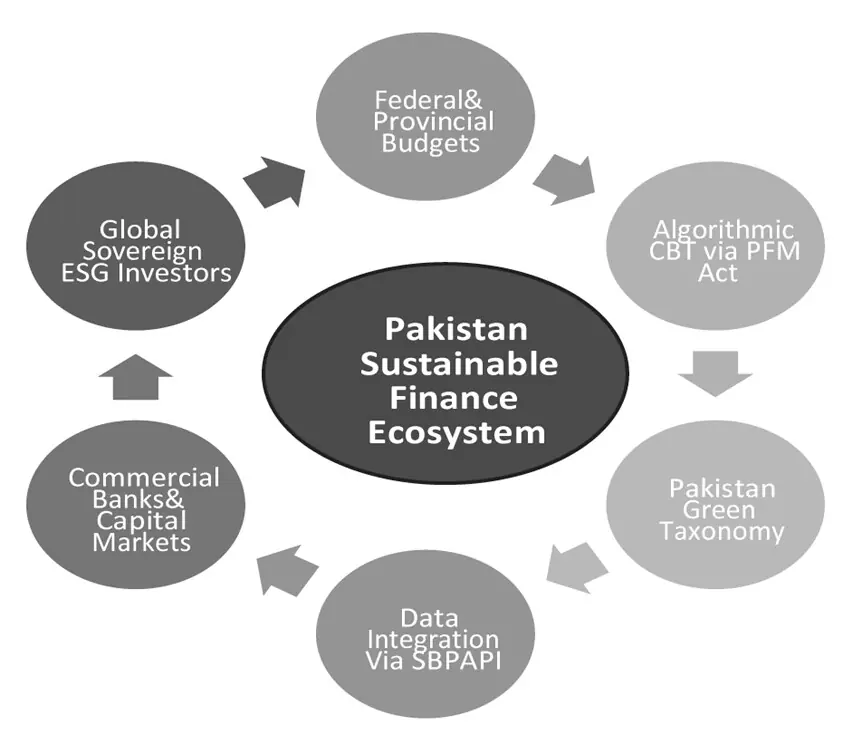
Pakistan is facing an estimated USD 348 billion climate financing gap through 2030; therefore, it’s imperative to carry out fundamental restructuring of fiscal architecture.
By shifting from traditional budgeting to an automated, data-driven Green Finance System and integrating algorithmic Climate Budget Tagging (CBT) directly into the federal Public Financial Management (PFM) framework, Pakistan aims to eliminate discretionary spending leaks. This digital overhaul ensures that every rupee allocated toward climate resilience is tracked, verified, and aligned with national adaptation goals in real time.
Artificial Intelligence (AI) is playing an increasingly important role in climate budgeting by helping government, businesses, and organizations allocate financial resources more effectively to climate action specifically in most of the advanced countries. This is happening because AI analyses large data sets to identify areas most vulnerable to climate change, prioritizing funding where it is needed most.
AI also aid in predictive analytics, resource optimization, monitoring and evaluation, carbon emission analysis and disaster preparedness.
Globally, this structural pivot aligns Pakistan with an expanding international network of tech-driven sustainable finance frameworks such as Artificial Intelligence (AI), Cloud Computing, blockchain, Big Data, and specialized Application Programming Interfaces (APIs)—into the financial ecosystem. Their primary purpose is to automate, track, and verify environmental, social, and governance (ESG) compliance in real time.
Emerging economies like Colombia, Indonesia, and South Africa have already demonstrated that digital taxonomy integration significantly reduces sovereign risk premiums by providing transparent datasets to the global market.
The backbone of this modernization is the newly deployed Pakistan Green Taxonomy (PGT), spearheaded by the State Bank of Pakistan (SBP) and the Ministry of Climate Change (MoCC). Through specialized application programming interfaces (APIs), the taxonomy standardizes environmental compliance across the commercial banking sector. This digital integration automatically screens corporate lending portfolios, categorizes assets into strict “green, transitional, or red” tiers, and provides the transparent data verification required to eliminate corporate greenwashing.
By establishing a digitized public ledger, Pakistan is successfully positioning itself to attract international environmental, social, and governance (ESG) capital.
The Ministry of Finance Sovereign Sustainable Financing Framework (SFF) leverages this verified data to issue sophisticated market instruments. These include oversubscription of conventional and Islamic instruments aim to finance environmentally friendly, social, and sustainable projects aligned with National Adaptation Plan, National Climate Change Policy, Nationally Determined Contributions, and National Climate Finance Strategy of the Government of Pakistan. These digital tracing mechanisms give global institutional investors clear visibility into the exact ecological impact of their capital.
Pakistan is actively leveraging this climate-linked Islamic finance structure to transition from traditional public funding to private institutional capital for ecological infrastructure.
A premier example is the government’s historic PKR 32 billion domestic Sovereign Green Sukuk, which legally ring-fences capital for key adaptation efforts like the Garuk, Naigaj, and Shagarthang projects. This domestic push complements international milestones like WAPDA’s USD 500 million “Indus Bond” on the London Stock Exchange, proving that data-verified digital metrics can effectively unlock global ESG markets even in a challenging macroeconomic climate.
Simultaneously, the federal cabinet’s policy guidelines for carbon markets are paving the way for localized carbon pricing and an automated national emissions registry. Operating under Article 6 of the Paris Agreement, this framework allows local project developers to tokenize and monetize ecosystem services.
Navigating this transition successfully will require deep coordination across federal and provincial lines to legally embed these digital metrics into all future public sector development programmes.
Ultimately, Pakistan’s localized integration of the PFM Act and the PGT serves as a scalable blueprint for other climate-vulnerable Global South nations, proving that institutional transparency can successfully bridge the capital deficit in the international carbon and sovereign debt markets.
Copyright Business Recorder, 2026
The writer is a Group Head IT at Bank Al Habib
ISLAMABAD: The government on Tuesday acknowledged that power sector circular debt flow has increased by Rs61 billion during the fiscal year 2025-26.
The government had given a commitment to the International Monetary Fund (IMF) that circular debt stock would be contained to Rs1.614 trillion as of June 30, 2026.
In an official statement, the Power Division said that Pakistan’s power sector witnessed a significant reduction in circular debt during FY2024-25, falling from Rs2,393 billion in FY2023-24 to Rs1,614 billion, reflecting the impact of ongoing structural reforms.
READ MORE: Power sector circular debt: Govt cuts a sorry figure before IMF
According to official figures, the federal government had allocated Rs893 billion for the power sector in the FY2025-26 budget. However, a cut of Rs98 billion in the allocated amount adversely affected the pace of debt reduction.
Power Division spokesperson said that had the full budgeted allocation been released to the Power Division, circular debt would have further declined to Rs1,577 billion. Instead, due to the shortfall of Rs98 billion, circular debt increased by Rs61 billion during the current fiscal year.
“The financial performance of power distribution companies (DISCOs) has also improved notably. The losses, which stood Rs591 billion in FY2023-24, have declined by Rs193 billion to Rs397 billion in FY2024-25. During the ongoing fiscal year, these losses have been further reduced to Rs 326 billion,” the spokesperson added.
Overall, the Power Division has successfully brought down losses by Rs265 billion over two years—from Rs591 billion to Rs326 billion—demonstrating a sustained improvement in operational efficiency.
Spokesperson Officials maintained that this reduction clearly indicates that reforms in the power sector are yielding tangible results and their positive impact continues to persist. They emphasised that the recent increase in circular debt is primarily due to a one-time budgetary constraint rather than any deterioration in sector performance.
The Power Division reiterated its commitment to continuing reform efforts aimed at ensuring financial sustainability of the energy sector while enhancing reliability for consumers.
Recently, the Power Division presented two options: (i) release of the full Rs97.649 billion as advance subsidies against future tariff differential claims, along with adjustment of TESCO’s TDS arrears of Rs44.198 billion against outstanding subsidy advances; or (ii) release of Rs53.451 billion as advance subsidy and Rs44.198 billion specifically for TESCO arrears.
The ECC considered the summary dated June 16, 2026, titled “Release of Rs152 billion TSG as equity in Power Distribution Companies and re-appropriation of available budget,” and partially approved the proposal, allowing Rs54.451 billion after adjusting Rs97.549 billion from the total Rs152 billion.
Copyright Business Recorder, 2026
EDITORIAL: This is the fifth consecutive budget presented under the premiership of Shehbaz Sharif. One common theme has been austerity. The fiscal noose has been tightened through exorbitantly high taxation and massive reductions in development spending.
The government has budgeted a primary fiscal surplus for three consecutive years, while growth has been compromised in the process. Then, when international oil prices increased sharply, another form of austerity was imposed on the public.
One can sense that this is the need of the hour and that the public at large is sacrificing for the greater good of the country. However, it is reasonable to expect government officials to set the tone. Austerity must begin at home. However, the reality is starkly different; and it hurts.
Reportedly, on the eve of the budget presentation, a special increase of Rs1.8 billion was approved for the top bureaucracy in a special cabinet meeting. The details were unveiled after five weeks, when the budget had already been passed and the increase in take home pay was already in effect. This is the second time in four years that these top government officials have received something extra.
The question is how this behaviour can be justified while persuading others to practise austerity. There is already criticism that provincial governments spend beyond their means and are being forced to share a hefty amount with the federal government this year. The business community is paying for the inefficiencies of the government through high utility prices and heavy taxation. Excessive taxation of the salaried class is hurting the middle class, while the poor are paying more for everything in the form of rising inflation.
Real incomes for the lower strata are falling, while investment and savings are at all-time lows. Private cars and travel are heavily taxed; and the list goes on. Still, the top federal government officials, who are at the helm of affairs and play a key role in making all these decisions, are protecting and preserving their own interests quite efficiently.
They are shielded from inflation and enjoy all the perks while the masses bear the brunt. This is outrageous. The top bureaucracy is all over the place. An official can be running the tax machinery while sitting on the boards of firms he taxes. They obtain perks from different sources—by sitting on the boards of public-sector companies and through deputations to donor-funded projects. Yet, they still ask for more when almost everyone else is suffering.
The reason presented for this move is that provincial employees enjoy huge perks because their governments have the budget, and no one is ready to work in the federal government. Hence, more perks are being offered to them. The logical step would have been to reduce the allowances and other benefits given to provincial government employees. Instead, they have raised their own benefits.
This shows how shallow the government’s reform story is and how little willingness it has to reform itself. The bureaucracy does not like privatisation because it would take away board seats that come with quarterly payments and travel benefits. They do not want to move away from donor money because this would take away the extra perks and income they receive from it. They do not want to rationalise the size of government because it would result in fewer senior positions for civil servants.
The message is that the sacrifices of the masses, who are being dragged into poverty for the benefit of a few, must not be wasted. Someone must act and send the right message. Otherwise, mistrust and disgruntlement will only increase.
Copyright Business Recorder, 2026
ISLAMABAD: Advisor to the Federal Minister for Finance and Revenue Khurram Schehzad outlined the government’s comprehensive reform agenda at the National Tax Seminar held Sunday.
During the four-day event, organised by the Pakistan Tax Bar Association and the Lahore Tax Bar Association, Shehzad highlighted the achievements towards national stability, attributed to prudent financial management and necessary structural reforms.
He emphasised that improvements in fiscal discipline, external financial reserves, and debt management have significantly boosted investor confidence, paving the way for sustainable growth led by the private sector.
READ ALSO: Aurangzeb says digital tax reforms a must to boost revenue
Shehzad described the fiscal year 2026-27 budget as balanced and growth-oriented, focusing on encouraging investment, promoting exports, and providing industrial development and employment opportunities.
The budget aims to provide relief to salaried individuals, enhance business competitiveness, support exporters, advance tariff reforms, stimulate economic documentation, and expand the tax base without further burdening existing taxpayers.
Beyond the budget, the advisor presented details of a broader reform agenda, including tax administration, public debt management, privatisation, reforms in public sector institutions, pension systems, energy sector development, Digital Pakistan initiatives, capital market development, and better access to financial services. These efforts aim to strengthen institutions, improve governance, enhance productivity, and make the economy more competitive and investor-friendly.
A significant highlight of the seminar was the introduction of Pakistan’s new tax operating model. Shehzad presented it as a major shift from the traditional officer-based system to a data-driven, technologically advanced, and faceless tax administration.
The model aims to limit discretionary powers, reduce direct interaction with taxpayers, uphold taxpayers’ rights, and promote transparency, fairness, and efficiency in the tax framework.
During the seminar, technical sessions considered topics such as provincial sales tax, budgetary tax proposals, faceless tax administration, and digitalization.
Dr Nadeem Haque delivered a keynote address on tax policy reforms, and FCA Muhammad Rehan Siddiqui provided insights on the scope of faceless and digitalization of tax administration. Panel discussions also addressed emerging tax issues and reform priorities.
At the conclusion of the seminar, leaders of the Pakistan Tax Bar Association and Lahore Tax Bar Association, including Ehsan Haque Sheikh, Rana Saqib Munir, and Abdul Qadir Memon, appreciated the government’s ongoing cooperation with the tax community. They expressed their commitment to supporting the development of a simple, transparent, technology-driven, and business-friendly tax system.

PESHAWAR: The Khyber Pakhtunkhwa Finance Department has issued comprehensive austerity measures and budget execution guidelines for fiscal year 2026–27 following approval by the provincial cabinet.
The directives are aimed at strengthening fiscal discipline, curbing unnecessary expenditure, improving revenue generation, enhancing internal accountability, and ensuring transparent, responsible and prudent utilization of public resources.
According to an official notification, all administrative departments, autonomous and semi-autonomous bodies, divisional commissioners, deputy commissioners, attached departments, and other relevant institutions have been directed to implement the guidelines in letter and spirit.
Under the austerity measures, the provincial government has prohibited the creation of new posts, purchase of unessential official vehicles, participation in overseas workshops, seminars, and training programmes using provincial funds, holding of official events in five-star hotels, and overseas medical treatment at the expense of the provincial government. However, in matters involving public interest or unavoidable necessity, the chief minister of Khyber Pakhtunkhwa may review each case individually and take an appropriate decision.
The Finance Department has also instructed all principal accounting officers to convene departmental accounts committee meetings regularly to further strengthen internal audit system.
Furthermore, departments have been directed to keep expenditures strictly within the limits of released funds, and under no circumstances shall financial liabilities be created before funds are made available.
The guidelines further state that the provincial revenue review committee will continuously monitor the performance of all revenue generating departments, recommend necessary reforms, establish performance indicators, and propose legal and administrative measures to further strengthen the provincial revenue system.
The Finance Department has clarified that prior approval from the Department, along with strict compliance with the relevant rules, would be mandatory for appointments on daily wages, contingent-paid staff, leave vacancies, and recruitment against vacant posts. No appointments would be permitted against dying cadre positions.
According to the notification, development projects involving the creation of new posts or the procurement of vehicles, machinery, equipment, and furniture shall not be processed without prior approval from the Finance Department.
All departments have been directed to deposit their receipts immediately to provincial account-I, while autonomous and semi-autonomous bodies, as well as medical teaching institutions, must submit quarterly reports on their reserve funds and procurement plans to the Finance Department.
The department has also emphasized that maintenance and repair projects must comply with prescribed rules and regulations, obtain approval from the relevant forums, and secure administrative sanction before execution.
All works departments have been instructed to maintain a complete digital record of maintenance projects on the designated e-portal and submit quarterly internal audit reports to the Finance Department.
The notification further states that funds allocated for advertisements must be utilized solely for the approved purpose. The information department has been tasked with maintaining a comprehensive record of all government advertisements and publications and conduct reconciliation at least twice a year.
Additionally, all autonomous and semi-autonomous bodies, medical teaching institutions, and other public sector organizations have been directed to ensure full implementation of these austerity measures with the approval of their respective governing forums.
The Finance Department has also instructed all government institutions to maintain strict oversight over the use of official vehicles, petroleum, oil and lubricants (POL), and vehicle maintenance expenditures, avoid unnecessary official travel, maximize use of online platforms for official meetings, and minimize non-essential expenses, including hospitality during official meetings.
Copyright Business Recorder, 2026
In the case of Punjab, current expenditure as per budgetary estimate for FY26 stood at Rs2.7 trillion, while revised estimates indicate an increase by Rs 248.3 billion to stand at around Rs3 trillion. At the same time, budgetary estimates for development expenditure for FY26 stood at Rs.1.2 trillion, while development spending as per revised estimate increased by Rs 100 billion to stand at Rs 1.3 trillion.
Having said that, not only is current expenditure much more than development expenditure, the gap has also increased from what was budgeted, and what is estimated to be actually spent. Here, budgetary estimates for current expenditure were 2.18 times more than the budgetary estimates for development expenditure for FY26, while in terms of revised estimates, current expenditure was 2.21 times more than development expenditure.
It needs to be noted that budgetary estimates for current- and development expenditures have not been provided for FY27, which is strange in view of the fact that Sindh, KPK, and Balochistan provide these estimates.
With regard to Sindh, budgetary estimates for FY27 for current expenditure were more than the budgetary estimates for FY26 by Rs 418 billion, and more than revised estimates by Rs 352.7 billion to stand at Rs2.6 trillion; whereas revised estimates for current expenditure for FY26 were of more than budgetary estimates by Rs 65.4 billion to stand at Rs2.2 trillion.
On the other hand, budgetary estimate for development expenditure for FY27 stood at Rs720.4 billion, which is less than the budgetary estimates for FY26 by Rs.298 billion, and less than revised estimates by Rs 223.6 billion.
Also read: Reflections on provincial budgets FY27—IV
Here, budgetary estimates for current expenditure for FY26 are 2.1 times more than the budgetary estimates for development expenditure, and the gap increases when seen in terms of revised estimates to 2.3 times, while in terms of budgetary estimates for FY27 the gap between current- and development expenditures increases all the more, and quite considerably, whereby current expenditure is 3.6 times more than the development expenditure.
It is strange that the ‘annual budget statement 2026-27’ for KPK does not include calculation on budget balance, and also not on primary balance. This author’s own calculations indicate that budgetary estimates for budgetary balance for FY27 stood at negative Rs48 billion, while budgetary surplus was targeted, given budgetary estimates for FY26 stood at negative Rs157 billion, revised estimates expected a budget deficit of Rs154.5 billion.
Here, budgetary estimates for provincial consolidated fund – composed of ‘general revenue receipts’ (which in turn includes ‘tax receipts’ and ‘non-tax receipts’), ‘development receipts,’ and ‘capital receipts (Account-I)’ – for FY26 stood at Rs 2.119 trillion, where revised estimates are expected to be less by Rs 232 billion, while budgetary estimates for FY27 are being targeted at Rs.2.122 trillion, which are more than the revised estimates by Rs 235 billion.
Also read: Reflections on provincial budgets FY27—III
Moreover, budgetary estimates for total expenditure for FY27 stood at Rs 2.170 trillion, which is more than the budgetary estimate for FY26 by Rs208 billion, and revised estimates for FY26 by Rs 128.5 billion.
Moreover, as per this author’s calculations, budgetary estimates for primary surplus for FY26 stood at Rs 207 billion. Having said that, the revised estimates for FY26 indicated a primary deficit of Rs 154.5 billion, which is being targeted to be narrowed to Rs.3 billion, given budgetary estimates for FY27. Here, budgetary estimates for debt servicing for FY26 stood at Rs 50 billion, while the revised estimates stood at Rs.40 billion, and budgetary estimates for FY27 stood at Rs 45 billion.
Here, a relative lack of increase in already low level of direct taxes, when compared with indirect taxes – that stood at Rs 811.4 billion as per budgetary estimates for FY27 – which are enhanced by Rs 108 billion over the revised estimates for FY26 to stand at Rs 695.4 billion, means that development expenditure is likely to receive the burden of drastically narrowing primary deficit, given current expenditures, in fact, have been budgeted for FY27 to increase by Rs.208.4 billion over the revised estimates for FY26 to stand at Rs.1.6 trillion, while budgetary estimates for FY27 for development expenditure have been slashed by Rs 84.2 billion over the revised estimate for FY26 – and over the budgetary estimate for FY26 by Rs 22.7 billion –to stand at Rs 524.3 billion.
Also read: Reflections on provincial budgets FY27—II
Here, it needs to be indicated that fiscal consolidation – or fiscal austerity, one way is to pursue primary surplus, for instance – not only negatively impacts economic growth, inclusivity, and resilience, but also has political economic implications, as a ‘Vienna Institute for International Economic Studies’ May 2026 published working paper ‘Fiscal consolidation and political instability’ by Philipp Heimberger, and Anna Matzner indicated that it accentuated the situation of political instability.
Taking the case study for advanced countries, where, according to the paper, ‘As fiscal deficits and public debt ratios remain high across many advanced economies compared with their pre-pandemic and pre-energy-crisis levels, governments are under pressure to undertake fiscal consolidation to strengthen their public finances… Studying the political consequences of fiscal tightening is essential for understanding the conditions under which efforts to restore public finances may destabilise governments and societies, thereby potentially hindering economic development and undermining effective policy making’ it needs to be indicated that the impact of fiscal consolidation may likely be more acute in the case of developing countries, with relatively much higher development, welfare, and resilience needs, especially which are also highly vulnerable to climate change, and commodity shocks, like Pakistan, where also a significant proportion of population is below the poverty line.
Also read: Reflections on provincial budgets FY27—I
With regard to the results of their study, the working paper taking ‘…a sample of 17 countries of the Organisation for Economic Co-operation and Development (OECD) over the 1980-2020 period’ pointed out, ‘We estimate the effects of fiscal consolidation shocks across these outlined dimensions of political instability– government approval, major government crises, anti-government demonstrations, and general strikes– over the short to medium term. …we find that fiscal consolidation affects political-instability outcomes mostly in the short run.
Following a fiscal consolidation shock, governments face declining approval and increased probability of protest activity and government crisis. While the state of the economy and the composition of consolidation shape approval dynamics, acute forms of political instability appear to respond mainly to the overall contractionary fiscal stance.’
(Concluded)
Copyright Business Recorder, 2026
The writer holds a PhD in Economics degree from the University of Barcelona, and has previously worked at the International Monetary Fund. His contact on ‘X’ (formerly ‘Twitter’) is @omerjaved7
EDITORIAL: More than a decade-and-a-half after the 18th Constitutional Amendment fundamentally altered Pakistan’s federal structure, the country still behaves as though development planning remains primarily a federal responsibility. That contradiction has become increasingly difficult to justify, which is why economist Dr Kaiser Bengali’s proposal, made during a policy roundtable on Pakistan’s development budget and post-devolution challenges, that provinces establish their own planning commissions deserves serious consideration.
It addresses one of the most overlooked weaknesses in Pakistan’s post-devolution governance framework.
The logic behind the 18th Amendment was never confined to transferring administrative functions from Islamabad to the provinces. Its broader purpose was to bring decision-making closer to the people by allowing policies to reflect local realities rather than central assumptions.
Health, education, population welfare and numerous other subjects were devolved precisely because provincial governments were expected to exercise greater ownership over development priorities. That objective remains only partially fulfilled if planning itself continues to depend disproportionately upon federal institutions.
Planning is not simply about preparing annual development programmes or allocating budgets. It involves identifying long-term priorities, conducting feasibility studies, evaluating economic returns, coordinating sectoral strategies and measuring outcomes.
Provinces cannot fully discharge their constitutional responsibilities if they lack institutions capable of performing these functions independently and professionally.
The need has become even more apparent as Pakistan struggles with increasingly constrained fiscal space. Debt servicing continues to consume a substantial portion of public resources, forcing governments at every level to make difficult spending choices.
Under such circumstances, every rupee allocated to development must produce measurable results. That requires stronger planning, better project selection and far greater accountability than has often characterised public development spending.
The discussion surrounding Pakistan’s development model has also evolved in important ways. Increasingly, economists argue that education, healthcare and nutrition should no longer be viewed merely as social expenditures but as productive investments in human capital. That shift in thinking demands institutions capable of integrating economic planning with human development objectives rather than treating them as separate policy spheres.
Provincial planning commissions would help move the country in precisely that direction. Each province faces distinct economic realities, demographic pressures and infrastructure needs.
Balochistan’s priorities differ markedly from those of Punjab. Sindh confronts urban challenges unlike those in Khyber Pakhtunkhwa. A planning framework designed around provincial circumstances is therefore more likely to produce efficient resource allocation than one relying excessively upon centralised assumptions.
This naturally complements the broader principle of devolution. Power should not simply flow from the federation to the provinces and stop there. Effective governance ultimately depends upon taking decision-making as close as possible to the communities affected by those decisions.
Provincial institutions, in turn, should increasingly empower local governments capable of responding to district and municipal priorities. Devolution is a continuing process rather than a single constitutional event.
Pakistan has spent years debating whether its development gap stems from inadequate resources, inefficient spending or weak institutions. The answer almost certainly involves elements of all three.
Better planning cannot solve every problem, but poor planning almost guarantees that limited public resources will continue producing disappointing results.
The 18th Amendment sought to reshape Pakistan’s governance by bringing authority closer to those best placed to exercise it. That constitutional vision remains incomplete if provinces continue depending on institutions designed for a more centralised state.
Establishing provincial planning commissions would not merely fulfil the spirit of devolution; it would also strengthen the country’s capacity to plan, prioritise and deliver development where it matters most.
Copyright Business Recorder, 2026
Pakistan’s federal development budget does not suffer from a shortage of money. It suffers from a crisis of purpose.
Ahead of the FY27 budget, the Planning Commission objected to diverting Rs126 billion from the federal Public Sector Development Programme (PSDP) to finance security and water-sector commitments, but that debate overlooked a much larger shift. Roughly Rs920 billion was cut from the development budgets of Punjab (Rs706 billion), Sindh (Rs110 billion) and KP (Rs109 billion) - money that would otherwise have financed provincial schools, hospitals, and local infrastructure.
Given Pakistan’s fiscal constraints, cuts were inevitable, especially for water resource development after the unilateral suspension of the Indus Waters Treaty by India. The more important question is whether they should have come from the provinces or Islamabad. The answer becomes clearer once one looks at how the federal PSDP actually performs.
In FY26, the federal PSDP was initially approved at Rs1 trillion but later reduced to Rs800 billion under austerity measures. Even then, implementation lagged: only 52% of the revised allocation was utilised during the first ten months of the fiscal year, compared to 56% over the same period the previous year. This recurring pattern of approving more projects than the government can execute and rolling unfinished schemes into successive budgets has created a throw-forward liability of around Rs11 trillion, locking future budgets into old commitments instead of new priorities.
The real question, however, is whether this large federal budget should even exist in its current form.
The 18th Amendment fundamentally reshaped Pakistan’s Federation in 2010, devolving health, education, social welfare and several other sectors to the provinces. Seventeen ministries were formally devolved, with the expectation that corresponding functions, staffing and expenditure would follow.
Sixteen years later, that transition remains incomplete. Federal ministries continue to operate in constitutionally provincial sectors, creating parallel bureaucracies, overlapping mandates and competing development budgets alongside provincial departments. A World Bank assessment revealed that rationalising federal ministries and autonomous bodies in devolved sectors could save approximately Rs398 billion annually, equivalent to nearly 60% of the FY22 GDP (gross domestic product).
These are resources consumed by parallel institutions instead of service delivery. The International Monetary Fund (IMF) programme recognises this problem. The National Fiscal Pact under the Extended Fund Facility explicitly links federal right-sizing with completing the unfinished agenda of the 18th Amendment. Still, budget decisions continue in the opposite direction.
None of this suggests that Islamabad should withdraw from development altogether. Federal leadership remains indispensable for national highways, railways, inter-provincial energy transmission, water infrastructure and projects with nationwide spillovers. The Rs365 billion allocated to transport and communications in the FY27 PSDP is therefore defensible. The problem lies in social sectors where constitutional responsibility, financing and implementation already reside with the provinces.
Meanwhile, the federal government’s comparative advantage lies not in running provincial development projects but in managing the national economy. Macroeconomic stability, fiscal reform, debt management, investment policy, and external financing are responsibilities only Islamabad can perform. Yet these are precisely the areas where Pakistan continues to struggle.
The latest Economic Survey reflects the consequences of this imbalance. GDP growth remains at 3.7%, below the target of 4.2%; unemployment has risen to 7.1% from 6.3% a year earlier; and nearly three in ten Pakistanis continue to live below the poverty line.
The real issue, therefore, is not whether Pakistan spends enough on development. It is whether each tier of government is spending on the right things.
For sixteen years, Pakistan has tried to operate under a devolved Constitution with a pre-devolution bureaucracy. The result is predictable: provinces finance and deliver constitutionally assigned services with shrinking budgets, while Islamabad maintains overlapping institutions, underutilises its development budget, and competes for scarce fiscal resources.
Pakistan’s fiscal crisis stems not from a shortage of money, but from a lack of institutional discipline. Until the federal government aligns its spending with its constitutional mandate, no amount of reshuffling the PSDP will make development spending more effective. The question is not how much Islamabad spends, but whether it is spending where it still has a mandate to act.
The writer is a Consultant at a Private Firm. The views expressed in this article are not necessarily those of the newspaper
The composition of LSM growth continues to evolve. Automobiles remain the largest contributor on a cumulative basis, with output still up nearly 59 percent year-on-year. While the pace has moderated in recent months, growth remains firmly in high double digits.
The more meaningful challenge now is the base effect. With FY26 having delivered exceptionally strong numbers, sustaining similar growth rates into FY27 will become increasingly difficult.
Food has emerged as the second-largest pillar of recovery, though the story is almost entirely one of sugar. Production has climbed to a record 7.7 million tons, up 32 percent from the previous year, making it the single biggest driver within the food basket. Elsewhere, edible oil, ghee and tea have remained largely flat, underscoring how concentrated the sector’s gains have been.
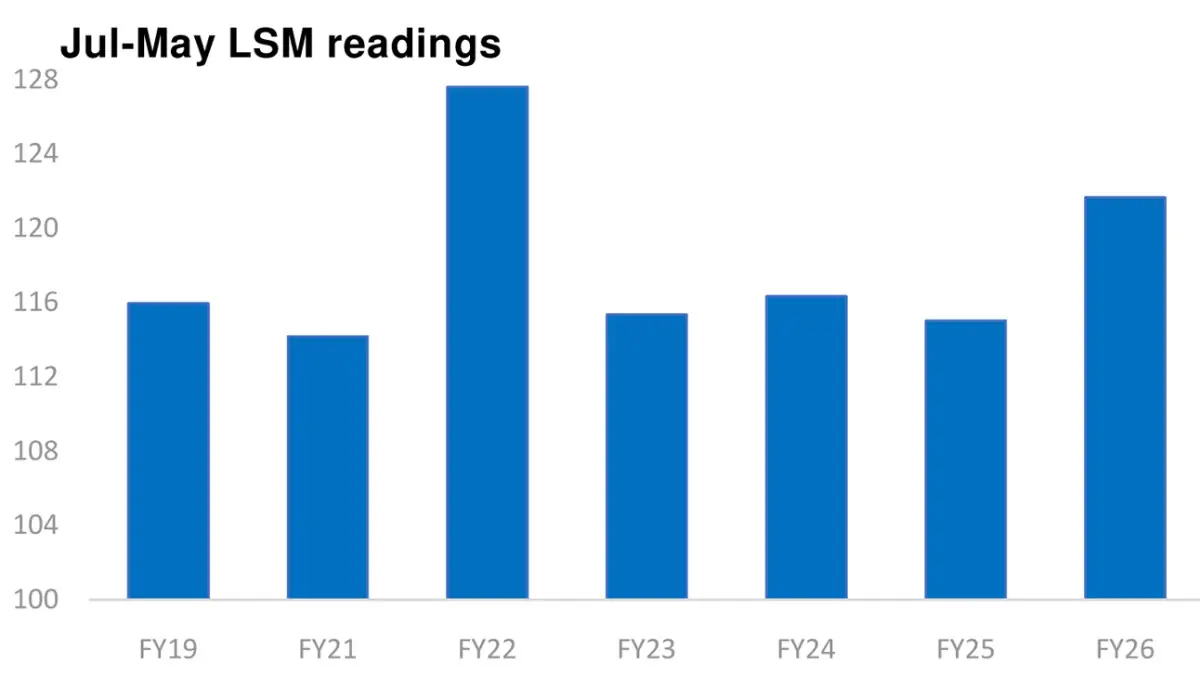
Wearing apparel, tracked through ready-made garment export quantities, completes the top three contributors. After posting double-digit growth through much of the fiscal year, momentum has eased steadily. Cumulative growth has moderated to around 7 percent, and June export data suggests FY26 is likely to close around 5.5 percent. The sector will remain a meaningful contributor, but its outsized role in driving LSM is gradually diminishing.
Petroleum has quietly re-emerged as another important source of support. Higher domestic demand, coupled with improved local crude availability, has helped refine output recover sharply after a subdued FY25.
The drag from lagging sectors, meanwhile, remains surprisingly limited. Pharmaceuticals and chemicals continue to underperform among the larger industries, while textiles, despite carrying the highest weight in the LSM basket, remain marginally in negative territory.
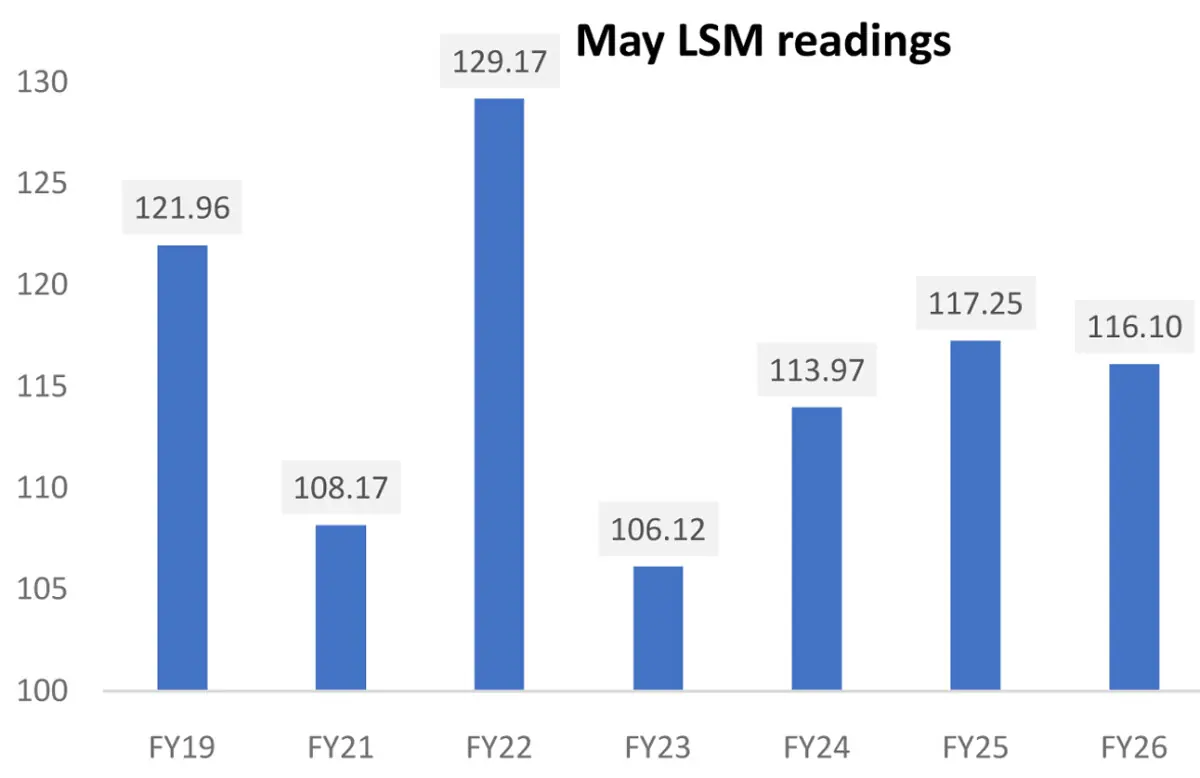
Importantly, none of the contracting sectors has recorded deep declines, allowing the overall manufacturing recovery to retain its broad-based character.
Looking ahead, the macro backdrop is arguably the most supportive it has been in years. Lower interest rates, coupled with substantially lower industrial electricity tariffs, should continue to improve manufacturing competitiveness and encourage capacity expansion.
The easing in financing and energy costs is likely to provide the next leg of support to LSM, particularly for sectors that have yet to participate meaningfully in the recovery.
Even so, expectations should remain grounded. FY22 continues to represent an exceptionally high benchmark, and the current recovery is better viewed as a steady reclamation of lost ground rather than the beginning of a new industrial boom.
Moreover, in the case of Balochistan the direction of taxes also needs to be shifted away from indirect taxes over the medium-term, given the regressive, and price distorting nature of regressive taxation.
Currently, the direction is undesirably, showing an opposite trend, whereby not only is direct taxation much less than indirect taxation, the gap is also widening. Hence, against the budgetary estimate for FY26 for direct taxes at Rs 2.4 billion, revised estimate stood at only around Rs1.1 billion with budgetary estimate for the ongoing fiscal year for direct taxes was slightly increased to Rs.2.8 billion.
At the same time, budgetary estimates for indirect taxes for FY26 stood at Rs44.5 billion (which is 18.1 times more than budgetary estimates of direct taxes), while revised estimates are expected at Rs.37.5 billion (which is 35.8 times more than revised estimate of direct taxes), where budgetary estimate for FY27 for indirect taxes stood at Rs.51.5 billion (which is 18.2 times more than the budgetary estimate of direct taxes).
READ MORE: Reflections on provincial budgets FY27—III
Just like at the level of the Centre, at the stage of provinces, on one hand, the provincial budgets are indirect tax heavy, which are regressive in nature and, on the other, there has been a serious lack of ambitious direct tax expansion policies, especially given the rising challenge of meeting elevated level of resilience-, and overall greater welfare spending related needs that have, in turn, risen due to fast-unfolding climate change crisis, high inflationary pressures in the wake of recession-causing Covid-19 pandemic, the Ukraine War, and ongoing high level of commodity shock in the aftermath of the Middle East (ME) conflict, and practice of over-board austerity policies over the medium-terms, all likely enhancing inequality and deepening poverty.
Hence, in the case of Punjab, the total budgetary estimates for expenditure for FY27 at Rs 3.3 trillion, where current (non-development) expenditure stood at Rs 3 trillion, and around one-third of that is development expenditure, with its budgetary estimates at Rs.1.3 trillion.
READ MORE: Reflections on provincial budgets FY27—II
Moreover, budgetary estimates for subsidies for FY27 stood at Rs 67.2 billion, which is in fact less than the budgetary estimates for FY26, which stood at Rs 77.3 billion; where the revised estimates for subsidies were much less at Rs 41.8 billion.
At the same time, interest payments are more than subsidies for the last fiscal year, whereby budgetary estimates in this regard stood at Rs.70.1 billion, not to mention the fact that revised estimates of interest payments for the last fiscal year at Rs. 64.1 billion were much higher than the revised estimates of subsidies for FY26! This is strange, given the onslaught of the ME conflict, much elevated levels of prices of oil, and fertilizer calling for greater provision of subsidy for both consumption in general for the lower income groups, and also for farmers.
It is strange that, just like the federal government, the government of Punjab has practiced fiscal austerity even when subsidy needs are high. These high needs are due to both last year’s floods, and an ME-induced severe commodity shock.
The province is pursuing a primary surplus which, as per budgetary estimates for FY27, stood at Rs 1.63 trillion.
It needs to be indicated that as per revised estimates for FY26, primary surplus is expected to reach Rs511.3 billion. Moreover, even at a stage of depressed economic growth in the country and high subsidy needs, given the commodity shock in the wake of the ME conflict, and elevated level of poverty overall, the province has been running fiscal surplus!
At least, balanced budget needs to be pursued, with some reasonable level of allocations kept for contingency/shocks-related needs.
READ MORE: Reflections on provincial budgets FY27—I
Hence, according to the revised estimates for FY26, the budget balance stood at a positive Rs 447.2 billion, while the budgeted balance for FY27 reached a higher positive level of Rs 1.56 trillion.
Better domestic resource mobilization efforts at the federal and provincial levels, and greater rationalization of fiscal federalism, will overall reduce the need for provincial surpluses to cover the overall fiscal deficit at the federal level. Furthermore, shifting the tax composition away from regressive taxation will improve equity. Additionally, planning expenditures away from non-development spending will support greater productive and allocative efficiencies. This will have an overall positive impact on growth and, in turn, on revenue levels.
Here, it needs to be indicated that Sindh, on the other hand, has run budget deficit in both FY26 – where revised estimates indicated budget balance at negative Rs.455.1 billion, which was higher than budgetary estimates for the last fiscal year at Rs.336.1 billion – and FY27, where, as per budgetary estimate, budget balance stood at negative Rs.185.9 billion.
Although calculation for primary balance has not apparently provided, the author’s own calculations point out that unlike Punjab, the province has run primary deficit, whereby against the budgetary estimates for the last fiscal year at Rs.276.4 billion, revised estimates for primary deficit were much higher at Rs 454.9 billion, while budgetary estimate for FY27 stood at Rs 187.9 billion.
In the case of Balochistan, while the provincial government targeted reaching budget surplus for FY27, where budgetary estimates in this regard stood at Rs45.6 billion against the same budget surplus targeting for FY26 at Rs.51.8 billion, the revised estimates showed a budget deficit of Rs.95.8 billion.
Here, to the credit of the province, development expenditure saw an increase by around Rs 16 billion from the budgetary estimates at Rs.336.6 billion, while current expenditure saw a decrease by Rs.9.9 billion from the budgetary estimates at Rs.639.9 billion.
Having said that, what is unfortunate is that current expenditure has been budgeted for FY27 with a significant increase of Rs 167.9 billion over the revised estimates at Rs.630 billion for FY26. Additionally, it is sad to see that development expenditure budgetary estimates for FY27 have decreased by Rs 61.1 billion over the revised estimate at Rs 352.6 billion.
At the same time, as per the author’s calculations, the province ran a primary deficit of Rs 82.5 billion for FY26 based on the revised estimates, contrasting with the budgetary estimates that projected a primary surplus target of Rs 51.8 billion.
Moreover, just like FY26, the provincial government is targeting a primary surplus for FY27 of Rs.66.1 billion, which is concerning mainly because of the fact that Without serious efforts to raise taxes or cut non-essential costs, hitting this surplus will likely require the government to cut development spending.
Moreover, it is a shame that current (non-development) expenditure is around twice the amount of the development expenditure, where more specifically, budgetary estimates for current expenditure were 1.9 times the budgetary estimates for development expenditure for FY26, revised estimates for the last fiscal year for current expenditure was 1.8 times the revised estimates of the development expenditure, while this gap widens considerably over the last fiscal year, whereby, budgetary estimates for current expenditure are 2.7 times the budgetary estimates for development expenditure for FY27!
(To be continued on Sunday)
Copyright Business Recorder, 2026
The writer holds a PhD in Economics degree from the University of Barcelona, and has previously worked at the International Monetary Fund. His contact on ‘X’ (formerly ‘Twitter’) is @omerjaved7
After years of firefighting, Pakistan’s economic managers finally have something they have not had in a long time: stability.
Inflation has fallen sharply from the crisis-era highs. Foreign exchange reserves have improved. The current account is no longer under immediate pressure. The exchange rate has largely stabilized. For the first time in years, policymakers are discussing growth targets instead of emergency financing needs.
Viewed from that perspective, Budget 2026-27 represents a genuine achievement.
But it also raises an uncomfortable question. If the crisis has largely been contained, where will the next phase of growth come from? This is perhaps the most important question left unanswered by the budget.
The government deserves credit for restoring macroeconomic order. Fiscal consolidation is visible throughout the budget. Revenue collection targets have been raised, expenditure growth remains restrained and policymakers continue to pursue primary surpluses under the IMF programme. These are not small accomplishments for an economy that only a few years ago was confronting severe external financing stress and dwindling reserves.
Yet stability should never be confused with prosperity. A close read between the budget lines reveals that Pakistan remains trapped by the same structural constraints that have limited growth for decades.
Nothing illustrates this challenge more clearly than debt servicing.
Interest payments are projected at more than Rs8 trillion in FY27. That is not merely a large number. It is larger than the combined federal spending on development, health, education and several other growth-supporting functions. More than forty percent of federal expenditure will be consumed before the state builds a road, upgrades a school, invests in technology or expands productive infrastructure.
This leaves little room to finance the future.
The government has allocated Rs1 trillion for the Public Sector Development Programme. While sizeable on paper, it appears modest when viewed against the scale of investment Pakistan requires in energy infrastructure, water management, climate resilience, education, logistics and technology.
The dilemma is obvious. Fiscal stability has been achieved but the fiscal space required to accelerate growth remains limited.
Some encouraging signs are certainly emerging.
Large-scale manufacturing has returned to growth. Automobile production has surged. Cement, petroleum products and garments have posted stronger performance. Lower inflation and improved business confidence appear to be translating into higher economic activity after a prolonged slowdown.
But these improvements should be interpreted cautiously.
Much of Pakistan’s industrial recovery remains concentrated in a handful of sectors. Pharmaceuticals, chemicals, fertilisers and steel continue to face challenges. More importantly, much of manufacturing still depends heavily on imported raw materials and machinery. As economic activity strengthens, imports inevitably rise.
The budget’s own projections reflect this reality.
While GDP growth is targeted at around four percent, the current account deficit is expected to widen significantly during the coming fiscal year. Pakistan has experienced this pattern repeatedly. Growth picks up, imports accelerate, external pressures emerge and another round of stabilization follows.
That cycle has become one of the defining characteristics of Pakistan’s economic history.
Breaking it requires something the budget only partially addresses: a credible growth strategy.
There are positive signals. Support for IT exports continues. Tariff rationalization has begun. Measures aimed at reducing the cost of doing business suggest policymakers understand the importance of competitiveness. These are steps in the right direction.
But they do not yet amount to a transformation agenda.
Pakistan still lacks a clear roadmap for export diversification. Productivity growth remains weak. Industrial policy remains fragmented. Foreign direct investment remains concentrated in a few sectors rather than flowing into new areas of technological upgrading and value addition.
Most importantly, there is still no convincing answer to how Pakistan intends to grow at a pace sufficient to create jobs for its rapidly expanding workforce.
That is why Budget 2026-27 should be viewed less as a growth budget and more as a stabilization budget.
Its success lies in restoring confidence after years of economic turbulence. It has bought Pakistan time. The challenge now is deciding how that time will be used.
Stability was the destination during the crisis years. Today it is merely the starting point.
The next chapter will depend not on how effectively Pakistan manages its finances, but on whether it can finally build an economy that grows without repeatedly running into the same external and fiscal constraints that have held it back for decades.
Copyright Business Recorder, 2026
The writer is a research associate at the Pakistan Textile Council.
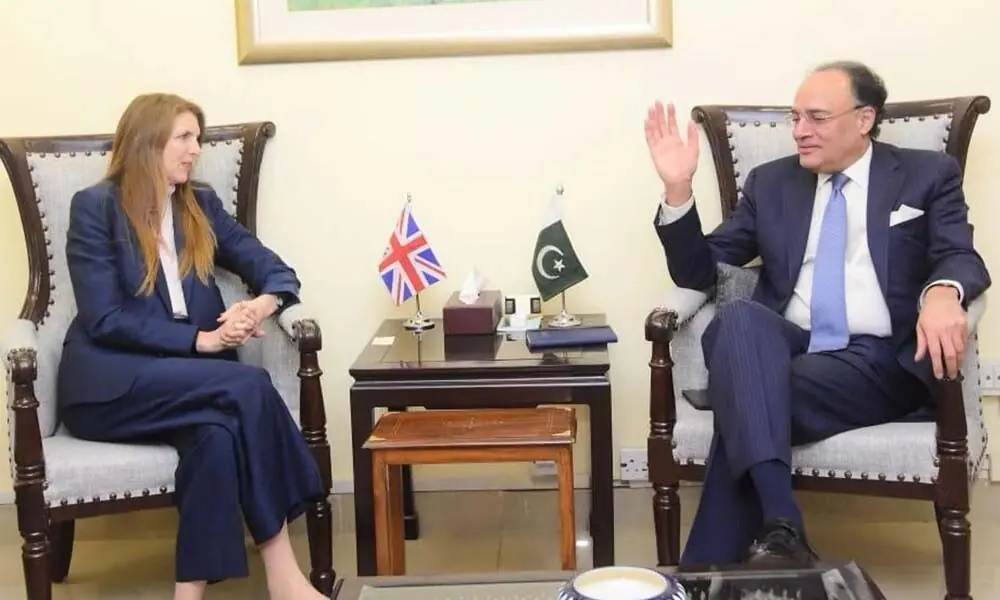
ISLAMABAD: Federal Minister for Finance and Revenue, Senator Muhammad Aurangzeb, held a meeting with the British High Commissioner to Pakistan, Ms. Jane Marriott CMG OBE, who called on him at the Finance Division today. The meeting focused on Pakistan’s macroeconomic outlook, the Government’s ongoing reform agenda, and avenues for further strengthening Pakistan-United Kingdom economic and development cooperation.
The finance minister appreciated the United Kingdom’s continued support for Pakistan’s economic reforms and acknowledged the longstanding partnership between the two countries across a range of sectors, including economic governance, fiscal reforms, climate resilience, public finance, health, and social development.
The meeting reviewed Pakistan’s recent macroeconomic progress, including the successful passage of the Federal Budget 2026-27, ongoing fiscal consolidation efforts, and measures aimed at promoting sustainable economic growth while maintaining macroeconomic stability.
READ MORE: Aurangzeb discusses economic cooperation, reform agenda with British envoy
Senator Muhammad Aurangzeb highlighted the Government’s commitment to implementing structural reforms, broadening the tax base, improving public financial management, and strengthening investor confidence.
The two sides also exchanged views on Pakistan’s population management and public health initiatives. The finance minister appreciated the United Kingdom’s continued technical support in these areas, particularly its collaboration on population stabilisation interventions. He emphasised the importance of institutionalising population planning through a coordinated national framework with measurable outcomes, while drawing on international best practices to promote women’s education, workforce participation, and greater public awareness. He underscored that sustained collaboration in these areas would be critical to improving long-term human development outcomes and supporting Pakistan’s sustainable economic growth.
The finance minister highlighted the government’s strategy to deepen access to international capital markets and diversify financing sources. He noted ongoing work on sovereign financing initiatives, including international bond issuances, Sukuk, Panda Bonds, and innovative financing instruments such as the tokenisation of sovereign debt, as part of the Government’s Medium-Term Debt Management Strategy. He emphasised that continued engagement with international investors and financial institutions would remain central to Pakistan’s efforts to strengthen its external financing profile.
The meeting also reviewed ongoing reforms within the Federal Board of Revenue. The finance minister highlighted the government’s efforts to modernise tax administration through technology-driven, faceless, AI-enabled, and risk-based systems aimed at improving transparency, reducing discretionary intervention, facilitating compliant taxpayers, and enhancing revenue mobilisation.
Discussions further covered progress on the Government’s broader structural reform agenda, including energy sector reforms, privatisation of selected state-owned enterprises, and measures to improve governance, efficiency, and service delivery across public institutions. Senator Muhammad Aurangzeb reaffirmed that these reforms are essential to strengthening Pakistan’s long-term economic resilience and improving the ease of doing business.
The High Commissioner welcomed Pakistan’s progress in restoring macroeconomic stability and reiterated the United Kingdom’s continued support for Pakistan’s reform agenda. Both sides also discussed strengthening cooperation in trade, investment, financial markets, and climate resilience, while underscoring the importance of maintaining close engagement between the two countries’ public and private sectors.
The finance minister reaffirmed the Government’s commitment to further strengthening Pakistan-United Kingdom economic cooperation through sustained reforms, enhanced investment facilitation, and continued engagement with international development partners and investors. Both sides agreed to maintain close coordination to advance areas of mutual interest and further deepen the longstanding bilateral partnership.
Copyright Business Recorder, 2026
ISLAMABAD: The Federal Board of Revenue (FBR) has issued a strict procedure for heads of field formations (Inland Revenue/Customs) seeking release of funds for recurrent budget and expenditures for 2026-27.
According to the FBR’s Admin Wing instructions to the field formations on Monday, the FBR has referred to Budget Orders (BO) signed by the chief finance and accounts officer (CFAO) and deputy secretary (Expenditure), Finance Division for the Financial Year 2026-27 in respect of recurrent budget of the field offices of FBR.
The FBR also quoted strategy for Release of Funds for Financial Year 2026-27 issued by the Finance Division OM dated July 1, 2026 and Austerity measures OM dated 2nd July, 2025 for strict compliance.
READ ALSO: Senate, NA finance committees raise concerns over ‘ambitious’ revenue target for FY27
All the heads of the departments/field offices of FBR are personally responsible for monitoring, execution and achievements of the objectives of the approved budget along with strict adherence to the prescribed statutory framework including provisions of Public Finance Management Act-2019, General Financial Rules, Financial Regulations, Treasury rules, directives of all the regulatory bodies and FBR headquarters, the FBR said.
The FBR’s directive stated that an analysis of SAP/Budget Execution report of FY 2025-26 revealed that a few offices incurred inadmissible expenditure resulting in over-draft (O.D) against budgetary allocation under various heads of accounts.
The concerned plead of the department/office, controlling officer and DDO shall be held personally responsible for any violation of the legal framework and may be proceeded under E&D Rules.
Consequently, no request of those office(s) for re-appropriation or additional funds will be considered till the adjustment/recovery of such overpayments.
For monitoring and reconciliation of expenditure, the FBR directed that an effective system for monitoring of monthly expenditure along with the budget appropriations may be established.
The focus of reconciliation should not only be on the recording of expenditure but the original budget, re-appropriations approved by the board, surrenders, supplementary grants, expenditure for the month/up to the month and balance of available budget must also be reconciled before reporting tothe Board, the FBR added.
Copyright Business Recorder, 2026
LAHORE: The Punjab University Syndicate on Thursday recommended a Rs20.87 billion budget for the financial year 2026-27, including Rs10 billion for student subsidies and scholarships, during its 1761st meeting chaired by Vice Chancellor Prof Dr Muhammad Ali.
The proposed budget has been forwarded to the university Senate for final approval. According to university officials, the budget will be financed through government grants, the university’s own resources and other funding sources to expand access to higher education.
On the directions of the vice chancellor, allocations for scholarships have been increased. The university has earmarked Rs341 million from its own resources for scholarships, while students will also continue to benefit from the Honhaar Programme, Higher Education Commission (HEC) schemes and the Punjab Educational Endowment Fund (PEEF).
The Syndicate was informed that financial reforms had reduced the budget deficit to Rs1.6 billion from Rs2.2 billion in the previous fiscal year. Members welcomed the improvement and also approved Rs284 million in research grants to strengthen the university’s research culture and improve its academic rankings.
Speaking on the occasion, Vice Chancellor Prof Dr Muhammad Ali expressed confidence that the remaining budget deficit would be eliminated in the coming years through increased revenue generation rather than borrowing. He added that the university expected to receive Rs786 million from the Punjab government.
Copyright Business Recorder, 2026
Moreover, a statement in Punjab’s ‘white paper’ that ‘Strategic investments continue to be prioritised in sectors critical to economic growth and social progress, including human development, infrastructure, climate resilience, urban services, and social protection.
The focus has shifted from the scale of expenditure alone to the quality, effectiveness, and sustainability of outcomes’ does not indicate specific orientation of governance, and incentive structures, including allocating adequate level of finances, and ways in which bank will be engaged in terms of fostering partnerships with them in ways that incentivize borrowing to agriculture sector, and industry – for instance, especially for small-and-medium enterprise level – in particular, overall, in high priority sectors in terms of economic, environmental, and epidemiological aspects climate change, energy sustainability, education, and health, to meet concrete targets in these directions.
READ MORE: Reflections on provincial budgets FY27—I
Overall, the ‘white papers’ of provinces lack clarity on whether provincial governments see a limited role of government, that is, does it prescribe to the neoliberal model? Moreover, they do not reflect whether the provincial governments have a learning curve with regard to the misgivings of the over-board austerity policies that have been pursued at the federal, and provincial levels, and whether the provincial governments understand that both neoliberal, and austerity policies have not lent any sustainability to macroeconomic stability and growth, and not helped enhance inclusivity and resilience, and, in turn, policy orientation needs to change in favour of a more balanced aggregate demand squeeze, and aggregate supply enhancement policies; where the latter focus is all the more important due to rising level of aggregate supply shocks over the years due to fast-unfolding of climate change crisis, and elevated level of conflict.
Here, it needs to be mentioned that neither the federal nor provincial budgets—at least in terms of reflecting this in their budget proposals—pay special attention to the ongoing Middle East (ME) conflict. There are no specific changes with regard to expenditure and revenue planning to better prepare for conflict situations.
Moreover, the statement that ‘This budget reflects the Government of Punjab’s commitment to the principles of fiscal federalism and its contribution towards meeting the country’s strategic national requirements’ does not reflect any specific discussion, especially from the level of the finance minister, as to what discussion has gone on between the federal government and the province with regard to, for instance, education, health, and social protection, including that on BISP – whose budgetary estimate in federal budget for FY27 stood at Rs.844.8 billion – whereby expenditures are better rationalized in the spirit of 18th Constitutional Amendment, and which would likely entail lesser need for provision of provincial surplus from all provinces to the tune of around Rs. 1.8 trillion.
Here, it needs to be mentioned that the author in his same BR published article has pointed out ‘…in an overall budgetary estimate of current expenditure for the ongoing fiscal year at Rs.17.5 trillion, a little more than Rs.1 trillion goes to these three concerns – ‘Education Affairs and Services’ allocated at Rs.117.1 billion, ‘Health Affairs & Services’ at Rs.37.4 billion, and ‘Social Protection’ at Rs.867.0 billion; where this saving could mean less primary surplus target, and overall greater fiscal space for enhancing development spending – where PSDP from this saving in federal budget could in fact around doubled – along with lesser need for seeking provincial surplus, which has been budgeted at Rs.1.8 trillion!’
In the ‘white paper’ of the Sindh Government the underlying message is sadly much more celebratory than it perhaps should be, given an overall depressed economic growth, and rising level of inequality, and poverty in the country overall, in particular, during the last few years in the wake of over-board practice of austerity, and a general neoliberal approach to economic management. Hence, the claim ‘Over the past few years, Sindh has made remarkable progress in recovering from the devastating floods of 2022’ stands unsubstantiated in terms of mention of any broad indicators in the message.
Moreover, no specific governance, and incentive structures are highlighted through expenditure allocation, and revenue measures that in turn, reflect the claim ‘Our focus now is on accelerating development through strategic investments in infrastructure, agriculture, education, healthcare, and social protection.
We are committed to creating an enabling environment for investment, generating employment opportunities for our youth, and ensuring that the benefits of economic growth reach every region and segment of society. This budget reflects our vision of a prosperous, inclusive, and resilient Sindh.’ Here, there is no mention of specific proposals that may have been reached after discussion with the Centre with regard to improving fiscal federalism. In addition, specific proposals with regard to reaching an effective local government system, both in terms of responsibilities and financial allocations are also missing.
For instance, it would make sense for the Centre, and the federating units in terms of both policy in general, and also in terms of budget proposal with regard to taxation and expenditures, to learn from China where local governments play an important role in supporting and monitoring state-owned enterprises (SOEs), and in over-seeing infrastructural work, including contributing resources from off-budget sources in a quasi-fiscal way. For example, as adopted by China, local governments arrange part of the financing of SOEs through off-budget sources, and are responsible for paying it as far as possible, having, in turn, a stake in the operational aspects of its functioning with the benefit of a localized focus, while the Centre directs the overall policy and implementation. Hence, this underlines the high importance of having well-empowered, and effectively financed local governance system not only with regard to playing an important role in managing local SOEs, but to also oversee infrastructural development at the local level.
In this regard, once again, China’s experience of employing local government financing vehicles (LGFVs) can be a very useful example to learn from. Here, it needs to be indicated that LGFVs are entities, which are quasi-fiscal in nature. Among other benefits that a localized supervision brings, this also allows members of legislative assembly at the provincial level to focus on their primary role of policymaking, and play their role in holding accountable those who do not follow policies in the policy implementation domain through the effective functioning of the committee system in respective provincial legislative assemblies; not to mention improving local government functioning overall, and in the shape of their employment in terms of implementing LGFVs, will also likely enhance space for focussing all the more on policy formulation and in performing accountability function in a much more effective way at the level of Centre.
Looking at the ‘white paper’ of Khyber Pakhtunkhwa (KPK) province, relative to the messages/statements in ‘White Papers’ of other provinces, there are more specifics given with regard to the performance of the province in terms of tax collection, and in certain interventions; for example, with regard to disaster management, among others. The message in the ‘white paper’ lacks a wholesome vision for the provincial economy – and also for the Centre, given the political presence leading the province is different from all other three provincial governments, given they are in the opposition domain in the National Assembly – in terms of the extent of role of public sector, regulation, or overall whether economic policy is being pursued under neoliberal, or that the provincial government sees a greater role in co-creating markets, and in establishing a symbiotic relationship with the private sector in terms of safeguarding the interest of the demos through forging contracts; for instance, ask in return for support by government in any sector to private sector making tangible real sector investments, and not spend their profits in share buy-backs for example.
Moreover, it is not indicated in terms of specific incentive structures with regard to tax and expenditure proposals, and in terms of some appropriate level of detailed layout of outcomes-based budgeting, which reflected the effective level of focus the provincial government needed to provide to important challenges like climate change catastrophes, given the province hold high level of risk in this regard, and suffered considerably from flash flooding last year. Here, the message in the ‘White Paper’ does not reflect the needed ambition in terms of tax and expenditure proposals in this regard, in particular supporting alternate sources of energy and building stock piles of essential agricultural commodities for instance. In addition, there is no indication that the direction of taxation that the provincial government wishes to take to enhance the equitability aspect by indicating some sort of timeline to shift from consumption-based, regressive, indirect taxation to direct taxation.
Here, something that is lacking in the message in the ‘white paper’ of KPK, and which makes sense, given the majority members in power in KPK, unlike parties in power in other provinces, has a political base that is in opposition at the federal level, and in that regard, it would have made sense to have some comment on the economic philosophical underpinning of economic policy being followed at the level of Centre and which, in turn, also has consequences for the provinces, including KPK. Also, it would have made sense, as an extension to reflect on the monetary policy of State Bank of Pakistan, which also has a strong bearing on the fiscal space of the provinces. The reason for including this possible reflection, once again, has to do with greater say of Centre on SBP policy than provinces, especially KPK, whose power base is in opposition at the level of Centre.
Hence, the KPK government through the ‘white paper’ could perhaps indicate whether the over-board monetary, and fiscal austerity policies – that is high level of policy rate and targeting primary surplus which, in turn, squeeze aggregate demand, while little focus on enhancing aggregate supply, which otherwise has a significantly positive role in controlling inflation, and providing needed sustainability to overall macroeconomic stability, and economic growth – being adopted made sense in the light of unnecessarily high economic growth sacrifice these policies have entailed, for a very short-lived macroeconomic stability at best, while also enhancing interest payments related expenditure for both public and private sectors – at the level of both Centre, and federating units – and overall hurting revenue prospects due to lower investment and growth levels that austerity policies contribute towards. This, in turn, has likely hurt fiscal space of both the Centre and the federating units, both in terms of transfers from divisible pool, and own resources; not to mention the negative impact of low level of both investment and growth on inequality, poverty, social sector, and resilience-related expenditure.
(To be continued)
Copyright Business Recorder, 2026
The writer holds a PhD in Economics degree from the University of Barcelona, and has previously worked at the International Monetary Fund. His contact on ‘X’ (formerly ‘Twitter’) is @omerjaved7
KARACHI: The Pakistan Business Council (PBC) on Monday has presented a private-sector-led export growth agenda to Federal Minister for Finance Muhammad Aurangzeb aimed at strengthening Pakistan’s competitiveness and accelerating foreign exchange earnings.
Finance Minister welcomed the engagement, saying the visit marked the start of consultations for next year’s budget. “This visit to the PBC is a discussion invitation for starting the medium-term tax and budget policy,” he said.
The PBC delegation led by Chairperson Dr Zeelaf Munir and CEO Javed Kureishi, presented sector-specific proposals covering textiles, processed food and FMCG, pharmaceuticals, IT and ICT, mobile phone manufacturing, rubber products and other export-oriented industries.
READ ALSO: ‘Overvalued’ rupee renders exports uncompetitive: PBC
During the meeting, the PBC shared a time-bound export acceleration plan under which the private sector could help generate an estimated USD1.1 billion to USD1.9 billion in incremental exports over 12 months, with USD450 million to USD700 million realizable during July-December 2026, subject to timely government action on key policy enablers.
As part of the discussion, Dr Zeelaf Munir presented “Building Brand Pakistan: Unlocking Processed Food Export Potential,” which highlighted how Pakistan can move from commodity-led exports to higher-value, brand-led exports. She said that Pakistan must now build a broader export model based on value, trust and competitiveness.
“Brand Pakistan is not limited to one sector; it is a national export strategy. With policy stability, institutional support and public-private partnership, Pakistan can move from exporting volume to exporting value,” she added.
Javed Kureishi, CEO of the PBC, said, “PBC believes in export-led growth and is ready to support the government in developing practical, private-sector-driven solutions that can help Pakistan build scale in global markets.”
The wider proposals focused on policy stability, market access, cost competitiveness, regulatory facilitation and export financing to help Pakistani businesses move from low-value trade to higher-value exports.
The PBC delegation included senior members and business leaders representing a cross-section of key sectors of the economy, including Musadiq Zulqarnain, Yaqoob Ahmed, Muzaffar Piracha, Abrar Hasan, Khalid Mehmood, Asif Peer, Omar Saeed, Rizwan Diwan, Bashir Ali Mohammad, Muhammad Faisal and Syed Haider Ali.
The Finance Minister welcomed the PBC’s proactive approach and its commitment to working with the government on export-led growth. Both sides agreed on the importance of a time-bound action plan to address structural barriers, unlock sectoral export potential and help Pakistani businesses compete more effectively in global markets.
Copyright Business Recorder, 2026
PESHAWAR: The Tobacco Dealers Association has announced an indefinite sit-in in front of the Parliament House in Islamabad starting July 20, protesting against the “cruel” taxes imposed on tobacco in the recent budget.
Addressing a joint emergency meeting of growers in Sheikha Dheri, Iqbal Khan of Shewa, the central president of the Tobacco Dealers Association warned that the federal government’s adverse policies and the Federal Board of Revenue’s (FBR) misrepresentation of facts are rendering thousands of people unemployed, which could ultimately lead to law and order issues.
Appealing to state institutions for intervention, he pointed out that flawed policies have already caused the government’s own excise duty revenue from tobacco to drop by half, while exports have plummeted by 40%.
He concluded by saying that the patience of tobacco growers, laborers, and local company owners has finally run out. On July 20, tobacco growers and dealers from across the province will launch a decisive march toward Islamabad and stage a sit-in outside the Parliament House, which will continue until their demands are met.
Copyright Business Recorder, 2026
The heavy reliance on indirect taxes in the budget for 2026-27, regressive taxes whose incidence on the poor is greater than on the rich, raises serious concerns about the International Monetary Fund’s (IMF’s) programme design in general that included review of the budget documents in detail prior to its presentation to parliament and the administration’s economic strategy in particular.
Total tax collections by the Federal Board of Revenue (FBR) for 2026-27 has been budgeted at 15.264 trillion rupees against the downward revised target of 12.983 trillion rupees in the outgoing fiscal year from the budgeted 14.131 trillion rupees. Two factors need to be highlighted.
First, the revised estimates noted in the budget documents are no longer credible estimates, given that well-informed sources in the FBR, on condition of anonymity, informed Business Recorder that nearly a trillion-rupee shortfall is expected from the downward revised total taxes or, in other words, the revised estimates may well be in the range of around 12 trillion rupees.
And second, the higher the growth rate for the economy the higher the tax collections and for the outgoing year the government projected Gross Domestic Product (GDP) growth at 3.7 percent against the budgeted 4.2 percent – a rate that independent economists maintain overstates.
Muhammad Aurangzeb, the federal finance minister, in a spirited defence on the floor of the House insisted that GDP growth figures are calculated according to international standards – a statement that disturbingly indicates that he did not bother to peruse the detailed IMF’s 10 October documents that approved the Extended Fund Facility programme and which stated the following: “there are weaknesses in the National Accounts (NA) and Government Finance Statistics (GFS) that somewhat hamper surveillance…..important shortcomings remain in the source data available for sectors accounting for around a third of GDP, while there are issues with the granularity and reliability of the GFS.
The authorities are prioritizing addressing these weaknesses supported by Fund TA on the GFS and a new Producer Price index, and the Pakistan Bureau of Statistics will soon begin fieldwork for four major surveys ahead of the upcoming NA rebasing to FY26.” The TA’s scheduled completion has been postponed from 30 June 2026 till October after the IMF team suggested some appropriate recommendations. It is precisely for this reason that independent economists maintain that next year’s growth rate is an over-estimation based on the downward revisions expected after the TA recommendations are implemented – a downward revision premised on a very tight monetary and fiscal policy.
Direct taxes, based on the ability to pay principle, as per the budget documents is estimated at 7.613 trillion rupees for 2026-27, against a downward revised collection of 6.431 trillion rupees for 2025-26 as opposed to the budgeted 6.9 trillion rupees – a revision that is indicative of the unrealistic target set in last year’s budget.
Total budgeted collection under income tax, by far the largest component, for next fiscal year is 7480.5 billion rupees against the revised estimate of 6331.4 million rupees for 2025-26 with the budgeted amount of 6811.2 million rupees.
Income tax consists of 75 to 80 percent withholding taxes that are levied in the sales tax mode – a revenue source which should, in all honesty, be credited to sales tax rather than to income tax – noted and recommended by the Auditor General of Pakistan to the FBR but to no avail.
In other words, around 5610 billion rupees out of the total income tax collections are really sales tax, which is a regressive tax whose incidence on the poor is greater than on the rich.
Sales tax collections have been budgeted at 4.8 trillion rupees which together with the withholding tax in the sales tax mode shows reliance on indirect taxes to the tune of 10.4 trillion rupees.
Customs revenue budgeted at 1.6 trillion rupees and federal excise at 1.073 trillion rupees, both indirect taxes, brings total reliance on indirect taxes to 13 trillion rupees out of a total collection of 15.264 trillion rupees – or 83 percent. It is little wonder that poverty levels are rising and if calculated at the calorific value are estimated at an extremely disturbing 44 percent.
In line with the claim by the IMF that the GST compliance efficiency rate has declined from 27 percent to 22 percent the government in the Finance Bill 2026 envisages levy of sales tax on 21 additional items on the basis of their printed retail prices, including vegetable and cooking oil, sugar confectionary, insecticides, pesticides, milk, fat filled milk and infant preparations – items that would further erode the value of each rupee earned.
FBR has claimed that it will generate 400 billion rupees from enforcement measures in 2026-27, an achievable target as it generated 389 billion rupees from these measures in the outgoing year though in 2024-25 enforcement measures netted the Treasury 874 billion rupees.
However, the source of these measures is as follows: sugar 76 billion rupees, cement 102 billion rupees – indirect taxes passed on to consumers and reflected in the rise in the price of these two commodities. Another 255 billion rupees was generated through Dispute Resolution and 218 billion rupees under tax liability.
And, if these measures were not anti-poor the government has extended 360 billion-rupee worth of tax relief measures, including 115 billion rupees for the property sector–m withholding tax for purchasers reduced from 2.5 to 1.5 percent and on sellers from 5.5 to 2.7 percent (a sector known for whitening black money), income tax 52 billion rupees abolishment of super tax for those with income from 15 to 50 crore rupees; however, those with incomes above 50 crores would pay the reduced super tax of 8 percent from 10 percent, CVT would no longer be levied on overseas assets, zero tax on business class and first class tickets.
The pro-poor measure consists of subsidies mainly as tariff differential subsidy for electricity (a policy that favours the inefficient and is untargeted top boot) and the Benazir Income Support Programme that is grossly inadequate to meet the growing number of the poor.
To conclude, it is absolutely baffling as to why there was no debate on the lack of pro-poor policies in the finance bill and yet it was passed with relative ease.
Copyright Business Recorder, 2026
EDITORIAL: The Finance Division released May and June Economic Update and Outlook on the last day of the fiscal year 2025-26.
It is hoped that one-month delay in uploading the May report, attributed to the focus of the Division on the budget for next fiscal year, was available to the domestic (the Finance Ministry and those under its administrative control including the Federal Board of Revenue) and foreign stakeholders (International Monetary Fund fielded a mission in the country from 13 to 20 May and noted in its press release dated 20 May that “discussions on the FY2027 budget will continue in the coming days.”) Be that as it may, most of the data uploaded by the Finance Division is, as is the norm, with a two-month lag though some data is more current, for example PSX index, market capitalization, which reveal remarkable performance, and bafflingly even tax revenue, which is normally up to date and available with the FBR.
The obvious question is: what are the macroeconomic changes that the country experienced from May to June, given that the Middle East conflict has not yet restored the oil flows to pre-28 February levels with a persisting concern over fiscal space remaining narrow, thereby necessitating higher target collections by the FBR on the one hand and, in case of a shortfall, to raise the petroleum levy that has no upper limit as per an Ordinance (credited under other taxes so that it is not part of the federal divisible pool) to levels that would minimize the fiscal deficit.
The June data improved over May on three major counts. First, remittance inflows rose from 33.9 billion dollars (July-March) to 38.1 billion dollars (July-April), an inflow that has done much to ease the pressure on the current account.
While economists are warning that remittances may actually decline due to geopolitics; however, the Middle East regional order is in transition and one would be well advised to wait before making a definite prediction in this regard. Thus the current account was negative 252 million dollars July-April and positive 255 million dollars July-May.
Second, there was an uptick in the non-tax revenue in the June data – from 4426.9 billion rupees July-March to 4621.8 billion rupees July-April. This can be attributed to the presidential ordinance dated 14 April that removed the upper limit and empowered the government to raise the levy at will. This is an easy to collect sales tax and, needless to add, impacts negatively on the pocket book of households regressively as its incidence on the lower income levels is higher than on the rich.
And finally, June also witnessed a lower negative portfolio investment – from negative 1.377 billion dollars July-April to negative 1.145 billion dollars July-May and a slight uptick in foreign direct investment – from 1.409 billion dollars July-April to 1.623 billion dollars July–May.
And credit to the private sector declined slightly from 880.6 billion rupees July to 15 May to 873.3 billion rupees July-12 June, which raises questions as to why and how did credit decline in June; however, it may have been used to justify the decline in Large Scale Manufacturing sector growth by 0.1 percent – from 6.5 percent July-March to 6.4 percent July-April.
The introduction of the two updates is over-optimistic with the May report noting that “in the outgoing fiscal year, Pakistan’s economy continued to improve and rebuild confidence despite regional geopolitical tensions and energy-related shocks,” with the June Update claiming that “Pakistan’s economy is concluding FY2026 on a stronger footing, with improved macroeconomic stability and sustained recovery in economic activity.”
The conclusions of the two reports also do not vary with the May Update, stating that “activity in Pakistan’s major export markets remains broadly in line with the trend, suggesting that external demand may remain supportive, subject to geopolitical risks and the June,” while the June Update maintained that “activity in Pakistan’s major export markets…..remains broadly in line with their long-term potential, suggesting supportive external demand.”
Sadly, no mention is made of the rise in unemployment levels – cited at 22 percent by independent economists, drawing data from the Labour Force Survey by the Pakistan Bureau of Statistics and neither is there any mention of the rise in poverty levels estimated by the World Bank at a high of 44 percent based on a calorific measure.
It is hoped that the Updates will start reporting, if not highlighting, poverty levels and unemployment data as well in order to better assess the impact of the ongoing severely contractionary monetary and fiscal policies (Including administrative measures to raise utility rates) as dictated and agreed with the IMF under the ongoing programme on the general public, instead of being a treatise on achievements that are simply not being felt at the grass root level.
Copyright Business Recorder, 2026
ISLAMABAD: The Federal Board of Revenue (FBR) has applied the buoyancy-based forecasting framework to estimate the tax collections for 2026-27.
According to a FBR report on tax estimates for 2026-27 issued on Thursday, to enhance the robustness and reliability of the projections, buoyancy coefficients have been recalibrated using the latest available FBR revenue data in conjunction with National Accounts statistics.
The macroeconomic dataset incorporates key indicators-GDP, Large-Scale Manufacturing (LSM), and imports-covering a comprehensive 20-year period from FY2005-06 to FY2024.
The use of a long time series strengthens the statistical validity of the estimates by capturing multiple economic cycles, structural shifts, and policy phases, it said.
Buoyancy for each major tax head has been estimated through a log-linear regression framework implemented in Excel.
READ MORE: FBR projects Rs14.5trn revenue excluding impact of any new taxation steps
This methodological approach quantifies the elasticity of tax revenues with respect to changes in their underlying macroeconomic bases, enabling an empirical assessment of how strongly each tax responds to economic expansion.
While relatively simple, this technique provides transparency, replicability, and operational practicality for institutional forecasting purposes.
The report highlighted that once the buoyancy coefficients were estimated, projected growth rates of macroeconomic variables-GDP, large scale manufacturing (LSM) and imports were applied to their corresponding tax-specific buoyancy parameters. This step yields the autonomous growth rate for each tax category, representing the increase in revenue attributable solely to economic activity under unchanged policy conditions. By isolating autonomous growth, the model clearly distinguishes structural revenue expansion from discretionary policy measures.
The calculated autonomous growth rates were then applied to the projected base year collections for FY2025-26 to estimate incremental revenue for FY2026-27.
The additional revenue derived from this process was added to the base year collections to arrive at the final projections. These figures therefore represent baseline revenue expectations, excluding the impact of any new taxation measures, rate adjustments, or policy reforms that may be introduced during the 2026-27 budget process, FBR maintained.
Analytically, this approach ensures methodological consistency and policy neutrality in baseline forecasting.
Copyright Business Recorder, 2026
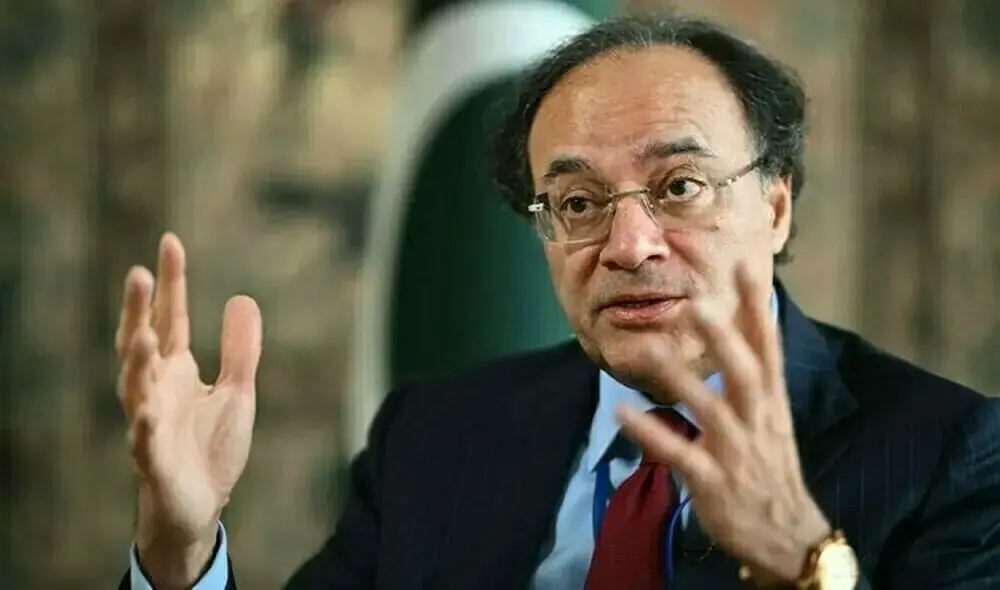
ISLAMABAD: Federal Minister for Finance and Revenue Senator Muhammad Aurangzeb held a meeting Thursday with a delegation from S&P Global Ratings comprising Yee Farn PHUA, Director, Sovereign Ratings, and Giulia Filocca, Associate Director, Sovereign Ratings, to discuss Pakistan’s sovereign credit profile, macroeconomic outlook, and progress under the Government’s comprehensive economic reform agenda.
During the meeting, the Finance Minister highlighted the significant improvement in Pakistan’s macroeconomic fundamentals, emphasizing stronger economic growth, sustained fiscal consolidation, improved debt sustainability, and enhanced external sector resilience underpinned by a pro-growth and fiscally responsible Federal Budget FY2026-27.
He noted that prudent economic management, disciplined policy implementation, and continued structural reforms have strengthened macroeconomic stability, resulting in lower inflation, higher foreign exchange reserves, a stronger external position, renewed investor confidence, and continued progress across key fiscal and external indicators despite a challenging regional and global environment.
READ MORE: Budget, Mideast peace deal to support FY27 growth, says Aurangzeb
The minister also underscored Pakistan’s improving public debt profile, highlighting the sustained decline in the debt-to-GDP ratio, the slowest pace of central government debt growth in around 15 years, active debt management through liability management operations and debt buybacks, extension in the maturity profile of domestic debt, historically lower fiscal deficits, and record primary surpluses.
He emphasized that these improvements, supported by stronger revenue mobilization and prudent expenditure management, are reinforcing fiscal sustainability and strengthening Pakistan’s sovereign credit fundamentals.
In the wake of the 18th Constitutional Amend ment, the role of the provincial spending, and revenue decisions have become all the more important both for the provinces, but also for better rationalizing such decisions at the level of the Centre. For reaching these rationalized budgetary outcomes, especially in terms of sustainably sharing revenue, and expenditure related responsibilities, federal and federating units’ budgets need to reflect policy decisions that better cater to the overall economic needs, including much improved level of fiscal federalism as per the 18th Constitutional Amendment.
Having said that, such relationship needs to be rationalized much better than reflected in the federal budget FY2026-27, where there is not only duplication with regard to, for instance, education, health, and social protection. For instance, the social welfare BISP (Benazir Income Support Programme) still remains an expenditure item for the Centre, when otherwise it falls under the social welfare responsibility.
Moreover, the Centre needs to set better rationalized direction-changing concerns like shifting from pro-cyclical to counter-cyclical policy in terms of the overall approach of the federal budget, along with putting the tax burden in an equitable way by laying out a mission-oriented plan to move away from practicing consumption-based, regressive, indirect taxation to direct taxation for reaching overall stability, growth, distribution, resilience, enhancing consequences, and in a sustainable way at the level of the Centre, and setting the same tone for provinces so that there is a unified policy response, including through the budgetary process.
In doing so, expenditure and revenue decisions are taken so as to incentivize a non-neoliberal and non-austerity policy response which, given the serious misgivings of the neoliberal, austerity and pro-cyclical policy response over the years, including the highly successful experience of China, for instance, in not following ‘shock therapy’ policies, and instead adopted greater-role of the public sector – through introducing, for example, ‘dual track’ pricing mechanism, and large-scale role of the state-owned enterprises (SOEs) – and overall counter-cyclical policies used especially in terms of greening the economy and pro-actively, but duly cautiously, adopting artificial intelligence- (AI-) induced solutions for modernizing the economy should be emphasized in terms of policy focus.
Once again, just like the author reflected on the budget with regard to first of all whether federal budget’s approach is outcome-based or not, and whether priorities reflect major issues facing the country – like as pointed out in author’s recent article titled ‘Policy philosophy correction budget – I’ in Business Recorder (BR), which pointed out in this regard, ‘…water resource management, and security, energy sustainability, poverty, unemployment, and high interest payments… fiscal federalism needs to be fixed to better match responsibilities with regard to subjects shifted under the 18th Constitutional Amendment to the federating units, with the expenditure responsibilities they should incur from the transferred resources under the National Finance Commission (NFC) award for those devolved responsibilities. That would better rationalize expenditure side, and revenue raising needs of the centre, and federating units’ the same is reflected in the provincial budgets. It needs to be mentioned here that provinces after the 18th Constitutional Amendment hold all the more importance in terms of all these issues, except from interest-related expenditure since it is mainly a consequence of monetary policy orientation – which has wrongly adopted over-board monetary austerity policy in general since inflation has significant aggregate supply-side determination, and requires a more balanced aggregate demand- and supply-side policy emphasis –and extent of borrowing – external, and domestic – at the federal level.
In analysing provincial budgets, ‘white papers’ – which reflect the general direction of a particular budget regarding development priorities, revenue, and expenditure decisions – are generally generic in nature, failing to reflect the outcomes-based, prioritized directions that the budget intends to take. The general message is more focused on fiscal discipline rather than bringing growth enhancing measures that will also likely bring much-needed greater aggregate supply support to macroeconomic stability, which would, in turn, allow reaching much more sustainability to both stability and growth. Even after posting sub-optimal economic growth rate around the medium term or so, and given during this time austerity – aggregate demand squeezing – policies and procyclical policies called for reversal of such policies to adopt non-austerity, counter-cyclical policies. Yet, this is missing in general in provincial budgets in terms of enhancement of provincial revenues that broader tax base, lower tax rates in general, and overall improve the equitability aspect of taxes.
Moreover, provincial governments need to adopt a much more non-neoliberal role, which includes rolling out effective local governments through timely elections and carrying out provincial finance awards to adequately fund them.
Hence, the messages/statements in the ‘white papers’ of provinces lack specific objectives the provincial government has pursued in terms of concrete targets, indicating, in turn, that these were the main steps in terms of fiscal consolidation and this is how the budget intends to move in the direction of enhancing growth, inclusivity and lowering poverty, which together with inequality has seen a sharp rise over the medium-term due to practice of steep austerity policies. Moreover, the strategy must indicate how the public sector will co-create partnerships with the private sector and markets. Key gaps in governance and incentive structures—particularly concerning tax proposals and expenditure allocation—must be addressed to improve overall productive and allocative efficiencies. This improvement should be reflected in the prioritization of social spending and infrastructure enhancement, particularly regarding water management. Ultimately, this will build greater resilience against economic shocks while facilitating the transition to a greener economy.
Messages in the ‘white paper’ on Punjab’s budget for FY27, for instance, remain unable to indicate how revenue base of the province was enhanced, including why implementation of agricultural income tax – already agreed with International Monetary Fund (IMF) – has fared, and which expenditures were curtailed in terms of big ticket items, how the governance, and incentive structures were improved for better allocation and effective spending, and which areas of the provincial economy were prioritized, especially in terms of agriculture, water, industry, social sectors, and infrastructure, and how they overall gels to provide sustainable growth, and resilience. This is important given that the province has experienced two major floods in recent years, including one during the last fiscal year. Furthermore, water management requires special attention to better handle floods, especially in light of water-related threats from India.
It is strange that provincial revenue base, for instance, remains so much limited in terms of breadth and depth on one hand, while under the National Finance Commission (NFC) award, provinces receive close to sixty percent of the resources from federal divisible pool, and have tremendous potential for enhancing provinces’ own tax base, and increasing revenues through greater economic growth effort at the provincial level as well, yet there is surprisingly a general tone in ‘white papers’ virtually across the board highlighting difficult revenue situation and presenting it as a basis for keeping development expenditures at lower levels. In Punjab’s ‘white paper’, for instance, it is indicated that ‘While development expenditures have been drastically reduced in line with available fiscal resources, the Government remains fully committed to advancing Punjab’s long-term development agenda’, yet what is not made to understand – and that is a theme found in the ‘white papers’ across all provinces – as to why it should be so in the presence of high level of resources transferred to provinces from the divisible pool, and immense level of revenue potential lying virtually untapped at the level of provinces.
(To be continued)
Copyright Business Recorder, 2026
The writer holds a PhD in Economics degree from the University of Barcelona, and has previously worked at the International Monetary Fund. His contact on ‘X’ (formerly ‘Twitter’) is @omerjaved7
That every Finance Act tells two stories is a fact. One is written in statutory language through new sections, substituted clauses and amended schedules. The other is written in silence—through debates that never took place, questions that were never asked and constitutional responsibilities that were never discharged. The Finance Act, 2026 belongs overwhelmingly to the second category. It is less a story of taxation than of Parliament’s continuing retreat from one of its most fundamental constitutional obligations.
Fourteen years ago, while examining the Finance Act, 2012 in these columns [‘Finance Act 2012: Where is Parliament?’ Business Recorder, June 29, 2012], we observed that the National Assembly had reduced itself to little more than a rubber stamp. The Finance Bill was adopted in haste, important amendments were introduced at the last minute, almost no meaningful debate took place on taxation and the constitutional scheme envisaged under Articles 73 and 82 was reduced to a procedural ritual.
It was hoped that parliamentary democracy, still recovering from years of authoritarian interruption, would gradually mature. Experience has proved otherwise. If anything, the Finance Act, 2026 demonstrates is nothing but the erosion of parliamentary control over taxation, which has become even more pronounced.
The annual Finance Bill is not an ordinary piece of legislation. It determines how wealth will be raised, how resources will be distributed and what burdens citizens will bear during the ensuing financial year. In every constitutional democracy, taxation lies at the heart of representative government because the power to tax is inseparable from the consent of those who are taxed.
This principle was established centuries ago through the historic struggle against arbitrary taxation and became the constitutional foundation of parliamentary government across the democratic world. Pakistan’s Constitution embodies the same philosophy by assigning Parliament the responsibility of examining, debating and approving fiscal measures before they become law. Unfortunately, our annual budget process has evolved in precisely the opposite direction.
Budget speeches have become political spectacles, while the actual Finance Bill is treated as an administrative document prepared almost entirely by officials of the Ministry of Finance and the Federal Board of Revenue (FBR)—role of standing committees of both Houses is also limited.
Members of Parliament rarely scrutinise individual clauses. Even more disturbing, the public seldom learns how many legislators have actually studied the legislation they ultimately vote to approve.
The events surrounding the Finance Act, 2026 expose this institutional failure with unusual clarity. The Senate Standing Committee on Finance examined the Finance Bill and submitted recommendations after hearing stakeholders, professional bodies and government officials.
Significant changes found their way into the legislation after the Senate had completed its constitutional advisory role. Those provisions naturally escaped Senate scrutiny because these did not exist when the Bill was placed before it. The National Assembly nevertheless approved the revised Bill in haste without reopening meaningful debate. This raises a constitutional question that has received surprisingly little attention. If substantial amendments are inserted after the Senate completes its examination, what purpose does the Senate’s advisory jurisdiction under Article 73 (1) actually serve? Constitutional procedures are not intended to be ceremonial exercises.
The Senate cannot meaningfully advise on legislative provisions that were never placed before it. By permitting substantial post-Senate alterations, successive governments have transformed an important constitutional safeguard into a procedural formality. The problem, however, extends far beyond legislative procedure. The Finance Act, 2026 significantly expands obligations imposed upon taxpayers, withholding tax agents, banks, businesses and other intermediaries.
Additional compliance requirements, broader reporting duties, deeper digital integration with FBR databases, greater reliance on automated systems and enhanced enforcement powers all increase the responsibilities of citizens. Yet Parliament devoted remarkably little attention to the equally important question of reciprocity.
Constitutional taxation has never been based solely upon the citizen’s duty to pay taxes. It is founded upon reciprocal obligations between the State and the taxpayer. Citizens surrender part of their earnings to finance public institutions.
In return, the State guarantees legal certainty, due process, protection of confidential information, efficient dispute resolution, timely refunds and impartial administration.
Taxation without reciprocity gradually ceases to resemble constitutional government and begins to resemble administrative extraction. That is precisely the direction in which Pakistan’s fiscal system is moving. Businesses are required to integrate their systems electronically with tax authorities, yet Pakistan still lacks comprehensive personal data protection legislation.
Vast quantities of commercial and financial information are expected to flow into government databases without Parliament first establishing robust legal safeguards against misuse, cyber intrusion or unauthorised disclosure. Taxpayers are expected to trust digital infrastructure that itself operates within an incomplete legal framework. Parliament, astonishingly, scarcely discussed this contradiction.
Similarly, artificial intelligence and faceless assessments are presented as symbols of modern tax administration. Technology undoubtedly has an important role to play in reducing discretion and improving efficiency. Yet algorithms cannot compensate for a fundamentally undocumented economy. They merely enable tax authorities to examine already documented persons with greater sophistication while leaving the cash economy, informal transactions and concealed wealth largely untouched.
Technology has become a more efficient instrument for monitoring compliant taxpayers rather than a strategy for documenting the undocumented economy. Parliament accepted this transition without demanding evidence that the underlying structural weaknesses had first been addressed.
The same pattern appears throughout the Finance Act. Withholding agents are assigned new responsibilities, businesses are burdened with additional compliance costs, financial institutions are required to share increasing volumes of information and documented taxpayers face expanding regulatory obligations.
The Parliament did not insist upon statutory protection of taxpayer rights, independent oversight of automated decision-making, accountability for wrongful assessments, legally enforceable refund timelines or meaningful reform of tax administration itself. Obligations multiplied but not corresponding rights.
However, the greatest irony lies elsewhere. The Finance Act, 2026 contains numerous provisions aimed at strengthening enforcement against those already visible to the tax administration. At the same time, Parliament once again failed to confront the much larger questions that continue to define Pakistan’s fiscal crisis. Tax expenditures running into trillions of rupees remain largely beyond parliamentary scrutiny. Large segments of wealth continue to escape effective taxation.
The informal economy remains overwhelmingly undocumented. Fiscal federalism continues to weaken as tax policy becomes increasingly centralised despite provinces receiving the constitutionally protected majority share of divisible revenues. None of these structural questions received the sustained parliamentary attention they deserved.
This pattern is neither accidental nor new. Successive governments have found it politically easier to impose additional obligations upon those already within the tax system than to challenge entrenched centres of economic privilege. Every Finance Act promises reform. Every Finance Act expands compliance. Yet genuine structural reform remains perpetually postponed because it threatens existing concentrations of power, influence and administrative convenience.
The tragedy therefore extends beyond defective tax policy. It concerns the gradual weakening of Parliament itself. When elected representatives cease to scrutinise taxation seriously, they surrender one of the oldest and most important functions of representative government.
Parliament becomes an institution that formally approves executive fiscal decisions instead of shaping them. The constitutional balance shifts quietly but decisively towards executive supremacy.
The Finance Act, 2026 should be remembered not simply for the taxes it imposed but for the constitutional precedent it reinforced. It demonstrated once again that the annual budget process has become increasingly detached from meaningful parliamentary deliberation.
The Senate’s advisory role is weakened by post-report amendments. The National Assembly frequently approves highly technical legislation without exhaustive clause-by-clause examination. Fundamental questions of taxpayer rights, fiscal federalism, administrative accountability and constitutional reciprocity remain largely absent from parliamentary discourse.
Fourteen years after we warned that Parliament was disappearing from Pakistan’s tax laws-making process, the evidence suggests that the disappearance is now almost complete. The constitutional promise that taxation shall be imposed through informed legislative deliberation has gradually yielded to a system in which executive proposals receive parliamentary endorsement with minimal scrutiny.
The real issue is no longer whether particular taxes are good or bad. The more fundamental question is whether Parliament still exercises meaningful control over taxation at all. Until that question is honestly confronted, every Finance Act will continue to expand the powers of the State while diminishing the constitutional role of the institution that alone possesses democratic legitimacy to authorise those powers. That is not merely a weakness of fiscal policy. It is a continuing constitutional failure whose consequences extend far beyond taxation itself.
Copyright Business Recorder, 2026
The writer is a lawyer and author, is an Adjunct Faculty at Lahore University of Management Sciences (LUMS), member Advisory Board and Senior Visiting Fellow of Pakistan Institute of Development Economics (PIDE)
The writer, an Advocate Supreme Court, Adjunct Faculty at Lahore University of Management Sciences (LUMS), member Advisory Board and Visiting Senior Fellow of Pakistan Institute of Development Economics (PIDE), holds LLD in tax laws
The writer is a corporate lawyer based in the US with extensive expertise in financial regulations, including Virtual Asset Service Providers (VASPs), corporate governance, and global economic policies. He holds an LLM from Washington University in St. Louis and has completed the Management Development Program at the Wharton School. He has developed regulatory frameworks for North American and South American Financial Institutions and has consulted and trained bureaucrats of different regions. He can be reached at [email protected]
ISLAMABAD: The Federal Board of Revenue (FBR) has estimated to collect Rs 14,500 billion during 2026-27 excluding the impact of any new taxation or budgetary measures for new fiscal year.
According to the FBR’s Evidence-Based Revenue Forecasting (EBRF) report (2026-27) issued on Wednesday, for FY2026–27, revenue collection-excluding the impact of any new taxation or budgetary measures—is projected at Rs. 14,500 billion.
This represents a 11.7 percent increase over the expected collection of Rs. 12,983 billion for FY2025-26, as reported in Table 1.
In absolute terms, the projected increment amounts to Rs. 1,517 billion.
READ MORE: Rs650bn in enforcement & tax policy steps introduced
This increase has been estimated by applying tax-specific buoyancy coefficients to projected macroeconomic indicators, thereby capturing autonomous revenue growth under existing policy parameters.
In other words, the forecast isolates the structural responsiveness of the tax system to economic expansion, without incorporating discretionary policy interventions such as rate changes, new levies, or withdrawal of exemptions.
Analytically, a 11.7 percent projected growth rate indicates moderate yet stable revenue expansion, broadly aligned with expected improvements in GDP growth, industrial output, and trade activity.
Copyright Business Recorder, 2026
ISLAMABAD: The Finance Division unveiled the strategy for release of funds for development and recurrent budget for fiscal year 2026-27, adding that all releases shall be subject to availability of fiscal space.
The division issued an office memorandum which stated that in pursuance of the provisions of the Public Finance Management Act, 2019 and Financial Management & Powers of Principal Accounting Officers (PAOs) Regulations, 2021, the funds release strategy for Development Budget for FY 2026-27 is being issued for implementation with immediate effect and till further orders.
Funds for Development Budget shall be authorised by the Planning, Development & Special Initiatives (PD&SI) Division out of the Public Sector Development Programme (PSDP) allocation for FY 2026-27 for approved projects at 15 percent for Quarter 1, 20 percent for Quarter 2, 25 percent for Quarter 3, and 40 percent for Quarter 4.
READ MORE: Requirements total Rs4.097trn: Rs1.126trn set aside for FY27 PSDP: Ahsan
While executing development projects, PD&SI Division and PAOs concerned shall ensure adherence to provisions of the Public Finance Management Act, 2019.
PD&SI Division shall devise a quarterly sector/project/division-wise strategy for release of PSDP funds within the approved appropriation.
Any proposal for change to the quarterly limits shall be considered by Budget Wing, Finance Division on case-to-case basis and shall require prior approval of Finance Secretary.
Release of funds for approved projects in the Demand for Grants and Appropriations shall be made by PAOs in each quarter as authorised by the PD&SI Division within the above limits. PAOs shall ensure availability of sufficient funds for employee related expenses for each project.
PAOs/Heads of Attached Departments/Heads of Sub-ordinate Offices/Project Directors shall not re-appropriate funds from employee related expenditures to non-employee related expenditures (heads of account) except with prior concurrence of PD&SI Division.
Adequate budgetary allocations on account of foreign exchange component (rupee cover) shall be ensured by all PAOs and conveyed to PD&SI Division, Economic Affairs Division and Finance Division.
Funds for foreign exchange payments shall require prior approval of External Finance Wing, Finance Division.
All payments shall be made through the pre-audit system or through the Assignment Account Procedure, or any other procedure issued by Finance Division from time to time.
A separate Assignment Account shall be opened for each project.
Copyright Business Recorder, 2026
LAHORE: The Punjab Small Industries Corporation (PSIC) Board in it’s 136th meeting, chaired by Provincial Minister Ch Shafay Hussain, approved the Rs14.285 billion budget estimates for the new financial year.
The Board also approved the revised PC-I for the Mandi Bahauddin Small Industrial Estate and the revised rates for booking industrial plots. The PC-I for the upgradation of the handicraft shop at PSIC House was also approved.
The board approved an increase in the medical allowance for retired PSIC employees. For this purpose, the corporation will contribute Rs400 million from its own resources to the pension fund. Approval was also granted for a housing scheme for PSIC employees under the Prime Minister’s Apna Ghar Programme.
The board further approved increasing the honorarium of PSIC Board members from Rs 25,000 to Rs 40,000. Several other administrative and financial matters were also approved. The meeting reviewed various proposals aimed at enhancing PSIC’s revenue and took important decisions to improve facilities and infrastructure in Punjab’s 23 Small Industrial Estates.
Addressing the meeting, Provincial Minister for Industries and Commerce Chaudhry Shafay Hussain said that the interest-free loan schemes launched on the directions of the chief minister had played a pivotal role in promoting economic activity across the province. He said traders and industrialists had greatly benefited from the Asaan Karobar Card and Asaan Karobar Finance schemes.
He further stated that the Punjab government is launching a major programme for industrial development and export promotion. Under this initiative, the Bank of Punjab will provide Rs300 billion in business financing to stimulate economic and commercial activities.
The programme is scheduled to be launched in October this year. Under the first category, businesses will be able to obtain interest-free loans of up to Rs100 million. Under the second category, loans of up to Rs1 billion will be available at a 3 percent markup, while under the third category, businesses will be eligible for loans of up to Rs5 billion at a 5 percent markup.
The minister also announced that work on upgrading infrastructure in Punjab’s 23 Small Industrial Estates will commence this year.
He further said that a new Small Industrial Estate in Mandi Bahauddin is being developed where industrial plots will be available on easy installment plans. Managing Director Mubeen Elahi informed the Board that the PSIC had generated approximately Rs2 billion during the last six months through the sale of surplus plots in Small Industrial Estates.
Copyright Business Recorder, 2026
EDITORIAL: The Federal Board of Revenue (FBR) collected 12.957 trillion rupees last fiscal year (1 July 2025 to 30 June 2026) – an amount that is lower than the 12.983 trillion rupees projected in the 2026-27 budget documents by 26 billion rupees.
The budgeted FBR collection target was revised downward twice during last year – a trend that has been evident in previous fiscal years as well, requiring adjustments in other key macroeconomic data, including the budgeted deficit as well as the share of the provinces in the divisible pool.
Gross collection for 2025-26 is estimated at over 13 trillion rupees but given that FBR released refunds to the tune of over 40 billion rupees, a long-standing legitimate demand of the business community, particularly exporters, net collections were appropriately adjusted and at the end of the fiscal year were 92 percent of the total (14.131 trillion rupees) budgeted for the year – a shortfall that indicates the over-ambitious target set jointly by the government and the International Monetary Fund (IMF), given that the latter’s approval of the budget is a condition of the ongoing programme loan.
The budgeted tax target for the current year is set at 15.2643 trillion rupees – a target which envisages a rise of nearly 18 percent from what was actually achieved last year that, additionally, requires a 4 percent projected growth rate and the implementation of all aspects of the Finance Bill 2026 – conditions that are challenging, given the severely contractionary monetary and fiscal policies in place today as agreed with the IMF.
Independent economists and tax consultants have already expressed their reservations about the ability of FBR to meet this target on the grounds that the continuation of severely contractionary monetary and fiscal policies would certainly act as a major impediment in the new fiscal year.
Pakistani budgets have typically set unrealistic FBR targets to show a budget deficit that is sustainable and as and when these over ambitious targets are not met adjustments are typically made through: (i) slashing the Public Sector Development Programme (PSDP) – a trend that is all the more prevalent in years when the country is on an IMF programme as, unfortunately, it has been for most of its seventy-nine year-long history. Currently, Pakistan is on its twenty-fourth IMF programme with the average duration of three years; (ii) compelling the FBR to take punitive measures that have raised litigation costs of the Board as those with grievances seek legal remedies and in time also fuel capital flight; and (iii) borrowing more than was budgeted – a highly inflationary policy that accounts for the ever rising mark-up component in our budgets.
The budgeted mark-up in the current year is a whopping 46 percent of the entire current expenditure – the same percentage as in the revised estimates of last year even though the mark-up declined significantly as the policy rate was reduced.
To conclude, realistic revenue targets are critical for the achievement of key macroeconomic targets, which the country has consistently failed to meet.
Copyright Business Recorder, 2026
ISLAMABAD: The World Bank has warned that Pakistan’s current fiscal federalism system has created a persistent structural imbalance in public finances, urging a comprehensive overhaul of the National Finance Commission (NFC) award to align spending responsibilities with revenue generation, strengthen provincial tax collection and empower local governments.
In its report titled “Strengthening Fiscal Federalism in Pakistan” released by the World Bank during media briefing on Wednesday, stated that while the 18th Constitutional Amendment and the 7th NFC Award marked a historic shift towards decentralisation by transferring key service delivery responsibilities to the provinces, financing and institutional arrangements.
However, structural weaknesses in the system continue to disturb fiscal discipline, constrain revenue mobilisation, and affect the quality of services for citizens.
READ ALSO: No consensus yet on provinces’ shares under NFC Award
The bank stated that reverse grants included in the fiscal year 2027 federal budget could help partially address the current vertical fiscal imbalance, but emphasised that broader institutional reforms would still be required to place Pakistan’s fiscal federalism framework on a sustainable footing.
The Bank noted reverse grants from Punjab at over Rs546 billion and Rs260 billion from Sindh, but no amount was shown from Khyber Pakhtunkhwa and Balochistan provinces.
When asked about this, the Bank official said that no such amount was mentioned in the two provinces’ budget documents. The federal government estimated grants/receipts from provinces under Article 164 at Rs1035 billion for 2026-27.
Copyright Business Recorder, 2026
June is the time of the year when the Ministry of Finance reflects on the past performance through the Pakistan Economic Survey and presents a forward-looking plan through the Federal Budget. Taken together, a complete picture of the economy emerges; the journey over the past year and the horizon over the immediate future.
The economic performance over the past year was marked by stability - stability without any spectacular growth. There was promise of growth but not without difficult reforms. Economic growth is moderate, reserves are steady and inflation is tempered. Remittances were the highlight and at a record high, but exports have remained stagnant. Glass half full or half empty; it depends on where one chooses to look.
The banking industry has been a partner in the government’s reform journey for decades. The sector has emerged as a strong pillar of the economy, an industry on which the government has relied countless times for its agenda on development and growth.
It is against this backdrop that the second annual Pakistan Banking Summit will take place. The Summit comes at a time when the economy is relatively stable but needs a well-planned concerted push towards a growth trajectory. Discussions at the summit will range from traditional areas such as SME finance, housing and agriculture to emerging themes including digital payments, priority sectors, digital currencies and climate finance. Taken together, these discussions reflect a broader question: how can the banking sector support Pakistan’s next phase of economic growth?
The summit should not be mistaken for another conference that produces more speeches than outcomes. Since the inaugural summit last year, measurable progress has been recorded across several priority sectors.
SME finance, which remained stagnant for years, has grown 54 percent in terms of borrowers and 46 percent in outstanding finance. SME lending now accounts for 7.63 percent of total private sector lending, an improvement from approximately 6 percent a year ago.
Overall, agricultural finance grew 14 percent year-on-year to Rs 995 billion. This area has seen momentum through the digital lending programme – Zarkhez-e. The programme has completed one lending cycle with recoveries underway. Over Rs 6.43 billion has been approved to 14,800 farmers. If scaled properly, this programme can reach millions of unserved farmers across the country.
Remittances in general, and specifically under the Roshan Digital Account, merit separate mention. Remittances for FY26 (up to May) reached USD 38.1 billion, with RDA contributing approximately USD 2.9 billion. With the introduction of RDA 2.0, business entities and non-Pakistani origin investors are now eligible. Recently, the government also announced that deposits can be held in Saudi riyals and UAE dirhams. The programme is still growing with nearly a million accounts to date. As of May, 84 percent of RDA funds remain in Pakistan with 64 percent utilized locally, spurring economic activity.
Housing finance faces a structural challenge at scale. Pakistan has a 10-million-unit housing shortfall, with 350,000 units needed annually but only 150,000 delivered. Housing accounts for 25 percent of core inflation, yet formal housing finance remains only 3–5 percent of GDP compared to 10–12 percent in India. The recently launched Apni Chhat Apna Ghar is showing good results with over Rs 200 billion disbursed and 99 percent recovery. The banking sector faces two structural constraints. First, in the absence of pension and insurance funds that can provide long-term capital through mortgage securitization, banks continue to face asset-liability mismatches with short-term deposits funding long-tenure housing loans. Creative solutions, including directing a portion of long-term RDA deposits towards housing finance, deserve consideration. Second, on the policy side, the absence of stronger foreclosure laws and digitization of land titling will continue to hamper the market despite the banking industry’s willingness to lend.
Climate finance presents a similar challenge. While the State Bank’s Green Banking Guidelines (2017) and Pakistan Green Taxonomy (2025) provide the governance and classification framework, embedding ESG into end-to-end banking processes (not just restricted to compliance and risk) remains elusive. For banks to deploy capital at scale for climate finance, green lending must remain commercially viable while enabling the state to access much-needed funding for adaptation and mitigation. Creative models in blended finance and de-risking instruments will need to be looked at carefully for meaningful headway to be made.
Pakistan has never been more financially included, reaching 69 percent of adults, with 6.8 million new unique accounts added during CY25. Digital transactions are also happening at a scale that has never been seen. However, the uncomfortable question of whether that is impacting currency in circulation and shrinking the cash economy is something that remains to be answered.
For this reason, and for such questions, the Banking Summit is more than just a conference. It is a platform that provides an important space to examine the banking sector’s priorities as it navigates the challenges and opportunities that lie ahead. Last year’s summit showed that outcome-based progress is possible. The challenge this year is to identify the foundations that will enable this progress to scale.
Copyright Business Recorder, 2026
The writer is the CEO and Secretary General at PBA
The writer is Head Priority Sectors & Research – Pakistan Banks Association
Pakistan’s cement industry is ending FY26 on a firmer footing. Total dispatches are estimated to reach just over 50 million tons for the year, growing 7 percent from FY25 and marking the second consecutive year of recovery after a prolonged downturn. This is driven almost entirely by domestic demand, with local dispatches up 9 percent, even as exports contract by 3 percent.
The broader picture is that Pakistan’s construction cycle has been slowly stabilizing with easing inflation, reduced interest rates and better business confidence that revived private construction activity. This allowed domestic cement demand to recover from the depressed levels witnessed between FY22 and FY25.
At the same time, total dispatches remain well below the levels producers had envisioned when they embarked on an aggressive expansion drive several years ago.
Installed capacity has continued to grow while consumption has struggled to keep pace, leaving the industry with one of the largest excess-capacity overhangs in its history.
Capacity utilization is expected to improve to around 59 percent this year from 56 percent last year, but still below reasonable thresholds of 65 percent. This imbalance has been years in the making.
During the construction boom that accompanied the CPEC investment cycle and the FY21 housing incentives under Naya Pakistan Housing Program, cement manufacturers raced to expand production lines in anticipation of sustained growth in infrastructure and residential demand. Instead, macroeconomic instability, political uncertainty and repeated stabilization programmes sharply slowed construction activity before the new capacity could be absorbed.
For several years exports were helping cushion the blow. Overseas shipments took their contribution up by easing some of weakness in domestic demand but that cushion is thinner.
Export dispatches are expected to decline this year as regional competition intensifies and freight economics become less favorable, particularly for southern manufacturers shipping through sea routes.
June data suggests that sea-based exports from the south remain considerably weaker than a year ago despite an overall monthly increase in export dispatches.
The shift back toward domestic sales is commercially better for producers. Local markets generally offer stronger pricing power and significantly lower logistics costs than exports. But it also leaves the industry’s fortunes increasingly tied to Pakistan’s own construction sector, where demand remains heavily dependent on government development spending and housing activity.
In the budget 2027, the government has announced a series of tax measures aimed at stimulating the construction and real estate sectors, while a subsidized housing finance scheme is expected to support home ownership.
Lower financing costs should gradually encourage private developers to restart projects that had become financially unviable during the high-interest-rate period.
Whether these initiatives are sufficient to trigger another construction boom remains uncertain.
Housing affordability continues to deteriorate as household incomes struggle to keep pace with rising living costs and taxation. Public sector development spending also remains constrained by fiscal consolidation requirements, limiting the government’s ability to generate the kind of infrastructure-led demand that historically lifted cement consumption.
The pace of domestic demand growth is unlikely to be strong enough to absorb Pakistan’s substantial surplus production capacity anytime soon. Without a sustained increase in large-scale infrastructure investment, a meaningful housing boom or a revival in export competitiveness, utilization rates are expected to improve only incrementally over the next few years.
But for producers, that may not be a bad outcome. The country’s larger cement manufacturers have spent the past several years strengthening balance sheets, reducing costs and diversifying export markets where possible.
Perhaps they no longer require another FY21-style demand surge to remain profitable. What they do need is a stable domestic economy that steadily adds a few million tons of annual demand rather than another short-lived construction frenzy. That may ultimately prove to be a healthier foundation for the industryven if it means much of Pakistan’s cement capacity continues to cast a long shadow over the market.
Copyright Business Recorder, 2026
MUZAFFARABAD: The Azad Jammu and Kashmir government on Monday unveiled its budget with a total outlay of Rs286 billion, allocating a total of Rs250 billion for non-development expenditure while development expenditure is estimated at Rs36 billion.
Salaries and pensions have been raised by seven percent.
Finance Minister Chaudhry QasimMajeed presented the budget in the legislative assembly.
For development expenditure, Rs900 million will be allocated for agriculture and livestock, Rs100 million for civil defence disaster management, Rs190 million for development institutions, and Rs3 billion for education.
Also, Rs3 billion will be allocated for the local government and rural development, and Rs1 billion for physical planning and housing, Rs3 billion for energy and water resources, and Rs14 billion for communication and construction.
The budget proposes 31 percent for social, 12 percent for productive and 57 percent for infrastructure sectors.
Education package 2026 has also been made part of the budget.
KARACHI: Sindh Senior Minister Sharjeel Inam Memon on Monday said that the development and prosperity of Karachi, along with the provision of essential civic amenities, remained the foremost priority of Sindh government, and more than Rs100 billion had been allocated for the metropolis in the provincial budget for the fiscal year 2026-27.
In a statement, the senior minister said the allocated funds would be utilized for improving water supply and drainage systems, constructing and rehabilitating roads, and upgrading public infrastructure and other civic facilities across Karachi.
He said instead of making false promises, the Pakistan Peoples Party (PPP) believed in delivering public service, and resolving the issues faced by Karachiites was both the government’s responsibility and commitment.
Sharjeel Memon said modern, safe and reliable public transport remained one of the city’s most pressing needs.
The Sindh government was taking historic measures to transform Karachi’s transport network.
He said that 500 modern electric buses, along with double-decker buses, would soon begin operating on the city’s roads, significantly improving public transportation.
Highlighting employment generation as a key component of the government’s economic agenda, the minister said the 2026-27 budget placed special emphasis on creating opportunities for young people.
He said thousands of jobs would be generated through industrial zones, development projects, transport initiatives and major infrastructure schemes.
He further said the PPP had consistently focused its politics on the welfare of the common man, including workers, farmers, youth and the middle class.
The Sindh government, he continued, was utilizing all available resources to improve people’s quality of life by expanding employment opportunities and strengthening education, healthcare and modern civic infrastructure.
He said certain elements were attempting to portray Karachi and other areas of Sindh negatively for political purposes.
However, he maintained that the people themselves were witnessing ongoing development projects, improvements in public transport, infrastructure expansion and various public welfare initiatives.
Sharjeel Memon said the people were fully aware that despite financial and other challenges, the Sindh government continued giving priority to public welfare and sustainable development.
He described the 2026-27 provincial budget as more than a financial document, flagging it as a comprehensive roadmap for practical progress, enhanced employment opportunities and a more prosperous future for Sindh, including Karachi.
Copyright Business Recorder, 2026
EDITORIAL: The Finance Division has yet to upload its May 2026 Economic Update and Outlook, a document that would have provided current statistics critical for an assessment of the state of the economy for use in the formulation of the budget 2026-27. This newspaper requested a copy of the document a fortnight ago and was inexplicably informed that the Division was busy with the budget and would upload it on the website in ‘due course’. It is relevant to note that tomorrow, on 1 July, the June monthly update and outlook would also be due together with the May report.
Pakistan Bureau of Statistics (PBS) and the State Bank of Pakistan (SBP) did continue to upload data pertaining to limited aspects of the economy; notably, the trade balance (exports and imports), remittance inflows, foreign exchange reserves held by the SBP and commercial banks, foreign direct investment, portfolio investment, and Consumer Price Index.
However, what has led many to argue that the failure to upload the May outlook may have been deliberate is the fact that these two sources of data have not yet uploaded key data for May 2026, including large-scale manufacturing (LSM) sector, credit to private sector, agriculture credit and non-tax revenue.
In addition, Federal Board of Revenue’s (FBR’s) actual collections for the month of May, with a reported projected shortfall of around one trillion rupees by 30 June 2026 from what was targeted at 13.979 trillion rupees - a downward revision from the budgeted 14.307 trillion rupees - has perhaps not been taken into account on the primary and fiscal balance claims for the outgoing year with obvious implications on the projections in the budget for 2026-27. This could have been a vital element in the government’s recent decision to keep oil prices stable in spite of a decline in the international price that necessitated raising the petroleum levy with the objective of raising non-tax revenue to meet the International Monetary Fund’s (IMF’s) upfront harsh conditions for the outgoing fiscal year.
There is, therefore, a serious concern that the budget was based on dated statistics, dated back to April, when the country’s economic performance had not yet absorbed or begun to show increased fragility due to the negative impact of the US-Israel attack on Iran which began on 28 February.
The Finance Ministry has, under its administrative control, numerous departments and divisions, whose terms of reference are not specific to one task at any one period of time.
In other words, the excuse that the Division was unable to write and upload the report because it was engaged in the budget formulation is not tenable and should not be accepted by the Cabinet. There is, therefore, an urgent need for the Cabinet to take cognizance of this serious lapse and take appropriate mitigating measures.
What has become a tradition, however, is for an administration to sanction special reward, over and above the due salary, to those engaged in budget making, a reward that is baffling for the simple reason that it is in the terms of reference of those engaged in this exercise.
And what makes the grant of a monetary reward even more unfathomable is the fact that the budget was reviewed in great detail by the IMF staff, a condition of the ongoing programme loan, and the domestic formulators input was even more severely limited than in years gone by when the country was not on a programme.
It is hoped that monetary rewards for undertaking or proposing measures that are the responsibility of any individual or individuals must not be a part of a policy and merit-based pay raises must be a function of their unbiased performance evaluation.
Copyright Business Recorder, 2026
KARACHI: Jamaat-i-Islami’s opposition bloc in the Karachi Metropolitan Corporation (KMC) on Saturday unveiled a Rs300 billion shadow budget for 2026-27, saying the city’s proposed Rs60 billion outlay fell far short of its actual needs.
Addressing a press conference at Faran Club, KMC Opposition Leader Saifuddin Advocate said Karachi’s budget was negligible compared to those of major regional cities. He said Delhi, with a population of around 15 million, had an annual budget of Rs520 billion, while Mumbai’s stood at Rs2.2 trillion. Even a Rs300 billion budget for Karachi, he added, would be seven times smaller than Mumbai’s.
Presenting the shadow budget, Saifuddin demanded that KMC receive a minimum allocation of Rs300 billion for the new fiscal year. He called for revenues generated through the motor vehicle tax, infrastructure cess and betterment charges to be transferred to local government institutions.
He recalled that former Karachi mayor Abdul Sattar Afghani had led a historic campaign for the transfer of motor vehicle tax revenues to the city government and urged the provincial government to act on that demand.
Saifuddin said Karachi generated around Rs180 billion annually through infrastructure cess and argued these funds, along with betterment charges, should accrue to local governments. He also demanded that Octroi Zila Tax, other grants and Provincial Finance Commission transfers — amounting to roughly Rs100 billion — be provided to KMC.
He said KMC currently raised only around Rs6 billion from its own sources and urged the civic body to grow that figure to Rs10 billion. Combined with the proposed transfers, he said, the total budget could reach Rs300 billion.
Saifuddin also called for fiscal decentralisation, saying funds should flow down to town administrations and union committees, with each union committee receiving at least Rs100 million annually.
Turning to Mayor Murtaza Wahab, the opposition leader rejected the mayor’s claim of making KMC financially self-reliant, saying own-source revenues accounted for only about 20 percent of the civic body’s budget.
He referred to former city nazim Naimatullah Khan, saying that after adjusting for the dollar exchange rate, the budget presented in 2005 was nearly three times larger than the current KMC budget.
Saifuddin said Murtaza Wahab had spent Rs201 billion since 2021 — including his tenure as administrator before becoming mayor — yet Karachi’s civic conditions had continued to deteriorate. He blamed the provincial government and KMC for widespread corruption and mismanagement, saying most public funds were lost before reaching citizens.
He also criticised the provincial government’s control over key municipal institutions, including the water utility and solid waste management system, arguing they should function under the elected city government in line with the Constitution and Supreme Court directives.
He further noted that the budgets of the Karachi Water and Sewerage Corporation and the Sindh Solid Waste Management Board were not reflected in the KMC budget, even though funds meant for towns and union committees were being used for their operations.
A short documentary on the struggle for local government elections and devolution of powers was screened ahead of the press conference. KMC Deputy Parliamentary Leader Junaid Makati, Fazal Ahad, Taimur Ahmed, and several union committee chairmen and vice-chairmen also attended.
Copyright Business Recorder, 2026
LAHORE: The Punjab Assembly on Saturday approved the FY2026–27 provincial budget amid strong protests from the opposition. The House also passed the Finance Bill and approved 131 demands for grants.
At the outset of the session, Deputy Speaker Malik Zaheer Iqbal Channar, who chaired the proceedings, commended the Punjab government, police, Rangers, the Counter Terrorism Department (CTD), and other relevant institutions for maintaining peace and security during Muharram.
The House witnessed heated exchanges between the treasury and opposition benches during the approval of budgetary grants. Senior Minister Marriyum Aurangzeb strongly defended the government’s performance, arrangements for Ashura, and ongoing development initiatives, while opposition members staged protests, raised slogans, and criticised the government’s conduct.
READ MORE: Punjab Assembly approves Rs270.53bn in demands for grants
Opposition lawmakers walked out of the House after alleging they were not given an opportunity to speak. Following the walkout, the Assembly approved all 131 demands for grants and the Finance Bill.
Addressing the House, Senior Minister Marriyum Aurangzeb said the arrangements for Ashura should not be politicised. She stated that 124,000 security personnel were deployed across the province, while thermal drones, QR code monitoring, Safe City surveillance cameras, and other advanced technologies were used for the first time to ensure comprehensive security.
She further said the government had launched 437 development schemes, of which more than 340 have already been approved. Work is progressing rapidly on projects related to infrastructure development, environmental protection, climate change, smog control, forestry, clean drinking water, South Punjab, and public welfare. She also criticised the opposition, claiming its members had neither read the budget nor examined the facts.
During her speech, opposition members stood from their seats and continuously chanted slogans, creating a tense atmosphere in the House.
Treasury lawmakers responded with counter-slogans, while Special Assistant to the Chief Minister Zeeshan Malik, Education Minister Rana Sikandar Hayat, and other government members waved wristwatches and chanted slogans against the opposition.
Minister for Parliamentary Affairs Mujtaba Shuja-ur-Rehman urged the Deputy Speaker to suspend opposition members who, he alleged, had used inappropriate language and raised slogans against the government leadership. He said the Business Advisory Committee had previously agreed that no remarks would be made against parliamentary leadership.
The opposition first protested, then pointed out a lack of quorum, and eventually boycotted the proceedings by walking out during the approval of the budgetary grants. The government, however, continued with the proceedings and completed the passage of the budget.
The Punjab Assembly ultimately approved all 131 demands for grants along with the Finance Bill, formally passing the FY2026–27 provincial budget. After completing the agenda, the session was adjourned until Monday at 11:00am.
Copyright Business Recorder, 2026
KARACHI: The Sindh Assembly’s fiscal year 2026-27 budget debate turned politically charged on Saturday as the treasury claimed sharp drops in crime, announced a landmark minimum wage, and signaled legislation to classify gutka and mawa as narcotics, while the opposition hit back over unresolved civic failures.
Presided over by Speaker Awais Qadir Shah, the session spanned law and order, katcha operations, narcotics, local government, workers’ welfare, and the Sindhi-Muhajir political divide, with the atmosphere turning emotional and combative on multiple occasions.
READ MORE: Fourth budget debate sitting: Sindh Assembly sees heated exchanges
Home Minister Zia ul Hassan Lanjar told the house that street crime and violent crime fell 40 percent year-on-year, the overall crime rate dropped 10 percent, and terrorism incidents declined 80 percent across the province. He said no major terrorist attack struck Karachi this year. The CTD conducted 642 intelligence-based operations and arrested 66 terror-linked individuals.
A foiled plot involving 200 kilograms of explosives recovered from a Mazda vehicle was cited as a major success. MQM Deputy Parliamentary Leader Taha Ahmed, however, demanded that debate not descend into political point-scoring, saying progress in Sindh and Karachi requires cooperation on equal footing rather than contested statistics.
In the katcha region, the Nijat-e-Mehran Operation killed 48 bandits, secured the surrender of 539 others, and reclaimed 115,000 acres from criminal control, with police now maintaining effective authority over areas long considered ungovernable. On mobile snatching, still a raw nerve for residents, incidents fell 7 percent.
The CPLC is launching a dedicated app to register phone transactions and track stolen devices, having already returned 2,458 snatched phones to their owners. Jameel Soomro, Political Secretary to PPP Chairman Bilawal Bhutto Zardari, countered by raising unresolved waiting lists for teachers, early childhood educators, science teachers, and police constables as delivery gaps the government could not talk its way past.
The narcotics discussion produced the session’s most striking moments. Lanjar acknowledged a serious drug crisis among Karachi’s youth, with cocaine, ice, and hashish use rising and reports of minors consuming drugs. He called for drug testing legislation, adding pointedly that cocaine is entering Pakistan not through Karachi Airport but Lahore and Peshawar airports.
His claim that drew immediate attention on the floor. Taha Ahmed objected to the tone of such assertions, insisting mutual respect must hold even amid sharp disagreement, and that public issues must take precedence over political point-scoring.
PPP’s lady legislator, Faryal Talpur urged the house to amend existing law to bring gutka and mawa under the Narcotics Act, describing their spread from coastal districts to Shaheed Benazirabad as a public health emergency requiring urgent legislative action.
Labour Minister Saeed Ghani delivered one of the session’s most combative addresses, announcing that Sindh will become the first province to enforce a minimum wage of Rs43,000 from July 1, approved through the minimum wage board with representation from both employers and workers. Income tax deductions on workers’ welfare funds have been eliminated, with the exemption set to extend to other provinces.
The Social Security department met its Rs13.5 billion collection target after contributions moved online, while 2.5 million workers and their families received free medical treatment this year — up 150,000 from the previous two years.
Ghani methodically dismantled media allegations of fraudulent recruitments, clarifying that 291 — not 300 — paramedical posts were filled through a legitimate 2022 advertisement, with only 112 candidates joining. On the SESSI dual-salary scandal, 31 employees were dismissed and recovery proceedings initiated, while 40 others were found on legitimate deputation. He said corruption in the Workers Welfare Board predated his tenure and that court stay orders have repeatedly blocked accountability efforts — a frustration he voiced without restraint.
Local Government Minister Nasir Hussain Shah defended the uplift record — hundreds of completed schemes, over 150 small roads rehabilitated, and 15,000 tons of waste collected daily. He said the Provincial Finance Commission, formed in 2023, will now hold regular meetings for fairer resource distribution to local bodies, and argued that Sindh alone is genuinely implementing Article 140-A of the Constitution.
The session’s most charged moment came from Ghani, who declared flatly that the PPP is now the largest party in Karachi — a direct challenge to the MQM on its traditional stronghold and warned that opposition numbers will shrink further after the next elections. The debate was under way at the time of this story filing.
Copyright Business Recorder, 2026
LAHORE: The federal government and the Punjab government have unveiled their budgets for fiscal year 2026-27, raising total outlays at both levels even as economists caution that higher spending has yet to translate into visible improvements in education, health, agriculture, and industry.
The two budgets have been presented at a time when Pakistan’s economy appears to have regained a degree of stability after several turbulent years, with inflation declining, foreign exchange reserves improving, and concerns regarding an immediate balance-of-payments crisis easing.
At the federal level, the government has presented a budget of approximately Rs18.77 trillion compared with Rs17.57 trillion in FY2025-26, with revenue targets increased to Rs15.26 trillion. Debt servicing continues to consume more than Rs8 trillion annually, while defence expenditure has increased to approximately Rs3 trillion.
Commenting on the budget, prominent economist and Advisor on political and economic affairs to President Pakistan Peoples Party Central Punjab Raja Pervez Ashraf, Rao Babar Jamil said the continuation of programmes such as the Benazir Income Support Programme, with allocations approaching Rs845 billion, reflects the government’s recognition that many households continue to face significant economic hardship. He observed that while inflation has slowed, prices have not actually fallen, meaning the relief felt by ordinary citizens remains limited.
Punjab, meanwhile, has announced a budget of approximately Rs5.9 trillion compared with roughly Rs5.3 trillion in FY2025-26. Notably, the province’s Annual Development Programme has fallen from approximately Rs1.24 trillion to around Rs752 billion, a decline that has raised questions regarding the government’s development priorities going forward.
In this context, the question Punjab’s citizens are entitled to ask is a simple one: where is the performance? If education spending continues to increase every year, it remains unclear why millions of children are still out of school, why parents increasingly rely on private schools despite the existence of a vast public education system, and why employers continue to complain about the quality of graduates entering the labour market.
Similarly, despite substantial healthcare allocations, government hospitals remain overcrowded, and many citizens continue to rely on costly private healthcare out of necessity rather than choice.
Babar said agriculture and industry are also areas that observers believe deserve far greater attention than they have received. Punjab’s farmers continue to face rising input costs, uncertain crop prices, water shortages, and increasing climate-related risks, and the budget could have done more to support farmer productivity through water-efficient irrigation, wider adoption of agricultural technology, crop insurance, and stronger income protection mechanisms for growers.
Punjab remains Pakistan’s largest industrial province, yet businesses operating there continue to grapple with high energy costs, regulatory complexity, limited access to finance, infrastructure bottlenecks, and weakening international competitiveness.
Copyright Business Recorder, 2026

KARACHI: The Institute of Chartered Accountants of Pakistan (ICAP) successfully hosted its Post-Budget Conference 2026 across Karachi, Lahore, and Islamabad, providing a strategic platform for policymakers, business leaders, and finance professionals to analyze the Federal Budget 2026–27 and its implications for economic growth, fiscal sustainability, and the business environment.
Khurram Schehzad, Advisor to the Federal Minister of Finance and Revenue, attended as Chief Guest and outlined the government’s fiscal priorities, reform agenda, and measures aimed at economic stabilization. He appreciated ICAP’s continued contributions toward strengthening policy dialogue and financial transparency.
Muhammad Samiullah Siddiqui, President ICAP, underscored the importance of structural reforms, prudent fiscal management, and broadening the tax base, reaffirming ICAP’s commitment to providing technical support and policy input.
Zeeshan Ijaz, Council Member and representative of ICAP’s Economic Advisory & Fiscal Laws Committee, presented a detailed technical review of the budget, focusing on taxation measures and reform recommendations.
A key highlight was session on economy, where leading experts discussed the macroeconomic outlook, fiscal challenges, and structural reforms required for long-term economic resilience. Session featured Khaqan Hassan Najeeb, Public Policy Advisor & former Advisor to the Ministry of Finance, as keynote speaker. The session was moderated by Sadia Khan, Head of Finance – Asia Pacific, Adam Smith International, and included panelists Mr. Ashfaq Yousuf Tola, former President ICAP & former Minister of State, and Syed Ali Ehsan, Program Director, PRIME Institute.
Session on Industry highlighted the insights on the budget’s impact on industrial growth, investment climate, and competitiveness, while emphasizing policy consistency and ease of doing business.
The session brought together leading corporate voices including Sarfaraz Ahmed Rehman (Unilever Foods Pakistan), Irfan Amanullah (Attock Cement), Muhammad Faisal (Lucky Motor Corporation), and Javed Ahmedjee (Hascol Petroleum), with moderation by Aman Ghanchi (Unilever).
In Lahore and Islamabad, notable participants included Haroon Khalid (MCB Islamic Bank), Harris Mahmood (Dawn Foods), Nadeem Khan (PTCL Group), Sohail Altaf (Suzuki Central Motors), and Mr. Touseef Alam Khan (National Logistics Corporation).
Session on indirect taxation examined changes in sales tax and customs duties, stressing the need for simplification, transparency, and improved compliance mechanisms. Session featured leading tax professionals including Asif Kasbati (Kasbati & Co.), Adnan Mufti (Moore Shekha Mufti), Haris Tufail (KPMG), Muhammad Zeeshan Merchant (M. Merchant & Co.), and Tazeen Fatima (Unilever). Additional prominent speakers included Naeem Akhtar Sheikh, Faisal Iqbal Khawaja, Ahmad Jabbar, Imran Afzal, Syed Ali Adnan, Waqar Zafar, Muhammad Mansoor Saeed, Sufiyan Habib, and Fareeha Hassan.
Session on direct taxation provided in-depth analysis of income tax measures, focusing on clarity in tax laws, reducing litigation, and creating a fair and predictable tax environment. Session included renowned experts such as Muhammad Raza, Khalid Mahmood, Muhammad Mehmood Bikiya, Imran Ali Memon, M. Muzammil Hemani, and Asif Zafar. In Lahore and Islamabad, key speakers included Asim Zulfiqar, Mohsin Nusurullah, Kamran Iqbal Butt, Shafaqat Ali (ATIR), Rashid Ibrahim, Masood Shahid, Muddassar Khalid, and Sheikh Moeen Ahmad.
Copyright Business Recorder, 2026
Here, it needs to be pointed out that it is highly strange to see that the government has apparently not pursued enhanced special drawing rights (SDR) allocation from International Monetary Fund (IMF) on the same lines it received in August 2022, as part of the overall enhanced SDR allocation received globally to countries.
Given the highly significant impact of commodity shock, especially in terms of oil prices during the conflict, especially to net oil importing countries like Pakistan, while it was expected that IMF will announce such an enhanced allocation at the global level, or at least for net oil importing countries, nevertheless it would have made sense that the country budgeted some amount to highlight to IMF its intent in this regard. If an effort has already been made with IMF to convince them to release such an amount, and the response has been in the negative, that should have been shared with the public at large so as to make clear that this otherwise important step that the government should take has in fact been taken.
READ MORE: Reflections on federal budget FY27—I
So, while it is important to make fiscal deficit sustainable, it is important to understand the positive consequences of sustainable primary deficit, especially in the context of high level of development needs of a developing country. This may be done through rationalizing non-development (current) expenditure, reducing interest payment-related expenditure, enhancing tax base, applying creative taxation – for instance, meaningful wealth tax, and taxing windfall profits of energy companies – lowering losses of SOEs through restructuring, meeting their financing needs through creative solution, and as earlier indicted, better rationalizing expenditure responsibilities of Centre and federating units as per the 18th Constitutional Amendment. In the absence of significant progress made on above aspects, for instance, among possible others, reaching primary surplus has meant a reduction in development expenditure.
Having said that, as per budget estimates for the upcoming fiscal year, primary surplus (fiscal austerity) is still being targeted at Rs.2.8 trillion (2 percent of GDP), which is slightly less than the revised estimates for the ongoing fiscal year at Rs 3.2 trillion (2.5 percent of GDP). Moreover, fiscal deficit still is budgeted at an increase of Rs 1.9 trillion for the next fiscal year, from the revised estimates of the ongoing fiscal year to stand at around Rs 7.0 trillion. Here, even after receiving a provincial surplus as per budgetary estimates for the upcoming fiscal year at Rs 1.8 trillion, stood at a higher level by Rs 1.5trillion over the revised estimates for FY2025-26 to stand at Rs 5.2 trillion for FY2026-27. It needs to be pointed out that receiving provincial surplus means lesser fiscal space to make overall spending, including development spending for the provinces.
Moreover, this means that the government does not appear to reverse its heavy borrowing trend, along with not rebalancing monetary austerity in favour of more balanced approach, which is playing a significant role in enhancing fiscal deficit, even when the government intends to target primary surplus. This, in turn, means less fiscal space overall, and less development spending; where federal public sector development programme (PSDP) was kept at the same Rs 1 trillion for the upcoming fiscal year, which is the same as budgeted for the ongoing fiscal year, while provincial PSDP being budgeted at Rs 2.2 trillion for FY2026-27, is lower than that budgeted for FY2025-26 by around Rs 645 billion!
Hence, with regard to interest payment on borrowing, the budget estimates for FY2026-27 stood at Rs 8.1 trillion, which is around half of the total current expenditure estimate for the upcoming fiscal year at Rs 17.1 trillion. Imagine the fiscal space if this were halved, under a much-more effective balanced aggregate demand- and supply-side policy emphasis with regard to reining in inflation – which means not employing over-board monetary- and fiscal austerity policies – and will allow significantly contributing towards an otherwise much-needed counter-cyclical boost to economic growth.
As expected, therefore, federal PSDP is far less than primary surplus being targeted as per budget estimates for FY2026-27, and the high level of interest payments budgeted for the upcoming fiscal year.
Overall, practice of procyclical policy, which has been going on over a number of years now, has been continued, instead of adopting counter-cyclical policy for reaching much-needed higher level of economic growth. Moreover, high level of interest payments related expenditure at the back of monetary austerity, and lack of enhancement of tax base, including no tax on windfall profits of energy companies, as much-needed creative tax measures to better share the burden of increase in oil prices, will likely to continue to keep borrowing for private sector at a low level. Hence, practice of monetary- and fiscal austerity, and higher level of interest payments, all indicate towards continuation of practice of pro-cyclical policy.
In terms of priorities, while water resource management is an exceedingly important budgetary objective, only Rs103.1 billion – composed of ‘Development expenditure of water resource division’ at Rs 55.3 billion, and ‘External development loans and advances of water resource division’ at Rs.47.8 billion – have been indicated as budgetary estimate for FY2026-27, and is only around one-tenth of the federal PSDP budgetary estimate for FY2026-27 at Rs1 trillion.
Also, while there is emphasis in the budget speech to reduce subsidies for removing distortion in prices – although subsidies being price distortionary, but hold the potential to positively impact growth and welfare – a similar approach of removing distortion from prices by significantly reducing indirect taxes has not been adopted, including continuation of application of petroleum levy (PL), which also distort prices. PL, in fact, saw an increase from revised estimate for FY2025-26 by Rs 178.5 billion to stand at budgetary estimate of Rs 1.7 trillion for FY2026-27; where it needs to be pointed out that the budgeted estimate for PL for the ongoing fiscal year was less than the revised estimate by Rs 29.6 billion.
Having said that, the budgetary estimate for FY2026-27 stood at Rs 1.1 trillion, which is less than budgetary estimate of price distorting, regressive, consumption (indirect) tax for the ongoing fiscal year by Rs.6.6 trillion to stand at Rs.7.7 trillion, which means a much-higher price distortionary impact coming from indirect taxes than from subsidies. It is strange that while nominal GDP budgetary estimate for the upcoming fiscal year stands at Rs 143.6 trillion, budgetary estimate for direct taxes for FY2026-27 only make up 5.3 percent of nominal GDP or Rs 7.6 trillion. Enhancement in direct taxes along with expenditure rationalization, and overall adopting counter-cyclical policy will lead to lesser need for indirect taxes, which are not only regressive, and also negatively impact domestic production, exports, poverty and inequality – not to mention similar negative consequence on political voice – but also likely negatively affect productive and allocative efficiencies.
Here, indirect taxation in electricity bills, and that too at a significantlyhigh rate, together with PL, increased energy prices significantly, which, in turn, enhances overall inflation through the channel of cost-push inflation; not to mention creating hardship for the people, where at least around one-third of the population is below the poverty line, as per official statistics, and around 45 percent of the population as per World Bank.
Moreover, it is quite shocking that government calls PL in ‘Table - 20’ of the ‘budget in brief’ documentas holding ‘climate relevance’ for all practical purposes is likely to produce little disincentivizing impact in terms of shifting people from fossil-fuel based transportation, given a serious lack of public transportation, especially in terms of EVs as public transport, and lack of incentives on solar energy also make it difficult for people to shift to EV bikes, for instance, given the affordability issue of solar energy and high prices of electricity from the grid being a significant hurdle in charging EVs.
Hence, putting PL to discourage use of fossil-fuel based transportation is an unproductive measure, and mostly brings hardship as people have little choice in terms of shifting to more environment-friendly modes of transportation in the shape of public or individual transport, especially electricity-based transportation.
(Concluded)
Copyright Business Recorder, 2026
The writer holds a PhD in Economics degree from the University of Barcelona, and has previously worked at the International Monetary Fund. His contact on ‘X’ (formerly ‘Twitter’) is @omerjaved7
EDITORIAL: The Finance Bill 2026 was passed by the National Assembly with 35 amendments, including extending sales tax exemptions on lease and import of aircraft and parts that the original bill extended only to Pakistan International Airlines (PIA).
The parliamentary committee members had pointed out that this inclusion is as per the law with officials from the Federal Board of Revenue (FBR) maintaining that they would need to get clearance from the International Monetary Fund (IMF).
In December 2024, the IMF had approved the 15 year sales tax and duty exemption on lease or purchase of aircraft, spare parts and aviation equipment as part of the Sales Purchase Agreement – an exemption that government sources at the time claimed would raise PIA’s sale price to around 350 billion rupees.
In December 2025, PIA was sold for 135 billion rupees to a consortium of leading local investors with a 75 percent controlling share with the remaining 25 percent of government shares acquired for 45 billion rupees though the government received only 10.1 billion rupees.
While climate support levy, another IMF condition under the Resilience and Sustainability Facility (RSF), remains yet provisions relating to late payment surcharge and recovery have been dropped, zero excise on electric cars and SUVs imported in CBU condition having value as determined under section 25 of the Customs Act 1969 not exceeding 75,000 US dollars, the manufacturer apart from any other liability be liable to pay 3 percent value-addition tax of imports on an ad valorem basis along with default surcharge in case the imported goods are supplied in the same state whether in the same packing, repacked or in bulk. And income tax exemption will be available on any income derived from a private equity or venture capital fund registered under private funds regulations 2015 if not less than 90 percent its accounting income for that year as reduced by accumulated losses and unrealized capital gains is distributed by the private equity or venture capital fund to its unit or certificate holders or shareholders.
All 35 amendments with major revenue implications would have to be run past the IMF staff to ensure that the staff level agreement on the pending fourth review of the ongoing Extended Fund Facility programme and the third review of RSF would be reached, triggering the tranche releases. In case of Fund insistence that the revenue loss be met the government can walk back some of these amendments, which is a challenging task at best. What is more likely is a mini-budget based on the contingency measures already agreed, measures that envisage higher sales tax on some items – a tax whose incidence on the poor is greater than on the rich– or slash expenditure.
It is disturbing that yet again the discussion during the parliamentary (Senate and National Assembly) committee meetings on the budget focused on individual tax measures rather than challenging expenditure in general and current expenditure in particular. The mark-up component of current expenditure is budgeted to rise to 8.05 trillion rupees (based on the assumption that the policy rate would not rise), pension outlay rising to 1.16 trillion rupees indicating that, as expected, reforms are not likely to kick in till those recruited in the last two years reach retirement age, and a 7 percent raise in salaries.
The current expenditure is budgeted at a high of 17.49 trillion rupees against the revised estimates of last year at 15 trillion rupees – a rise of 16.5 percent well above inflation, which is difficult to justify at a time when fiscal space remains extremely narrow.
Copyright Business Recorder, 2026
Pakistan’s Federal Budget FY2026–27 should not be read only as an annual statement of taxes and expenditures. The budget comes at a time when fiscal space is extremely constrained.
Total federal expenditure is estimated at Rs18.771 trillion, of which current expenditure alone accounts for Rs17.495 trillion. Interest payments are budgeted at Rs8.054 trillion, defence at Rs3 trillion, while the Federal Public Sector Development Programme stands at Rs1 trillion.
In simple terms, the budget is dominated by debt servicing, defence, pensions, subsidies and transfers, leaving limited room for development and transformation.
This fiscal constraint is real. However, constraint should not become an excuse for weak prioritisation. In fact, when fiscal space is narrow, the quality of public investment becomes even more important.
For the energy and climate policy community, it should also be assessed as a test of whether Pakistan is beginning to align its fiscal policy with its climate vulnerability, energy transition needs, and long-term green development ambitions.
The most interesting feature of the FY2026–27 budget is the introduction and reporting of green-linked fiscal flows. The Budget in Brief identifies roughly Rs2.026 trillion under the green component of revenues. This includes Rs1.676 trillion from the petroleum levy, Rs50 billion from the Climate Support Levy, Rs22.481 billion from the EV Adoption Levy, along with gas development surcharge, oil and gas royalties, GIDC, petroleum levy on LPG, windfall levies and other receipts.
This figure is significant. But it also needs careful interpretation. The petroleum levy, which constitutes almost 83 per cent of this green-linked revenue pool, is not automatically climate finance. It is primarily a general fiscal revenue instrument imposed on fossil fuel consumption and used to finance the broader budget. Calling the entire amount “climate revenue” would therefore be misleading unless the proceeds are earmarked, tracked or reinvested in climate-related outcomes.
Yet this is exactly where the policy question begins. If the state classifies such revenues as green or climate-relevant, then citizens and investors have the right to ask: how much of this revenue is being converted into resilience, energy transition and environmental protection?
The answer, so far, is not reassuring. Climate-tagged allocations, excluding subsidies, stand at around Rs214 billion in FY2026–27. This includes Rs70.462 billion for adaptation, Rs124.067 billion for mitigation and Rs19.490 billion for supporting areas. Compared with FY2025–26, adaptation has declined from Rs85.435 billion, mitigation from Rs603 billion, and supporting areas from Rs28.331 billion. Total direct climate-tagged allocations have fallen sharply.
At the same time, disaster-related allocations have increased from Rs50.2 billion to Rs116.2 billion. This increase is understandable, given Pakistan’s exposure to floods, heatwaves, droughts, GLOFs and other climate-induced hazards. But it also reveals a deeper pattern: Pakistan continues to budget more visibly for recovery than for resilience.
The 2025 floods should have changed this approach. According to the Economic Survey, the floods caused damages of Rs822 billion, resulted in over 1,039 fatalities, displaced more than four million people and affected around 6.5 million people across 70 districts. The agriculture sector alone suffered damages of Rs430 billion, while infrastructure-related damages were estimated at Rs307 billion. The floods also contributed to a downward revision of real GDP growth for FY2026 from the initial target of 4.2 per cent to an estimated range of 3.5–3.9 per cent.
These numbers make one point clear: climate change is not only an environmental concern; it is a macroeconomic risk. Floods damage roads, homes, crops, irrigation systems and public finances. Heatwaves reduce labour productivity, increase health costs and raise cooling demand. Water stress affects agriculture, exports, food prices and urban supply. Air pollution damages human capital and productivity. A climate budget, therefore, should not be treated as a welfare add-on. It should be viewed as economic risk management.
This is where CPEC 2.0 becomes relevant. The development budget reportedly carries an overall national development outlay of Rs3.675 trillion, including Rs1 trillion Federal PSDP, Rs2.224 trillion provincial ADPs and Rs451 billion development spending by state-owned enterprises. CPEC-II appears as one of the few new initiatives, with an initial allocation of Rs1 billion.
This amount should not be criticised in isolation. CPEC is not a normal PSDP scheme; it is a bilateral, investment-driven and project-based cooperation framework. Its financing depends on G2G coordination, Chinese investment, private capital, joint ventures, SEZs, project preparation and commercial viability. Therefore, Rs1 billion should not be read as the full financing envelope of CPEC 2.0.
However, it can be read as a signal. It suggests that CPEC 2.0 is still at a preparatory budgetary stage. The real question is whether Pakistan is creating the domestic fiscal architecture needed to translate CPEC 2.0’s Green Corridor into bankable projects.
CPEC Phase II is framed around five corridors: Growth, Innovation, Green, Openness, and Livelihood. The Green Corridor has been associated with renewable energy manufacturing, electric mobility, climate-smart agriculture, water and climate resilience. These priorities overlap strongly with Uraan Pakistan’s 5Es, especially Energy, Environment, Exports and E-Pakistan.
Budget FY2026–27 already contains some relevant pieces. There are allocations for electricity, renewable energy, solar and wind projects, grid expansion, water projects, sustainable urban development and climate-resistant housing. But these remain scattered unless they are integrated into a coherent Green Corridor investment pipeline.
Pakistan’s policy challenge is to build a fiscal bridge between green-linked revenues and CPEC 2.0’s Green Corridor. This does not mean earmarking the entire petroleum levy for climate action, which is fiscally unrealistic. But it does mean ring-fencing selected instruments such as the Climate Support Levy and EV Adoption Levy for project preparation, resilience-building and energy transition investments.
A practical step would be to establish a Green Corridor Project Preparation Facility. This facility could finance feasibility studies, climate-risk screening, grid integration studies, environmental safeguards, bankability assessments and provincial project pipelines. Without such preparation, Pakistan will continue to announce large visions but struggle to attract implementation finance.
The priority areas are clear: renewable energy manufacturing, battery storage, smart grids, EV and battery value chains, green SEZs, energy-efficient industry, climate-smart agriculture, water resilience, wastewater treatment, resilient housing and urban flood management. These are not only climate projects; they are productivity, export and competitiveness projects.
Pakistan has made progress in climate budget tagging by mapping more than 5,000 cost centres and expanding climate tagging to subsidies, grants and climate-relevant revenues. This is a useful public financial management reform. But tagging is not transformation. Existing projects can be tagged as climate-relevant without necessarily becoming climate-resilient.
The next reform should be climate investment discipline: every major PSDP and CPEC-linked project should be screened for future heat, flood, water, emissions and disaster risks. The government should also publish an annual climate revenue-to-expenditure statement showing what was collected, what was allocated, what was released, what was spent and what outcomes were achieved.
Budget FY2026–27 has made green revenues visible and has given CPEC 2.0 a symbolic budgetary entry. The missing link is a fiscal corridor that connects the two. Without such a mechanism, green-linked revenues will continue to flow into the general treasury, while the Green Corridor will remain a corridor of intent.
Pakistan does not need more climate labels. It needs green revenues to become green investments.
Copyright Business Recorder, 2026
The writer specializes in Energy Policy and Management and talks about energy and climate-related issues. He works at CPEC Center of Excellence, PIDE and can be reached at [email protected].