


SBP keeps policy rate unchanged at 11.5% as inflation outlook stabilises
- Decision in line with market expectations
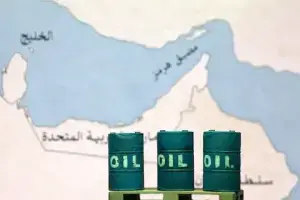
The State Bank of Pakistan is expected to announce its new monetary policy today, with market expectations mixed amid volatile oil prices and a recent US-Iran peace deal.
- The SBP's previous policy rate increase.
- Market expectations for the central bank's decision.
- The US-Iran peace deal and its impact.

The Monetary Policy Committee (MPC) of the State Bank of Pakistan (SBP) on Monday decided to keep the policy rate unchanged at 11.5%.
The Monetary Policy Committee (MPC) met for the fourth time this year. The decision was in line with market expectations.
“The committee noted that global oil prices have eased following the recent positive geopolitical developments, yet they remain elevated as compared to pre-conflict levels. Nonetheless, as anticipated in the last MPC meeting, the impact of the conflict is now reflecting in recent economic indicators,” read the statement.
As per the MPC, headline inflation rose to double digits in April and May, while core inflation also edged up.
“Moreover, economic activity is showing some signs of moderation, reflecting the impact of elevated prices, austerity measures and prevalent economic uncertainty. Meanwhile, the external account pressures remain moderate,” it said.
The MPC observed that the macroeconomic outlook is broadly unchanged from its previous meeting.
“In this context, the MPC assessed that the current monetary policy stance remains appropriate to guide inflation towards the target range of 5 –7% over the medium term,” it said.
The MPC noted the following key developments since its last meeting.
“First, real GDP growth for FY26 is provisionally estimated at 3.7% by the PBS.
“Second, confidence of both consumers and businesses recovered marginally in the latest sentiment surveys, while their inflation expectations eased somewhat.
“Third, the successful completion of IMF reviews for EFF and RSF, coupled with ongoing purchases, increased SBP’s FX reserves to $17.2 billion as of June 5, 2026.
“Fourth, the government has estimated primary balance surplus for FY26 at 2.5% of GDP and is targeting a surplus of 2.0% of GDP for FY27.
“Lastly, the Middle East conflict has begun to impact macroeconomic conditions in many economies, and a rising number of central banks have started to raise their policy rates,” it noted.
The MPC noted that proactive macroeconomic management – underpinned by forward-looking monetary policy and consistent fiscal consolidation – has helped sustain ongoing macroeconomic stability despite the prolonged Middle East conflict.
Inflation outlook
The MPC assessed that inflation may remain in double digits for the next few months, before gradually easing subsequently.
“This outlook is subject to multiple risks, including geopolitical developments, the extent of pass-through of global prices to domestic fuel prices, the magnitude of adjustments in power and gas tariffs, potential fiscal slippages, and uncertain food prices amidst weather-related challenges,” it said.
Previous MPC
In the previous MPC meeting held on April 27, 2026, the central bank raised the policy rate by 100bps, increasing it to 11.5%, in line with market expectations.
Earlier, Topline Securities expected interest rates to remain unchanged.
In a poll conducted by Topline Securities, 49% of respondents expect the policy rate to remain unchanged on Jun 15, 2026, MPC meeting. Meanwhile, the remaining 49% anticipate an increase, with 34% expecting a 50bps hike and 15% forecasting a 100bps hike. While 2% expect a decline of up to 50bps.
“The uncertainty/mix view over rate change expectations is primarily driven by high volatility in oil prices. Our view of the status quo is backed by efforts/steps taken by involving parties in the war and active mediation by Pakistan,” said the brokerage house.
Meanwhile, Pakistan Institute of Development Economics (PIDE) noted that market expectations are broadly aligned with a cautious hold.
“Recent commentary suggests that, while views remain divided between status quo and a modest hike, easing oil-price and geopolitical pressures have reduced the probability of another increase, whereas still-elevated inflation and expectation risks make a rate cut premature,” it added.
Industrialists denounce status quo
Atif Ikram Sheikh, President of the Federation of Pakistan Chambers of Commerce & Industry (FPCCI), has denounced the status quo saying that a static policy rate in the double digits is “highly detrimental to the nation’s economic survival; and, failure to ease borrowing costs will accelerate de-industrialisation and severely compromise export targets, which are highly critical for earning precious foreign exchange for the country”.
Sheikh expressed his concern over the central bank’s disconnect from the challenges being faced by trade and industry.
“The decision to hold the policy rate is unfortunate, despite a clear downward expectation in inflation numbers on the back of the impending US-Iran peace deal being facilitated by Pakistan, and gradual normalisation of global energy supplies,” he said.
Meanwhile, Saquib Fayyaz Magoon, SVP FPCCI, highlighted that the benchmark policy rate has created an artificially high cost of capital.
“Our regional competitors are operating with significantly lower borrowing costs, rendering Pakistani exports fundamentally uncompetitive in the global arena. Maintaining the status quo only penalises SMEs and large-scale manufacturing alike, effectively halting capacity expansion and job creation,” he said.



















Comments