


Budget: Punjab closely follows in Centre’s footsteps
- Pesents Rs5.9trn budget for FY2026-27
The Punjab government unveiled its Rs 5.903 trillion budget for FY 2026-27, prioritizing social sectors, health, education, and economic growth with a Rs 752 billion development program.
- Increased allocations for health and education sectors.
- Ambitious targets for provincial own-source revenue.
- New initiatives for economic growth and job creation.
- Proposed salary and pension increases for government employees.
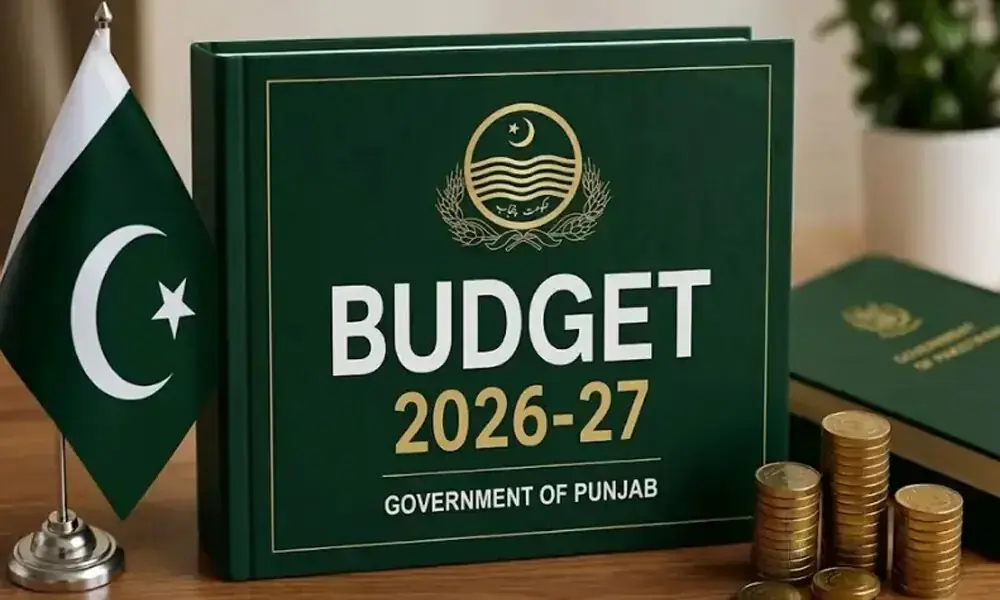

LAHORE: The Punjab government presented its annual budget for the fiscal year 2026-27 in the Provincial Assembly, with a projected total outlay of Rs 5.903 trillion and an allocation of Rs 752 billion under the Annual Development Programme (ADP), placing special emphasis on the development of social sector, health, education and economic growth.
Finance Minister Mujtaba Shuja-ur-Rehman presented the budget in the House amid protests by opposition members, who termed it an anti-people budget.
Chief Minister Maryam Nawaz was also present during the session. Highlighting the salient features of the budget, the finance minister said that significant increases had been made in allocations for the health, education, and social sectors.
He said the total outlay of Rs 5.903 trillion for the fiscal year 2026-27 marks a 10.7 percent increase over the current fiscal year’s budget. The finance minister stated that total current expenditures have been estimated at Rs1.962 trillion, reflecting a 3.1 percent decrease compared to the ongoing fiscal year.
READ MORE: Punjab to present budget today
He attributed the reduction to the government’s austerity and expenditure rationalization policies.
The budget proposes a 7 percent increase in salaries for government employees. Despite the pay raise, salary expenditures are expected to increase by only 1.4 percent, reaching Rs 638.93 billion, which the minister credited to the government’s rightsizing policy. Pension payments for retired government employees are proposed to increase by 3.5 percent, bringing total pension expenditures to Rs 500.12 billion.
To strengthen grassroots governance and public service delivery, the government has proposed Rs 803.88 billion for local governments, under the Provincial Finance Commission (PFC) Award, representing a 5.2 percent increase. Service delivery expenditure has been estimated at Rs 783.62 billion, including Rs578.62 billion for operational expenses of institutions, which is 5.1 percent lower than the previous fiscal year. Capital expenditures worth Rs679.01 billion have also been proposed.
The finance minister said the government had maintained fiscal discipline despite economic challenges, enabling the allocation of Rs752 billion for development projects through improved revenue generation, efficient resource utilization and expenditure rationalization.
Under the National Finance Commission (NFC) Award, Punjab is expected to receive Rs4.391 trillion from the federal government, an increase of 8.1 percent over the outgoing fiscal year. The province has also set an ambitious target of Rs1.210 trillion in own-source revenues.
The Punjab Revenue Authority (PRA) has been assigned a revenue target of Rs528.5 billion, a 55.4 percent increase from the current year. The Board of Revenue is expected to collect Rs86.19 billion, while the Excise and Taxation Department has been given a target of Rs124 billion, representing a 77 percent increase. Non-tax revenues are projected at Rs461.17 billion, up 52 percent from the current fiscal year. The minister said these targets would strengthen the province’s financial self-reliance and ensure the availability of resources for development priorities.
The government has proposed Rs750 billion for the education sector in FY2026-27, including Rs63.3 billion for development projects and Rs686.8 billion for non-development expenditures. Education will account for more than 15 percent of the total provincial budget. The allocation aims to improve educational infrastructure, promote modern skills, expand digital facilities and enhance access to quality education.
Under the Chief Minister Punjab Laptop Programme, a project worth Rs27 billion has been launched to distribute 110,000 modern laptops. So far, 42,000 laptops have already been distributed. Additionally, Rs15 billion has been allocated for the Honhaar Scholarship Programme, benefiting approximately 108,000 students.
The health sector has been allocated Rs500.62 billion, comprising Rs424.32 billion in non-development expenditures and Rs76.3 billion for development projects. The allocation is 10 percent higher than the current year’s budget. Construction of the Nawaz Sharif Institute of Cancer Treatment and Research, a project costing Rs75 billion, is continuing with Rs20 billion allocated for the coming fiscal year.
The government also plans to begin work on the Nawaz Sharif Medical District, a Rs169 billion initiative that will include a children’s hospital, orthopedic and surgical hospital, center of excellence and a burn unit.
To enhance exports and value addition, the government plans to establish plug-and-play factory parks for the garments sector at a cost of Rs13.3 billion. The initiative is expected to generate an additional $300 million in annual exports, create 20,000 jobs, and facilitate the establishment of 40 new garment units.
Agriculture, livestock and aquaculture sectors have been allocated Rs133.54 billion in development and non-development spending. Over the next three years, the government plans to invest approximately Rs482 billion under economic transformation initiatives focused on agricultural value addition, livestock development and aquaculture.
Copyright Business Recorder, 2026




















Comments