


Oil prices fall 4% to three-month low on hopes interim US-Iran deal will reopen Hormuz
- Brent crude futures fell $3.29 to $79.88 a barrel at 10:48 a.m. ET (1448 GMT)
Oil prices rebounded due to uncertainty surrounding a preliminary US-Iran peace deal and concerns that reopening the Strait of Hormuz and restoring oil supply will take longer than expected.
- Impact of the US-Iran preliminary agreement on oil.
- Challenges to fully reopening the Strait of Hormuz.
- Iran's nuclear program in peace negotiations.
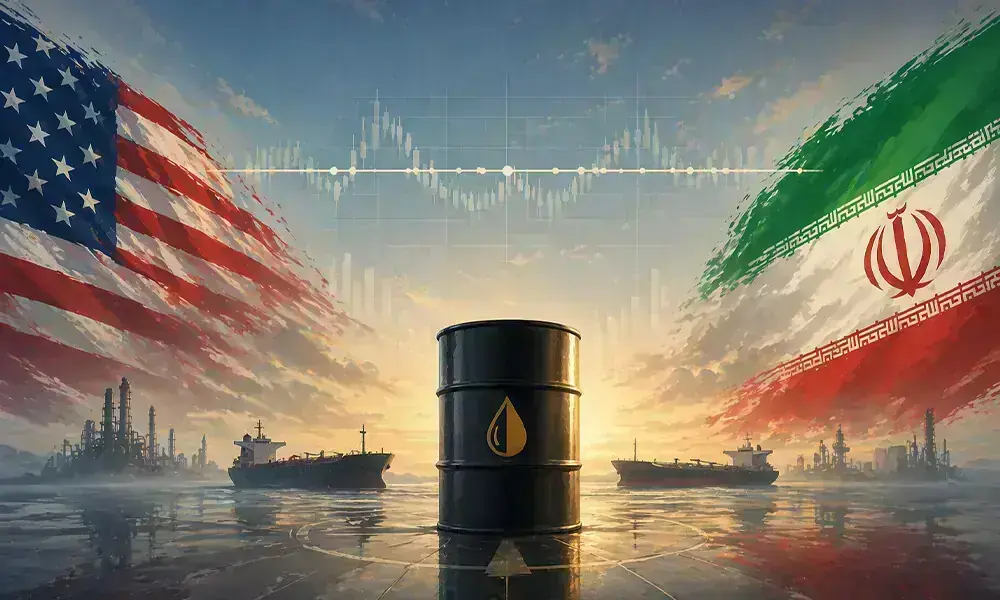

NEW YORK: Oil prices fell about 4% to a fresh three-month low on Tuesday on hopes the US and Iran will agree to end the war and allow oil to flow through the Strait of Hormuz.
Brent crude futures fell $3.29, or 4%, to $79.88 a barrel at 10:48 a.m. ET (1448 GMT), while US West Texas Intermediate crude fell $3.82, or 4.7%, to $76.93.
The drop put Brent on track for its lowest close since March 2 and kept it in technically oversold territory for a third day in a row for the first time since October 2025. WTI was on track for its lowest close since March 4.
Before the Iran war started on February 28, both crude benchmarks were trading around $65 to $70 a barrel.
Oil prices sank nearly 5% on Monday after US President Donald Trump announced an interim deal to end the US-Israeli war with Iran.
Doubts, however, swirled around the interim deal on Tuesday, with warnings that shipping traffic and energy exports could take weeks to recover and details of the agreement yet to be made public.
The interim deal would extend a tenuous ceasefire announced in April by another 60 days and reopen the strait, which Iran has effectively blocked since the US and Israel first attacked Iran. About 20% of global oil supplies passed through the strait before the war.
That preliminary agreement prompted investment banks, including Goldman Sachs, Morgan Stanley and Citi, to lower their oil price forecasts.
“Even in the best-case scenario — in which the Strait of Hormuz is sustainably reopened — it is likely to take quite some time before shipping traffic, and thus energy exports from the Gulf region, have normalised again,” Commerzbank analysts said in a note.
Around the world
Other factors weighing on oil prices included worries about China’s economy, rising global inflation and interest rates, and US calls for peace between Russia and Ukraine.
In China, the world’s second-biggest economy showed increasing unevenness in May.
Trump said Russia should make peace with Ukraine, and that he would try to help, after Group of Seven leaders met Ukrainian President Volodymyr Zelenskiy on Tuesday.
A settlement in the Ukraine war could result in the lifting of some sanctions on Russia, which could allow Moscow to export more oil. Russia was the world’s third-biggest crude oil producer behind the US and Saudi Arabia in 2025, according to US energy data.
In the US, most global brokerages are betting the Federal Reserve will hold interest rates steady for the rest of 2026, reversing from expectations of two interest rate cuts at the start of the year, as policymakers navigate elevated inflation risks and a resilient labor market.
The Bank of Japan raised interest rates to a 31-year high on Tuesday.
Central banks such as the Fed and BoJ use interest rates to control inflation. Higher interest rates raise consumer costs, which can reduce economic growth and demand for oil.
China’s crude oil throughput in May fell 9.1% from a year earlier to the lowest level in almost four years.
US oil inventories
The oil market awaited weekly storage reports from the American Petroleum Institute trade group later on Tuesday and the US Energy Information Administration on Wednesday.
Analysts estimated energy firms pulled 4.5 million barrels of crude from storage during the week ended June 12.
If correct, that would be the first time energy firms pulled crude out of storage for eight weeks in a row since January 2025. It compares with a decrease of 11.5 million barrels in the same week last year and an average decline of 2.3 million barrels over the past five years (2021 to 2025).



























Comments