



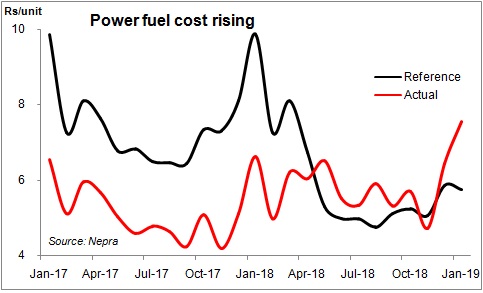
The fuel cost for burning furnace oil to generate power in the last two months is 38 percent of the total bill. The furnace oil fuel cost has been the single largest fuel source cost in the last two months – for the first time in over a year. All this while RLNG fuel cost was consistently the largest – keeping the fuel cost component somewhat in check.
Unsurprisingly, January 2019 and December 2018 are the only months in the last thirteen, where the FO generation share exceeded that of RLNG. Apparently, Pakistan is supposed to have corrected its ailing power generation mix. The regulator, Nepra, in the latest hearing on deciding the monthly adjustment in fuel cost component for January 2019, took “serious notice” of underutilization of efficient power plants and generating more on FO – while going on to provisionally allow the increased cost to be part of tariffs.
The National Power Control Centre (NPCC), in the words of Nepra, was “trying to shift the responsibility,” of less than optimal utilization of more efficient RNLG power plants. The response from the NPCC shows just why the presence of a strong, functional, coherent central ministry for energy affairs is needed today more than ever before, as the Energy Ministry appears clueless on why was there shortage of LNG. This is classic case of zero coordination between two important and apparently much related ministries – which appear to know little to nothing on matters as serious as fuel availability.
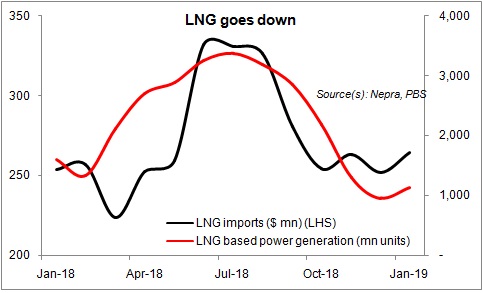
A look at the LNG imports in the past few months shows the import planning was completely in another direction to the LNG requirement of 1468 mmcfd. The allocated amount is one-fifth of the requirement. Little wonder why FO has taken the lion’s share, LNG has gone down, and the costs are up. (read: Power: FO refuses to go, published on Jan 19, 2019 & Power generation goes dearer, published Feb 19, 2019).
The monthly LNG imports in the last four months have averaged 20 percent lower than the preceding four months – despite higher RLNG dependable generation availability. There appears to be a deliberate attempt to import less RLNG, despite the winter season, and the fact that the hydel generation goes considerably down in these months. If anything, efforts should have been made to import more LNG during the period.

And one has to look no further beyond the simultaneous increase in the FO based generation (and the fuel cost as well) to know why the LNG imports did not happen as per requirements. Remember the refineries in Pakistan, still end up producing FO. And somebody has to procure it, to keep them running. It is the inefficiency cycle all over – the inefficient refiners produce the expensive FO, the government procures it to keep them afloat, more efficient plants are deliberate kept shut to make use of the more expensive fuel, the costs go higher, payments go down, circular debt goes out of bound, and the merit order goes for a walk.
Pretty scary – right? And that is without even mentioning the ills of generation and distribution losses.





















Comments
Comments are closed for this article.