


Indian rupee supported by oil slump, capped by Asian weakness in run-up to Fed
- The Indian rupee is expected to open in the 94.50-94.55 range to the US dollar, per traders, having settled at 94.56 on Tuesday
The Indian rupee is set to open marginally higher, boosted by falling oil prices due to the US-Iran deal, but weakening Asian currencies and the upcoming Fed decision may cap gains.
- Falling oil prices and their effect on the Indian rupee.
- The US-Iran interim peace agreement and its market implications.
- Anticipated Federal Reserve policy decision and market scrutiny.
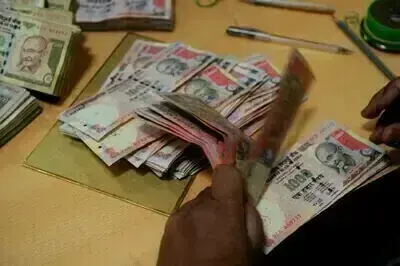
MUMBAI: The Indian rupee is likely to open marginally higher on Wednesday, aided by a further drop in oil prices, though weakening in Asian currencies ahead of the Fed decision may cap the advance.
The Indian rupee is expected to open in the 94.50-94.55 range to the US dollar, per traders, having settled at 94.56 on Tuesday.
Brent crude tumbled 5% on Tuesday to below $80, taking losses over four sessions to about 15% on expectations a US-contract is at its lowest since the first week of March, roughly only $7 above the pre-conflict level.
Details began to emerge on Tuesday of the US and Iran’s interim peace agreement, with U.S. President Donald Trump saying it will rule out a nuclear weapon for Tehran and a U.S. official saying it allows Iran to sell oil upon signing.
While the slide in oil prices points to rising optimism about the normalization of flows, analysts have urged caution.
“Many questions remain on how the interim US-Iran deal will be implemented,” analysts at ANZ Bank said in a note.
“Concerns over the safety of vessels remain high, while there is some doubt on whether the chokepoint for a fifth of the world’s supply will remain toll-free.”
The rupee has climbed about 1.2% in the last six sessions, helped by the slide in oil prices, a major boost for net energy importer India. However, the currency has struggled to sustain moves past the 94.50 level over the last two sessions.
Traders said that threshold may remain a hurdle on Wednesday, pointing to weakness in Asian currencies. Focus is firmly on the Federal Reserve’s first policy decision under Chair Kevin Warsh, where rates are widely expected to be left unchanged, though the statement, economic projections and press conference will be closely scrutinised.















Comments