


Tariq Glass Industries Limited (PSX: TGL) was incorporated in Pakistan as a private limited company in 1978 and was converted into a public limited company in 1980. The principal activity of the company is the manufacturing and sale of glass containers, opal glass, float glass and tableware. Besides, meeting the demand in the local market, TGL’s renowned brands Toyo Nasic, Omroc and Nova are also exported across the globe.
Pattern of Shareholding
As of June 30,2024, TGL has a total of 172.167 million shares outstanding which are held by 3895shareholders. Directors, CEO, their spouse and minor children are the major shareholders of TGL holding 37.69 percent of its shares followed by associated companies, undertakings and related partieshaving a stake of 23.33 percent in the company.
Local general public accounts for 20.42 percent of the outstanding shares of TGL while Modarabas and Mutual funds hold 8.71 percent shares. 4.46 percent of TGL’s shares are held by joint stock companies and 2.85 percent by Banks, DFIs and NBFIs. 1.42 percent of the company’s shares are held by Pension funds, provident funds and cooperative societies. The remaining shares are held by other categories of shareholders.
Historical Performance (2019-24)
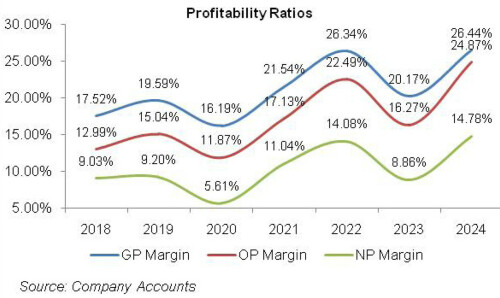
Except for a dip in 2020 and 2023, TGL’s topline and bottomline have boasted double digit growth in all the years under consideration. The margins which were on the rise until 2019, took a dip in 2020. Soon after the COVID-19 phase passed, the margins took a flight until 2022. In 2023,
TGL’s margins considerably declined. In 2024, the margins rebounded to attain their optimum level.The detailed performance review of the period under consideration is given below.
In 2019, TGL’s net sales grew by 18.37 percent year-on-year to clock in at Rs.14,389.01 million. 94.5 percent of the total revenue recognized by TGL in 2019 was from local sales while the remaining 5.5 percent sales was from exportsto Sri Lanka, India, Afghanistan and other export destinations.
The pulled production of the company clocked in at 267,582 M Tons while packed production stood at 214,538 M Tons in 2019, signifying a year-on-year growth of 5.6 percent and 13.8 percent respectively. Despite depreciation of Pak Rupee and high cost of raw and packaging materials, labor and general overheads and export and freight charges, the company was able to drive its gross profit up by 32.37 percent year-on-year in 2019.This translated into GP margin of 19.60 percent, up from GP ratio of 17.52 percent recorded in 2018.
Administrative expense grew by 11.89 percent year-on-year in 2019 as the company hired additional human resources to meet the growing demand. The number of employees grew from 914 in 2018 to 992 in 2019. Moreover, elevated Ijarah rentals and depreciation charges also pushed the administrative expense up in 2019. Distribution expense grew by 28.47 percent year-on-year in 2019 on account of higher payroll expense, travelling expense as well as advertisement and promotion charges.
Other income grew by 165 percent year-on-year in 2019 as the company recorded gain on the disposal of its property, plant and equipment besides recognizing hefty exchange gain on its export sales because of weaker Pak Rupee. Other expense grew by 29.75 percent year-on-year in 2019 due to higher provisioning done for WPPF and doubtful advances. Operating profit posted a handsome 37.13 percent year-on-year growth in 2019 with OP margin growing from 13 percent in 2018 to 15 percent in 2019.
Finance cost grew by 102 percent year-on-year in 2019 on the back of high discount rate coupled with increased short-term and long-term debt obligations. During the year, the company obtained demand facilities from various banks to finance the manufacturing of new production line of opal glass dinnerware and float glass. Moreover, running finance facilities obtained during 2019 also surpassed the previous year’s level because of high cost of production.
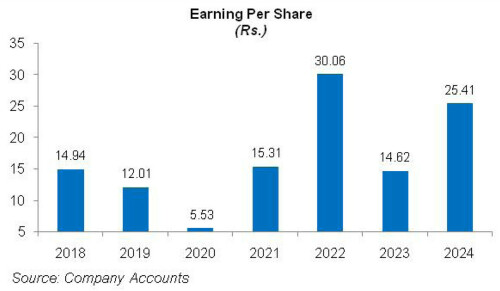
This resulted in debt-to-equity ratio of 119 percent in 2019 versus 66 percent in 2018. TGL’s net profit grew by 20.65 percent year-on-year to clock in at Rs.1323.68 million in 2019 with NP margin clocking in at 9.20 percent, slightly higher than the NP margin of 9 percent posted in 2018. EPS dropped from Rs.14.94 in 2018 to Rs. 12.01 in 2019 due to the issuance of 50 percent bonus shares.
In 2020, the outbreak of COVID-19 not only endangered the lives of humans across the globe but also put businesses and economies at risk due to lockdowns imposed all over the world. The pandemic not only halted the operations of the companies but also resulted in dampened demand due to a drop in the purchasing power of consumers.
TGL was no different as its net sales nosedived by 5.57 percent year-on-year to clock in at Rs.13,587.30 million in 2020. Due to tamed demand, the company couldn’t pass on the onus of high cost of production to its consumers which not only trimmed down its gross profit by 21.95 percent year-on-year in 2020 but also resulted in a thinner GP margin of 16.20 percent.
Administrative expense kept growing in 2020 due to high inflation and an increase in the number of employees to 1006 as the company continued its production and accumulated finished goods inventory during the lockdown period.
The pulled production clocked in at 248,391 M Tons in 2020 while packed productions stood at 193,487 M Tons in 2020, indicating a drop of 7.2 percent and 9.8 percent respectively. Distribution expense plunged by 21.34 percent year-on-year in 2020 due to significant drop in payroll expense, travelling expense as well as advertisement and promotion charges. Other income plummeted by 23.22 percentyear-on-year in 2020 due to high- base effect as the company disposed off its fixed assets in the previous year.
This diluted the impact of a tremendous rise in foreign exchange gain in 2020 as company’s export sales accounted for 7.7 percent of its net sales in 2020 versus 5.5 percent in 2019. Other expense slumped by 36.97 percent year-on-year in 2020 owing to a drop in the provisioning done for WWF, WPPF and doubtful advances. Despite cost curtailment, operating profit lost its footing and declined by 25.48 percent year-on-year in 2020, translating into OP margin of 11.87 percent.
Finance cost surged by 83.13 percent year-on-year in 2020 due to considerable increase in TGL’s borrowings during the year. The company obtained both long-term and short-term loans during 2020 to finance its capital expenditure and meet its working capital requirements respectively.
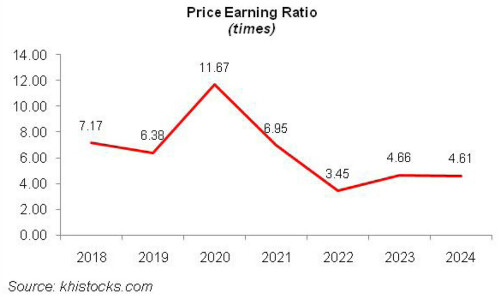
This resulted in debt-to-equity ratio of 155 percent in 2020. Net profit shrank by 42.46 percent in 2020 to clock in at Rs.761.59 million with NP margin of 5.61 percent. EPS also dropped to Rs.5.53 in 2020.
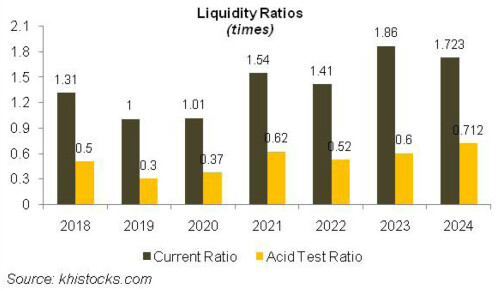
2021 brought about a staggering 40.60 percent year-on-year in TGL’s net sales which were recorded at Rs.19,103.35 million. During the year, the company commenced the operations of its new float glass plant unit-II which had a daily production capacity of 500 M Tons.
The pulled production increased by 12.9 percent to clock in at 280,426 M Tons and packed production rose by 10.6 percent to clock in at 213,948 M Tons respectively in 2020. Cost of sales grew by 31.62 percent year-on-year. Pak Rupee was relatively stable during the year.
Gross profit posted a stunning 87 percent rise in 2021 with GP margin growing up to 21.54 percent. Administrative expense grew by 8.87 percent year-on-year in 2021 as the employee headcount grew to 1143 in 2021 to meet the human resource requirement at the new plant as well as old plants. Distribution expense posted an uptick of 27.57 percent year-on-year in 2021 as the company launched advertising and promotional campaigns to muster sales of its float glass.
Impairment allowance for trade debts considerably grew in 2021 to clock in at Rs.15.01 million versus Rs.8.45 million in the previous year. Other income contracted by 50.71 percent year-on-year in 2021 as the company posted net exchange loss due to appreciation in the value of local currency in 2021.
Other expense surged by 165.85 percent year-on-year in 2021 owing to higher provisioning done for WPPF, WWF as well foreign exchange loss incurred during the year. Operating profit grew by 102.82 percent in 2021 with OP margin climbing up to 17.13 percent.
Finance cost slumped by 44.84 percent year-on-year in 2021 due to low discount rate and lesser borrowings. Debt-to-equity plunged to 77 percent in 2021. Net profit climbed up by 176.97 percent in 2021 to clock in at Rs.2109.37 million with NP margin of 11 percent. EPS rose to Rs.15.31 in 2021.
TGL’s topline grew by an even greater magnitude of 53.98 percent year-on-year in 2022 to clock in at Rs.29,415.67 million. Out of the total sales of Rs. 29,415.67 million in 2022, 9.2 percent pertained to export sales. To meet the growing demand of its products, the company’s pulled production increased remarkably by 33.8 percent to clock in at 375,229 M Tons. Packed production also boasted a tremendous growth of 41.6 percent in 2022 to clock in at 303,022 M Tons.
Upward price revisions coupled with economies of scale achieved due to the instigation of new float glass plant resulted in year-on-year growth of 88.29 percent ingross profit in 2022 with GP margin jumping up to 26.34 percent. Administrative and distribution expense grew by 22.65 percent and 28.49 percent respectively in 2022.
The number of employees grew to 1250 in 2022 which greatly increased the payroll expense. Moreover, higher advertisement expense, travel expense and depreciation were the main contributors of elevated operating expense in 2022. Other income multiplied by 671.30 percent in 2022 due to massive gain recognized on the disposal of property, plant and equipment, sizeable foreign exchange gain and high interest income on bank deposits due to high discount rate.
Other expense rose by 106 percent year-on-year in 2022 due to high provisioning done for WWF, WPPF and doubtful advances. Operating profit went up by 102.15 percent year-on-year in 2022, culminating into OP margin of 22.49 percent. Finance cost inched up by 10.49 percent year-on-year in 2022 as the company settled its long-term loans to a large extent in 2022. Debt-to-equity ratio slightly reduced to 76 percent in 2022. Net profit rose by 96.30 percent year-on-year in 2022 to clock in at Rs.4140.67 million with NP margin of 14.1 percent. EPS also rose to Rs.30.06 in 2022.
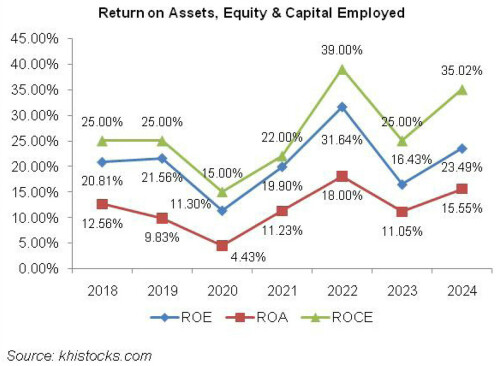
During 2023, TGL’s net sales dipped by 3.36 percent year-on-year to clock in at Rs.28,426.97 million. Due to sluggish demand, the company pulled production dropped to 242,163 M tons in 2023, down 35.46 percent year-on-year.
Packed production also slumped by 35.39 percent to clock in at 195,780 M tons in 2023. Conversely, cost of sales grew by 4.74 percent year-on-year in 2023 due to expensive RLNG, electricity, Diesel, LPG and furnace oil coupled with unprecedented level of inflation which pushed up the prices of raw and packaging materials. Gross profit declined by 26 percent year-on-year in 2023 with GP margin eroding to 20.17 percent.
Administrative expense grew by 26.22 percent year-on-year in 2023 due to higher payroll expense, travelling expense, legal & professional charges, utility charges, rent as well as generous donations paid during the year. TGL’s workforce was squeezed to 1211 employees in 2023. Distribution expense inched up by 8 percent in 2023 due to higher payroll and travelling expense as well as rent & utility charges paid during the year.
Other income grew by 13.50 percent in 2023 due to higherforeign exchange gain owing to Pak Rupee depreciation. Interest income from bank deposits also contributed to driving up other income in 2023. Other expense slid by 32 percent year-on-year due to low provisioning done for WWF and WPPF.
Operating profit sank by 30 percent year-on-year in 2023 with OP margin sliding down to 16.3 percent. Finance cost grew by 46.85 percent year-on-year in 2023 due to higher discount rate while TGL’s outstanding borrowings dropped in 2023. Debt-to-equity ratio marched down to 49 percent in 2023. Net profit slipped by 39.16 percent year-on-year in 2023 to clock in at Rs.2519.13 million with EPS of Rs.14.62 and NP margin of 8.9 percent.
In 2024, TGL’s net sales posted year-on-year rise of 4.12 percent to clock in at Rs. 29,598.54 million. This was mainly due to price optimization to pass on the partial impact of cost hike to the consumers. Pull production slid by 6.6 percent to clock at 226,176 tons while pack production dropped by 6.29 percent to clock in at 183,460 tons. Cost of sales slid by 4 percent in 2024 due to effective management of energy mix and adoption of cheaper alternative of natural gas.
Controlled cost and the ability to pass on the effect of cost hike to consumers resulted in 36.50 percent higher gross profit in 2024 with GP margin recording its optimum level of 26.44 percent. Administrative and distribution expenses multiplied by 14.83 percent and 23.33 percent respectively in 2024. The main factors behind the elevated operating expense in 2024 were higher payroll expense, travelling & conveyance charges, legal & professional charges as well as advertisement & promotion expense.
TGL streamlined its workforce from 1211 employees in 2023 to 1034 employees in 2024.Other income strengthened by 163.75 percent in 2024 mainly on account of gain from sale of store, spare parts and raw materials to a related party, gain on discounting of investment to present value and interest income on saving deposits. Other income was completely wiped off by 40.75 percent higher other expense recorded in 2024 on account of higher profit related provisioning and exchange loss. Moreover, the company also recorded 215.61 percent higher impairment allowance on trade debts to the tune of Rs.46.58 million. Share of loss from associates also clocked in at Rs.148.70 million in 2024.
All these factors could’ve taken a toll on the profitability and margins of the company, but TGL recorded a tremendous bargain purchase gain of Rs.915.16 million in 2024 on investment in associate. This enabled TGL to regain its financial soundness in 2024.
During the year, TGL acquired 50 percent stake in M/s MMM Holding (Private) Limited which is the holding company of Baluchistan Glass Limited. Through this transaction, TGL became a beneficial owner of 42.17 percent shares of BGL. After this transaction, TGL acquired joint management control of MMM and BGL.
Operating profit enhanced by 59.11 percent in 2024 with OP margin clocking in at an unprecedented level of 24.87 percent. Finance cost inched up by 12.63 percent in 2024. This was on account of increased working capital requirements and capital expenditure to rebuild the float glass furnace and finance new production lines. Net profit climbed up by 73.65 percent year-on-year to clock in at Rs.4374.469 million with EPS of Rs.25.41 and NP margin of 14.78 percent.
Recent Performance (9MFY25)
TGL recorded 15.51 percent year-on-year growth in its net sales, which clocked in at Rs.24.831.29 million in 9MFY25. One plant each of tableware and float glass was fully operational during the year. The other plants were kept on hold for more favorable demand and market conditions. Cost of sales inched up by 8.71 percent during 9MFY25 due to favorable energy mix.
This coupled with price optimization enabled TGL to record 34.23 percent stronger gross profit in 9MFY25 with GP margin clocking in at 30.98 percent versus GP margin of 26.66 percent recorded in 9MFY24. Administrative expense mounted by 17 percent in 9MFY25 while distribution expense posted 6.10 percent downtick. Other income deteriorated by 28.57 percent during the period under consideration seemingly on account of high-base effect as the company recorded robust interest income and gain on sale of store, spares and raw materials to a related party in the previous year.
Other expense surged by 39.88 percent in 9MFY25 due to higher profit related provisioning. One-off bargain purchase gain recorded in 9MFY24 coupled with 287.83 percent higher share of loss of associate allowed TGL to record only 11.53 percent uptick in its operating profit in 9MFY25 with OP margin marching down to 25.30 percent versus OP margin of 26.20 percent recorded in 9MFY24.
Finance cost dipped 7.52 percent in 9MFY25 due to monetary easing and considerably lower outstanding borrowings recorded at the end of the period under consideration. TGL discharged its short-term borrowings to its entirety during 9MFY25. Net profit ticked up by 0.92 percent in 9MFY25 to clock in at Rs.3509.74 million with EPS of Rs.20.39 versus EPS of Rs.20.20 recorded in 9MFY24. NP margin ticked down from 16.18 percent in 9MFY24 to 14.13 percent in 9MFY25.
Future Outlook
Easing inflation, discount rate and energy tariff will provide cost savings for the company and also foster demand recovery across the sectors.
Copyright Business Recorder, 2025

























Comments
Comments are closed for this article.