


Pakistan eyes B+ sovereign credit rating by Sept 2027: finance minister
- Country has been rated at ‘B’ with stable outlook since July 2026 by S&P Global Ratings, while Moody’s raised Pakistan’s credit rating to ‘B3’ from ‘Caa1’ with a stable outlook in August 2026
Pakistan's Finance Minister anticipates a 'B+' sovereign credit rating upgrade by Q1 FY27-28, driven by macroeconomic stability, record forex reserves, and structural reforms, aiming for higher FDI.
- Expected 'B+' sovereign credit rating.
- Record high foreign exchange reserves.
- Future of IMF programs.
- Projected economic growth for FY27.
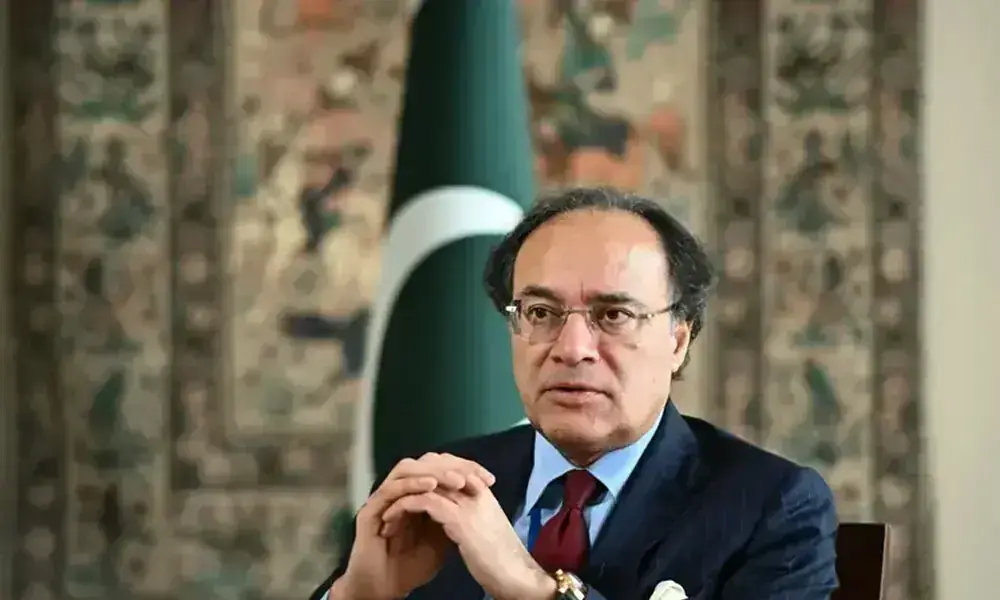

Finance Minister Muhammad Aurangzeb said on Thursday Pakistan was expected to be upgraded to ‘B+’ sovereign credit rating by first quarter (Jul–Sep) of the next fiscal year 2027-28 by global agencies, adding it was premature to say whether ongoing $7 billion IMF Extended Fund Facility (EFF) would be the country’s last programme.
Pakistan has been rated at ‘B’ with stable outlook since July 2026 by S&P Global Ratings, while Moody’s raised Pakistan’s credit rating to ‘B3’ from ‘Caa1’ with a stable outlook in August 2026.
“I am hopeful, if we remain on the trajectory of macro stability on the back of structural reforms, then God willing we will get to ‘B+’ by end of this fiscal year or by first quarter of the next fiscal year,” Senator Aurangzeb said while addressing media at the Overseas Investors Chamber of Commerce and Industry (OICCI).
He recalled three credit rating upgrades had been made on Pakistan by global rating agencies since April 2025. “If we look at Pakistan’s last 40-year journey, the best ever rating for Pakistan has been ‘B+’.”
“We have high ambition that we breakthrough in ‘BB’ rating category,” he said, adding the rating upgrades were achieved in the wake of improvement in the external economy with record high inflows of remittances and record foreign exchange reserves held by State Bank of Pakistan (SBP).
Pakistan’s foreign exchange reserves held by the State Bank of Pakistan (SBP) reached a record high of $21.44 billion in September 2026, raising the country’s import cover to around three months and bringing it in line with the international benchmark.
The macroeconomic stability, the upgrades in ratings, and Pakistan International Airlines’ (PIA) privatisation should convince more local and as well as foreign investors to inject foreign direct investment (FDI) in Pakistan, going forward, he said.
Responding to a question whether the ongoing IMF’s $7 billion Extended Fund Facility (EFF) was the last programme, Aurangzeb said that remained premature to say anything. “We will decide on this during the course of this year [FY27]”, he said.
He further said Pakistan needed to gradually reduce its reliance on external financing, as the country needed to address its short-term rollover and balance-of-payments requirements.
“The successful issuance of the $3 billion Eurobond is an important step in the right direction. These are all steps that will help us gradually move towards weaning off foreign support [and IMF].”
He remained hopeful Pakistan’s current account deficit would remain within the initial target of zero to 1% of gross domestic product (GDP) in FY27 despite the surge in oil price in international markets to above $100 per barrel in the backdrop of the ongoing middle eastern geopolitical crisis.
The finance czar projected the country’s economy would achieve a growth rate of 4% in FY27 compared to 3.7% attained in the preceding year FY26.


























Comments