


Pakistan’s solar boom adds pressure on Chinese-backed coal plants: report
- Solar accounted for about 20% of Pakistan’s electricity generation in 2025, up from roughly 3% at the start of the decade
Pakistan's rapid shift to solar power is straining its grid, reducing demand for conventional electricity, impacting utility finances, and jeopardizing repayments for Chinese-backed coal plants.
- Widespread solar panel adoption in industrial zones and homes.
- Financial strain on utilities and Chinese-backed coal plants.
- Rapid increase in solar's share of Pakistan's electricity generation.
- Pakistan's efforts to extend power-sector debt repayment periods.
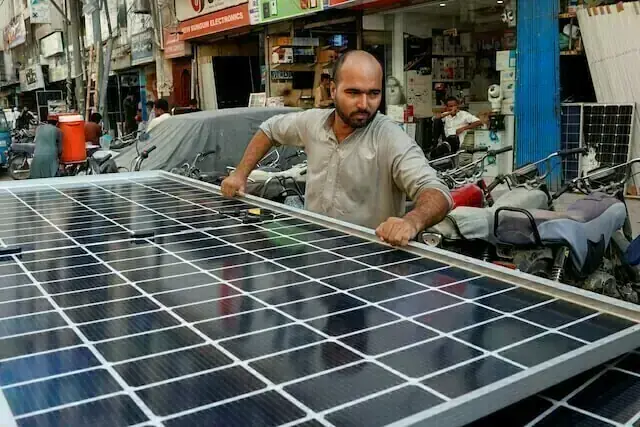

Pakistan’s rapid shift towards solar power is creating a new challenge for the country’s troubled power sector, as cheaper distributed generation reduces demand for grid electricity, strains utilities’ finances and threatens the repayment economics of Chinese-backed coal-fired power plants, reported Bloomberg on Thursday.
According to the report, about an hour’s drive east of Karachi, the country’s economic hub, solar panels now cover rooftops across an industrial zone of about 400 companies at Port Qasim, alongside a coal-fired power station built as part of China’s Belt and Road Initiative.
“There are solar panels almost everywhere one sees,” Zaheer Allana, owner of a packaging factory, told Bloomberg, where the rooftop is crowded with photovoltaic modules that generate about a fifth of the facility’s electricity needs. “We have utilised almost all available space… If we had space, we would take it to 100%.”
The panels deliver power at less than one-third of the electricity price, he said. “If we save on electricity, it is significant for us,” said Allana. “It all trickles down to the bottom line.”
Citing figures from Ember, an energy think tank, the report shared that solar accounted for about 20% of Pakistan’s electricity generation in 2025, up from roughly 3% at the start of the decade.
“High power costs, an unreliable grid and the availability of cheap panels — popularised through DIY installation tutorials on TikTok — made the nation China’s third-largest solar export market last year, and the equipment has become so ubiquitous that it’s now even being used as wedding dowry,” read the Bloomberg report.
The report, citing customs data, noted that Pakistan’s battery imports from China jumped almost 150% in the first half to a value of about $392 million.
“Every consumer who is opting out of the grid and going to solar is causing the burden to increase,” said Muhammad Mujahid, executive director of Lahore-based Innovo Corp., a clean technology importer that has supplied batteries, inverters and solar panels. “This is like a death spiral for all the utilities.”
However, the shift is reducing demand for grid-supplied electricity, putting further pressure on state-owned utilities and the Chinese companies operating coal-fired power plants, said Bloomberg.
Electricity consumption across Pakistan’s distribution companies was almost 12% lower in the 12 months to July 2025 than three years earlier, according to NEPRA data.
“No one knew that this dramatic and highly disruptive transition would happen so quickly,” said Mujahid. “I think the policymakers have been caught off guard.”
The report noted that the impact is particularly significant for Chinese-backed power projects. Overdue payments to Chinese electricity plants had risen to more than $1.5 billion by August, according to an official familiar with the details, while outstanding project debt tied to China-financed coal assets stood at $3.1 billion last year.
At the Port Qasim coal plant, overdue payments had reached almost $300 million in June, according to an official familiar with the matter. The plant is among seven coal-fired facilities China has delivered in Pakistan since 2017 at a cost of about $9.6 billion, the report stated.
When China was focused on the export of coal power, “Pakistan was the darling of that,” Kevin Gallagher, a professor of global development policy at Boston University and a co-author of China and the Global Economic Order, told Bloomberg. “Now they’re the darling of green, but the two don’t square.”
Pakistan’s Energy Minister Awais Leghari said Islamabad is seeking to extend the repayment period for the power-sector debt rather than seeking a reduction in the outstanding amounts.
“We are not expecting any haircuts in those terms and conditions,” Leghari told Bloomberg. “We are just expecting to, or have asked for, the debt to be extended over a longer period of time.”
Chinese officials have so far been unwilling to make major concessions on outstanding power-sector debt that could trigger losses for Chinese state-owned companies and banks, according to people familiar with the discussions. Potential solutions under consideration include refinancing and repurposing under-utilised power plants, it said.


























Comments