



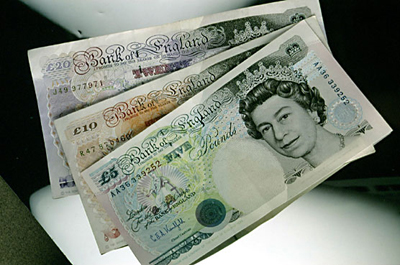
 LONDON: Sterling hit a two-and-a-half month high against the dollar on Monday, with traders saying it was lifted in thin trading by demand from Middle East investors and from companies looking to hedge.
Sterling rose to $1.6216, its highest level since early October, taking it just shy of chart resistance at $1.6218, the Oct. 5 high. More gains could see the pound rise towards the September peak of $1.6310.
Analysts said the pound could see further gains against the dollar if the so-called US fiscal cliff, a looming combination of tax rises and spending cuts due to kick-in at the beginning of 2013, is not headed off soon.
"Sterling tends to be caught in the middle of the euro and the dollar but we are seeing some underpinned strength, which seems to be flow driven," said Daragh Maher, currency strategist at HSBC Markets.
Traders said demand from Middle East investors buoyed the pound in early trade. Later, demand from corporates also surfaced, while one trader reported Asian names buying.
The pound also recovered against the euro, which was down 0.3 percent at 81.13 pence, having hit a near two-month high in Asian trade of 81.505.
Investors will be focusing on a speech from European Central Bank President Mario Draghi, who is due to speak on Monday afternoon on monetary policy, for hints on whether the ECB could cut euro zone interest rates. That could weigh on the single currency against the pound.
Data from the Commodity Futures Trading Commission on Friday showed currency speculators slashed bullish bets on the US dollar while they remained long on the pound.
Analysts said the pound could continue to benefit against the dollar in the wake of last week's monetary easing in the United States.
"We did see sterling/dollar moving higher and most of this gain is due to more easing from the Federal Reserve last week that will have an impact on keeping the dollar depressed and risk appetite elevated," said Jane Foley, senior currency strategist at Rabobank.
Against the Japanese yen, the pound rose to its highest level since April 2011 at 136.37 yen. The yen weakened broadly after the weekend's election victory for Shinzo Abe's conservative Liberal Democratic Party, which is committed to aggressive monetary easing.
UK DATA
UK data later this week may also add to expectations that the Bank of England (BoE) will hold off from more quantitative easing for the time being and help lift sterling, analysts said.
Investors will look to inflation data on Tuesday and BoE policy meeting minutes on Wednesday for clues on the chances of it authorising more bond buying. Retail sales data is also due, on Thursday.
"Tomorrow's UK consumer price inflation data could offer the pound a little padding by limiting scope for further Bank of England monetary easing," Western Union told clients in a note.
Quantitative easing is usually negative for a currency as it increases its supply.
Analysts at Commonwealth Bank of Australia said in a note that UK consumer inflation should remain above the BoE's 2 percent target, while retail sales should bounce back in November and minutes from the December BoE meeting are likely to reiterate the Monetary Policy Committee's 'wait and see' approach.
"These factors should see UK yields continue to track above their US counterparts and in turn support sterling/dollar."
**

























Comments
Comments are closed for this article.