



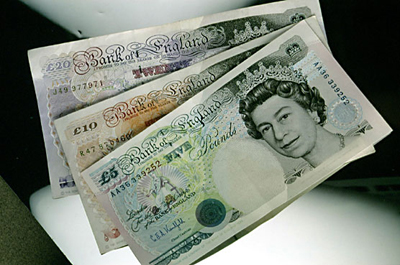
 LONDON: Sterling traded near a three-month high against the dollar on Thursday, tracking gains in other perceived riskier currencies after the US Federal Reserve indicated it could opt for more monetary stimulus "fairly soon".
Analysts said the pound was likely to remained well bid given persistent speculation the European Central Bank will take action to tackle the euro zone debt crisis, which also fuelled investor appetite to take on risk.
The next focus for sterling investors will be the second reading of UK second quarter GDP on Friday, expected to show the economy contracted less than the initial estimate of 0.7 percent.
"Everyone was taken aback by the Fed minutes and just how dovish they were," said Neil Mellor, currency strategist at Bank of New York Mellon.
"The dollar is going to be on the back foot for a little bit and on that basis anything that gives impetus to that (trend)will be taken up, although some of the GDP revision has already been priced in."
Sterling rose to a session high of $1.5912 against the dollar, its highest level since mid-May. It retreated slightly to last trade close to flat on the day at $1.5879.
The pound held gains from late on Wednesday when the minutes from the Fed's last meeting raised expectations policymakers could deliver another cash injection to stimulate economic growth as soon as September.
"The FOMC has helped higher-beta currencies across the board. The market also feels a bit more positive about the euro zone so I think cable (sterling/dollar) can hold these levels," said Geoffrey Yu, currency strategist at UBS.
"We wouldn't want to bet on fading these moves right now, although if sterling goes above $1.60 we would reassess."
Technical strategists said resistance around $1.5910, the 61.8 retracement of the late April to early June fall from above $1.63 to around $1.5270 may cap sterling gains. But a clear break of that level opened the door to a test of $1.60.
CENTRAL BANK POLICY
The Fed's bias towards more accommodative monetary policy -- which tends to weigh on the dollar -- wrong-footed many market players who had focused on recent signs of improvement in US economic data.
By contrast, the Bank of England is still expected to keep monetary policy largely unchanged at their next meeting. BoE policymaker Martin Weale told a French newspaper he did not think it was necessary to extend asset purchases at this stage.
A French PMI survey showing manufacturing and services activity was not as bad as forecast briefly boosted sterling and the euro against the dollar, although the sectors were still in contraction and the euro zone as a whole looked destined for recession.
The euro hit a two-week high of 79.19 pence, with traders reporting sterling selling by a UK clearer.
The single currency has been supported in recent days by expectations the ECB will intervene in the bond market next month, buying Spanish and Italian debt to ease their borrowing costs.

























Comments
Comments are closed for this article.