


PSX: KSE-100 sheds over 700 points
- Benchmark index was hovering at 167,933.14
The KSE-100 Index and Asian shares fell amid geopolitical tensions in the Middle East, elevated crude oil prices, and investor caution ahead of key US jobs data.
- Geopolitical tensions in the Middle East.
- Selling pressure across KSE-100 key sectors.
- Global market reactions to upcoming US jobs data.
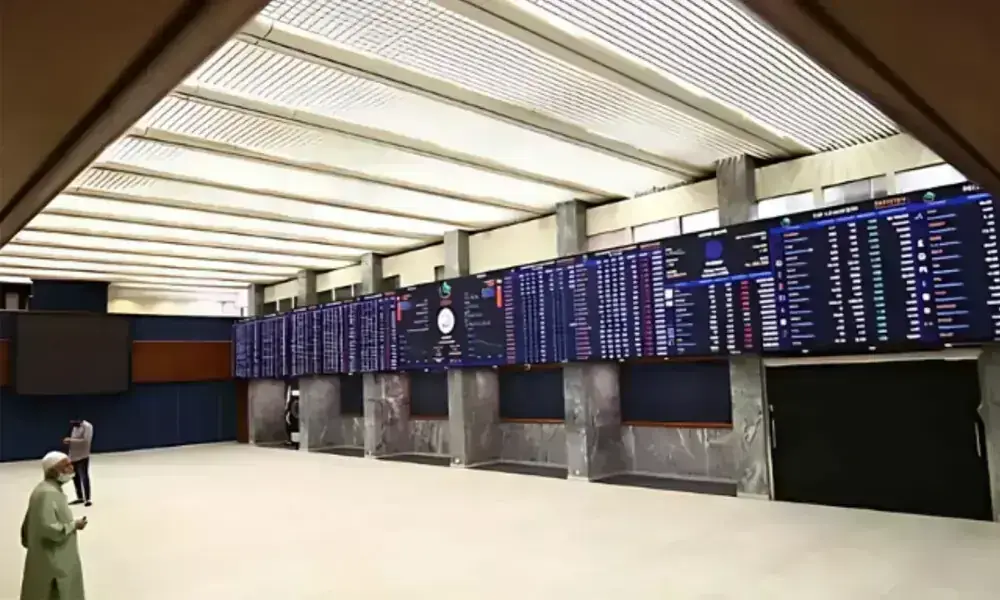

The benchmark KSE-100 Index slipped in the first half of Friday’s trading session as investors remained cautious amid reports that the US is sending more troops and carriers to the Middle East.
At 12pm, the benchmark index was hovering at 167,933.14, down 703.71 points or 0.42%.
Selling was observed in key sectors, including automobile assemblers, cement, commercial banks, oil and gas exploration companies, OMCs and power generation. Index-heavy stocks, including ARL, HUBCO, PSO, SSGC, HBL, NBP and UBL, traded in the red.
Profit-taking and broad-based selling across banks, exploration and production companies, cement and oil marketing companies dragged the PSX sharply lower on Thursday, as elevated crude oil prices and persistent geopolitical uncertainty weakened investor sentiment and erased the market’s early gains above the 170,000-point level.
The benchmark KSE-100 Index shed 1,332.47 points, or 0.78%, to close at 168,636.85 points.
Internationally, Asian shares fell on Friday as investors grappled with wild swings in bond and currency markets ahead of key US jobs data, while a widening military buildup in the Gulf kept oil prices elevated.
In Asia, MSCI’s broadest index of Asia-Pacific shares outside Japan fell 0.5% and was on track for a weekly decline of 1.7%. Japan’s Nikkei dropped 0.7% but was set for a gain of 3.1% for the week.
Mainland Chinese markets are closed for a public holiday through Wednesday of next week.
Nasdaq futures rose 0.3%, and S&P 500 futures inched up 0.1% after the pullback in Treasury yields helped Wall Street stage a late rebound.
All eyes are on the US nonfarm payrolls due later in the day. Forecasts are centred on a rise of 90,000 jobs in September, while the employment rate is likely to be steady at 4.1%. Much attention will be on hourly earnings after the ISM survey showed a huge jump in prices paid, pointing to more cost pressures.
This is an intraday update

























Comments