


PM urges exporters to deliver, finmin presents reform agenda at PSX
- Finance minister presents comprehensive review of the ongoing reform agenda
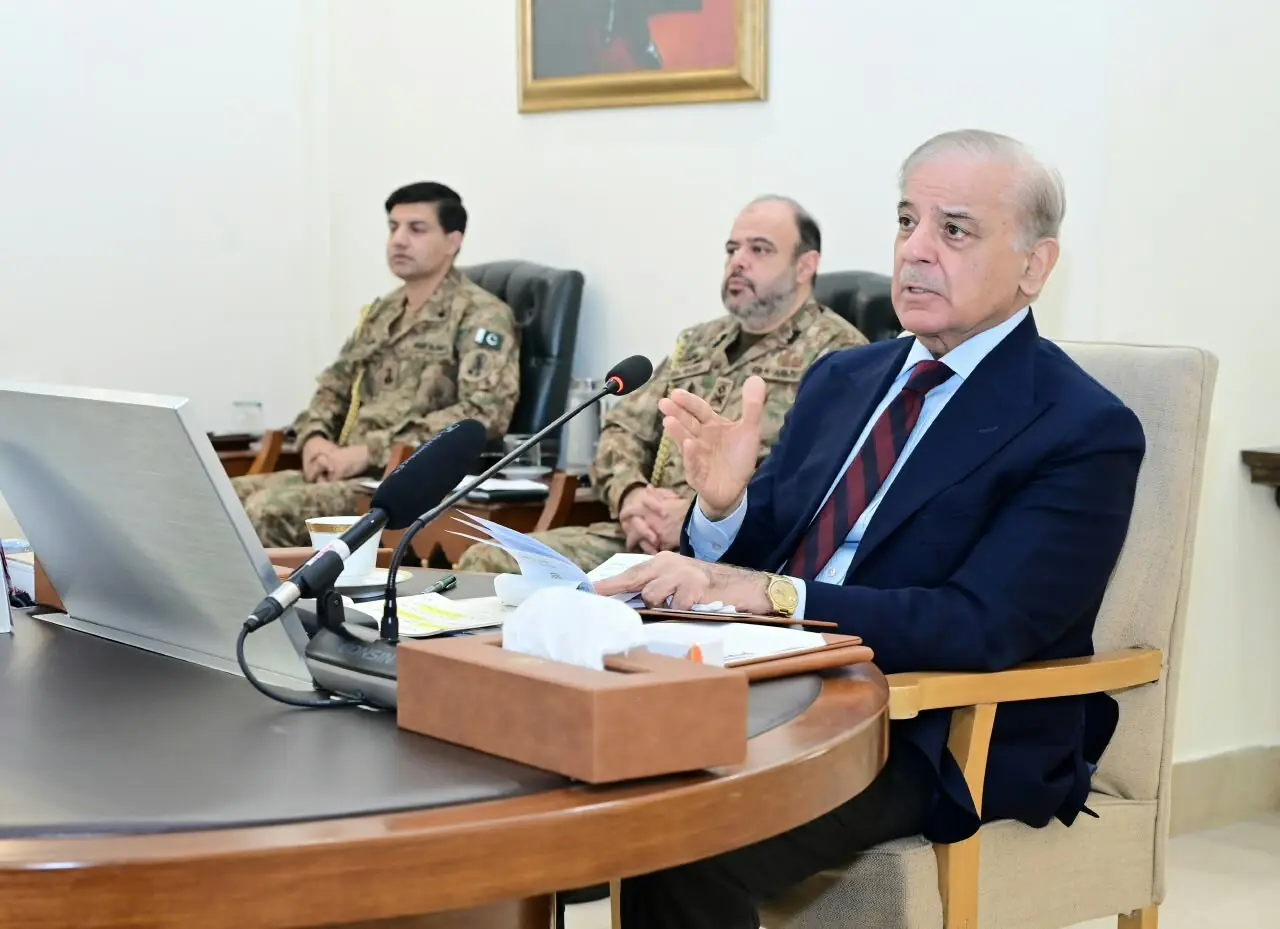

Prime Minister Shehbaz Sharif on Thursday said that the government remains committed to achieving export-led, sustainable economic growth following the stabilisation of the economy.
In a virtual address at the gong ceremony, organised by Arif Habib Corporation at the Pakistan Stock Exchange (PSX) in Karachi, the prime minister criticised some export-oriented industries for receiving incentives and government support over the past decades without delivering the desired results.
“I do not want to name the export industries that have failed to deliver,” he said, urging them to correct course and play their role in driving export-led and sustainable economic growth.
PM Shehbaz said successive governments had provided exporters with substantial support and incentives, “but prices of relevant products have gone up, while the quality has deteriorated”.
The prime minister recalled that the federal budget for 2026–27 offered hundreds of billions of rupees in tax breaks and incentives for exporters, manufacturers, and industries, including the construction sector.
He said the incentives introduced by the government for the construction sector were coming to fruition.
He specifically commended the real estate and industrial initiatives spearheaded by business leaders like Arif Habib in Lahore and Karachi under the REIT structure, urging further modernisation and improvement of the stock exchange and capital markets by studying other markets in the region.
Meanwhile, Finance Minister Muhammad Aurangzeb, speaking in person at the PSX Trading Hall, presented a comprehensive review of the ongoing reform agenda agreed under the IMF Extended Fund Facility.
“The government has to show more fiscal discipline, and at the same time, we want to shift our borrowing away from banks to non-banks and retail investors,” said Aurangzeb.
On the Capital Market Development Council, the finance minister said the government “is trying to figure out all asset classes, including VCS, Sukuks and REITs”.
“We are doing an overall review in terms of taxation and regulatory reforms to scale up the capital markets,” he said.
He said the government does not need to implement all reforms at once and could phase in measures with appropriate safeguards.
The finance minister said the council includes the Governor of the State Bank of Pakistan, the chairman of the Securities and Exchange Commission of Pakistan (SECP) and other stakeholders.
“We will, by or before the end of the year, come up with recommendations” for the Prime Minister’s Office, as well as for the central bank, SECP and Ministry of Finance, he said.
Aurangzeb added that the SECP was already working on a legislative agenda that would later go to Parliament.
Aurangzeb projected Pakistan’s economy to grow by 4% in the current fiscal year 2026-27, compared to 3.7% registered in FY26.
He said Pakistan can easily achieve 6% growth ‘‘in no time” by supporting consumption-led growth. “This, however, will again create a balance of payments crisis and take Pakistan back to the IMF.”
To avoid this scenario, the government is determined to achieve export-led sustainable economic growth, the finance minister added.
The finance minister shared that the number of tax filers has now crossed 5.7 million. “This number was close to about 3.9 million last year, so it is about 45% new filers who have come in.”
Speaking about the Prime Minister’s Apna Ghar Programme, Aurangzeb said around Rs60 billion had been financed, while banks had approved an additional financing pipeline of approximately Rs340 billion awaiting disbursement.
He noted that the banking sector had taken the lead and emphasised that the supply side must now accelerate housing development. He underscored the role of the private sector, including ABAD, in supporting the initiative and highlighted REITs as an important mechanism for mobilising investment into housing and real estate.
The finance minister noted that the participation of major Pakistani business groups in the consortium for the PIA transaction, involving Arif Habib and Tabba, represented close to $1.2 billion in collective investment and demonstrated the growing ability of local businesses to work together, create scale and pursue larger investment opportunities.
He said international investor interest was also increasing, pointing to Turkish interest in the privatisation of electricity distribution companies and growing interest from US investors and companies in minerals and mining, agriculture, IT, oil and gas, and refinery upgrades.
He stressed that foreign investment takes time to materialise and requires a conducive ecosystem supported by appropriate policies and effective facilitation.

























Comments