


Faisalabad’s role in policymaking to be enhanced: FCCI president
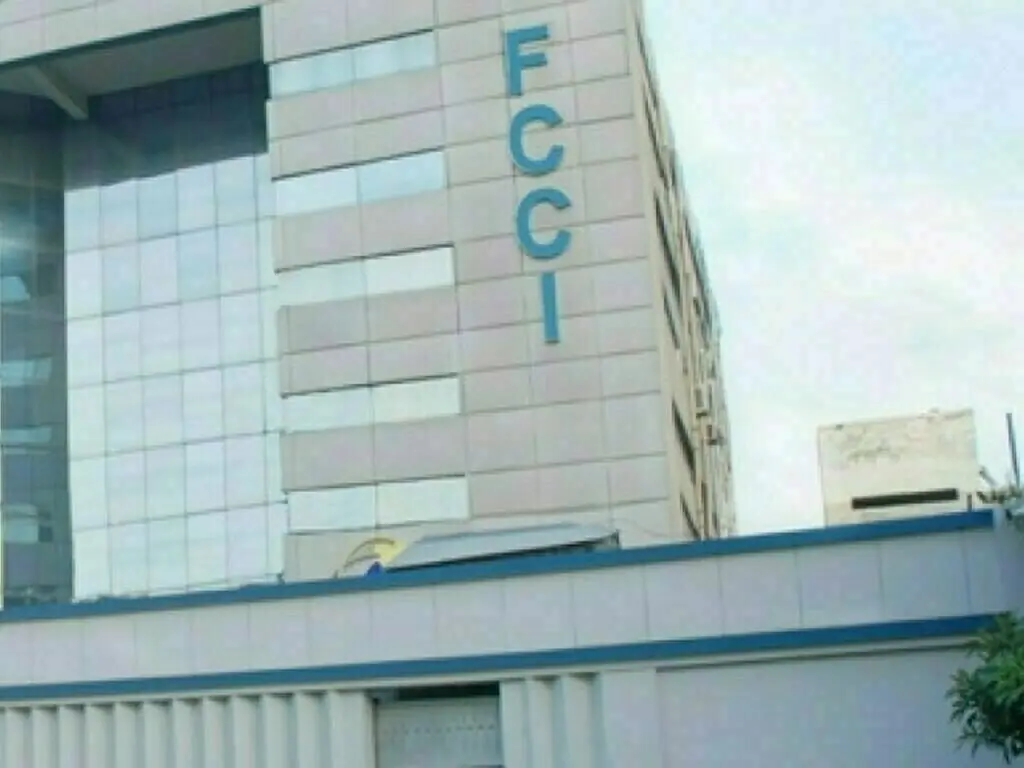

FAISALABAD: Newly elected President of the Faisalabad Chamber of Commerce and Industry (FCCI), Arif Ehsan Malik, has said that efforts will be accelerated to enhance Faisalabad’s practical role in policymaking, fully digitalisation the Chamber, improve the performance of standing committees, develop Faisalabad as a textile circular city, establish a Special Technology Zone, commercialise research being conducted at universities, launch venture capital to provide funding to startups, organize CSR-related activities, use artificial intelligence to resolve industrial issues, promote value addition of agricultural commodities, and establish the Faisalabad Expo Centre.
He was speaking at the Annual General Meeting (AGM) of the Faisalabad Chamber of Commerce and Industry on Wednesday.
He said Pakistan is the world’s fifth-most populous country, with an economy worth around USD 420 billion. Geographically, it is at the gateway to the Middle East, Central Asian states, the Arabian Sea and China. Once known primarily for its textile industry, the country is now witnessing rapid growth in other industrial sectors as well.
He said the country is no less than a blessing for us, yet despite its potential, Pakistan is among the heavily indebted nations. Similarly, although 65 percent of the country’s population comprises young people, the unemployment rate stands at 7 to 8 percent. Around 25 million children are out of school; therefore, concerted efforts are needed for the country’s development.
He said that, alongside resolving the day-to-day problems of the business community, he would also work toward achieving the objectives outlined in his roadmap. He said he was fully aware of the problems faced by the SME sector as well as traders, and efforts would be made to resolve the issues arising from SRO 1109.
He said he would remain in contact with the administration to improve the city’s basic infrastructure so that the problems faced by traders in the down town area could also be addressed.
Regarding federal-level issues, he said the current situation of industries was extremely concerning and that work would be undertaken for the revival of the sector. He said the government talks about increasing exports, but containers remain stuck at ports for as long as a month. The reasons for these delays must be identified and removed through practical measures and appropriate policy formulation.
He said seminars would be organised for the awareness of the business community in addition to developing an economic vision. Referring to a study conducted by the American Economic Association, he said that ten new businesses would experience rapid growth in the coming decades, including food processing, defense manufacturing, healthcare, and energy storage. Pakistan should focus on establishing industries in these sectors, which would also lead to the development of related vendor industries.
He also referred to export-led growth and said its basic requirements would have to be fulfilled, including duty rationalization. He said that currently only 20 percent of the textile sector’s raw material is cotton, while 80 percent consists of man-made fibers. Import duties on man-made fibers should therefore be abolished to increase exports of textile products manufactured from these fibers.
He further said that Pakistan’s share in the USD 300 billion technical textiles sector was negligible because a 20 percent anti-dumping duty was imposed on its raw materials. This duty should be abolished.
He also discussed trade agreements and said that a new trading bloc was emerging in the world, comprising 20 countries, including China. He said he had asked Federal Minister for Commerce Jam Kamal to provide feedback on the matter so that the opportunity could be utilized in the interest of Pakistan’s economy and trade.
He further said there were extensive trade opportunities with Türkiye and East Africa, but barriers in the form of duties would have to be removed.
He said the SME sector contributes 30 percent of exports, but the share of loans allocated for SMEs is being taken by others. He said efforts would now be made to ensure that SMEs receive financing through the EXIM Bank.
Earlier, outgoing President Farooq Yousaf Sheikh presented an account of his performance, while a documentary highlighting his achievements was also screened. He attributed the successes achieved during his one-year tenure to his family, leadership, team members and executives, saying that their support had enabled him to accomplish these achievements.
Group Head Mian Muhammad Idrees appreciated the performance of the outgoing office-bearers and executives and assured the incoming officials of his full cooperation. He also praised the services of the Chamber’s staff and said that, as with the outgoing office-bearers, the staff would continue to cooperate with the new leadership.
He said an additional floor would be added to the Chamber’s existing building. He added that, besides constructing a boundary wall around the five-acre plot at FEDMIC, a study would be conducted for the construction of a state-of-the-art building there.
He explained that during Farooq Yousaf Sheikh’s tenure, an effective system of checks and balances had been introduced for internal auditing.
Group Leader Mian Javed Iqbal said that new projects emerge with the change of leadership every year. He remarked that Farooq Yousaf Sheikh’s speech had given the impression that all problems had been resolved, whereas Arif Ehsan Malik’s entry showed that much still remained to be done. He said this process takes place every year, so it was not surprising for him.
He said the standing committees were meant to advise the President; however, their leadership should also be changed so that new and diverse ideas and approaches could emerge.
Earlier, Election Commission Members Muzammil Sultan, Chaudhry Muhammad Nawaz and Atif Munir Sheikh formally announced the names of the new office-bearers and newly elected executives. They expressed satisfaction that the elections had been conducted in a transparent and impartial manner, leaving no party with any grounds for complaint.
The AGM was attended by outgoing Senior Vice President Naveed Akram Sheikh and Vice President Engineer Asim Munir, as well as newly elected Senior Vice President Mian Muhammad Saeed and Vice President Muhammad Yasin, along with former presidents of the Chamber.
The routine agenda was also taken up at the AGM, while shields were distributed among those who had demonstrated outstanding performance during the previous year.
Copyright Business Recorder, 2026

























Comments