


Islamabad MoU remains framework for US-Iran peace talks: FO
- Says parties in conflict often issue 'hard and strong' statements
Pakistan asserts the Islamabad MoU remains a viable framework for US-Iran dialogue, despite recent military escalation and strong statements, hoping for a return to negotiations.
- Pakistan's diplomatic efforts in US-Iran conflict.
- Viability of the Islamabad MoU for US-Iran dialogue.
- Hope for US-Iran return to negotiations.
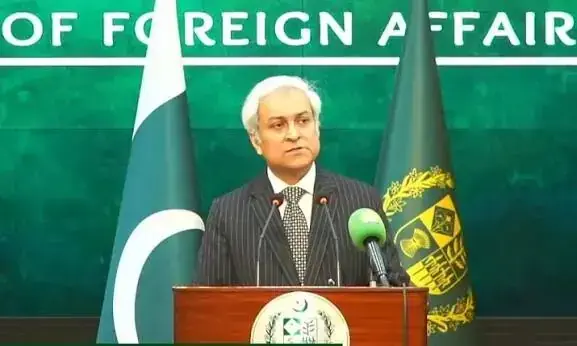
Pakistan said on Wednesday that the Islamabad Memorandum of Understanding (MoU) remains a viable framework for dialogue between the United States and Iran despite renewed military escalation and strong statements by US President Donald Trump.
Foreign Office spokesperson Tahir Andrabi said parties to conflicts often issue “hard and strong” statements during periods of escalation, stressing that such remarks did not mean the Islamabad MoU had been rejected.
“There’s no question of it being alive or dead or half-dead. This for peace is there,” the spokesperson said during a weekly press briefing.
He said Pakistan remained hopeful that once the logic of escalation exhausted itself, the parties would return to the negotiating table. The Islamabad MoU and Pakistan-Qatar Joint Statement provide a framework for resuming dialogue, including technical-level discussions, aimed at achieving a sustainable settlement.
Pakistan has stepped up diplomatic efforts to facilitate an end to the US-Iran conflict. Prime Minister Shehbaz Sharif recently met Iranian President Masoud Pezeshkian on the sidelines of the SCO Summit, while Deputy Prime Minister Ishaq Dar held talks with Iranian Foreign Minister Abbas Araghchi.
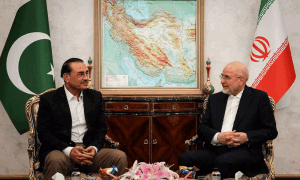
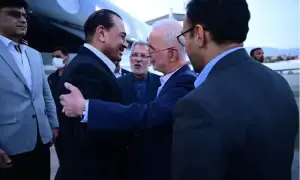
Earlier, Field Marshal Syed Asim Munir visited Tehran as part of Pakistan’s efforts to promote de-escalation, resolve the standoff over the Strait of Hormuz and encourage a negotiated settlement.





















Comments