


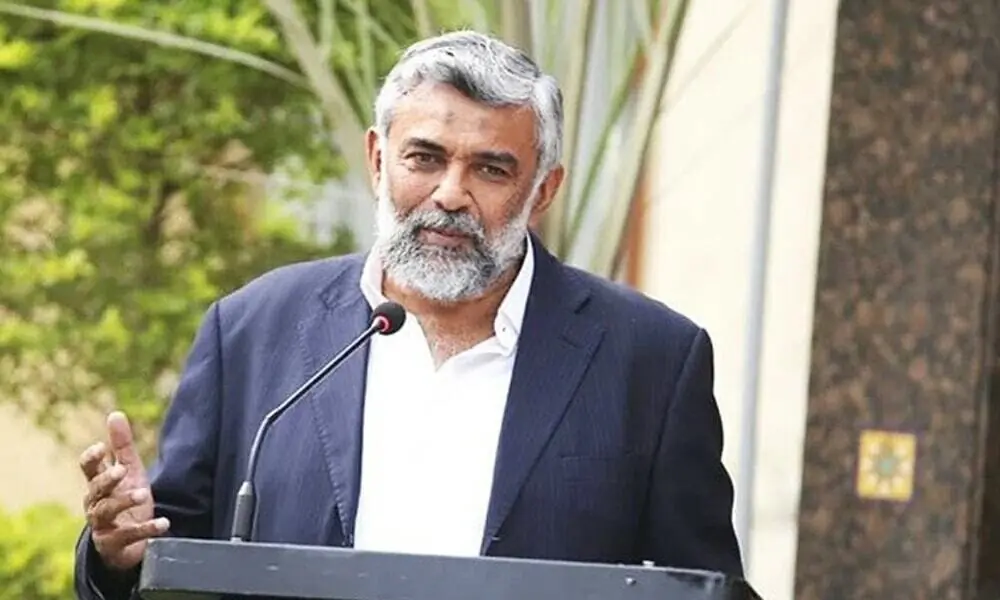

KARACHI: The Chairman of Pasban Democratic Party (PDP), Altaf Shakoor, has urged the government of Sindh, the Karachi Metropolitan Corporation, district municipal corporations, and federal development agencies to put aside administrative divisions and establish a transparent, time-bound roadmap for urban sanitation reform.
“There is a need for an urgent and comprehensive municipal intervention to fix Karachi’s severely broken sanitation infrastructure that is spreading diseases in the megacity,” he said.
He said as Pakistan’s financial capital and largest metropolis, the megacity faced a worsening environmental and health emergency.
The urban sanitation crisis in Karachi had reached an unprecedented scale, he said.
Altaf Shakoor said across both commercial centers and dense residential neighbourhoods, uncollected garbage routinely accumulates in informal dumping sites, blocking roads, clogging storm drains, and leaking toxic leachate into surrounding soils.
“During the monsoon seasons, this lack of basic maintenance leads to severe urban flooding, inundating streets and homes with sewage-laden water. The widespread presence of standing wastewater and uncovered manholes creates pervasive hazards, transforming everyday commutes into dangerous navigation and turning neighborhoods into breeding grounds for disease vectors.”
He said the public health consequences of this persistent degradation are severe and well-documented. Independent water quality tests across Karachi consistently show that an alarming majority of municipal water samples are unsafe for human consumption.
This contamination is caused largely by the proximity of aging, fractured water supply pipes to overflowing sewer mains, allowing raw sewage to mix directly with drinking water supplies.
“As a direct result, hospitals and clinics throughout the metropolis report high numbers of preventable waterborne and vector-borne illnesses, including typhoid, cholera, gastroenteritis, hepatitis A and E, malaria, and dengue fever. Vulnerable populations, particularly children, the elderly, and low-income communities residing in informal settlements, carry the heaviest burden of this daily public health emergency,” he said.
He said addressing a crisis of this magnitude requires moving beyond temporary patchwork fixes toward structural, long-term infrastructure investment and administrative accountability.
He said first, municipal authorities must modernize solid waste management systems by establishing formal, structured door-to-door garbage collection mechanisms across every union council.
Second, immediate capital investment is required to rehabilitate the underlying piping networks managed by the Karachi Water and Sewerage Corporation (KW&SC).
Priority must be given to completely separating water distribution mains from sewage disposal pipelines, repairing leaks, upgrading pumping stations, and restoring non-functional wastewater treatment plants so that untreated effluent is no longer dumped directly into the sea or city drains.
Third, public institutions must lead by example by enforcing stringent internal hygiene standards, he suggested.
Finally, civic transformation requires active community participation alongside effective enforcement, he said.
Municipal authorities must enforce environmental and anti-littering regulations fairly, while civil society conducts sustained public education initiatives regarding waste segregation, responsible disposal practices, household hygiene, and safe water storage, he said.
“Sanitation is not an optional urban luxury — it is a fundamental human right, a basic public service, and a vital cornerstone of economic vitality.”
He said without clean, functioning, and reliable public infrastructure, Karachi cannot sustain its role as the nation’s primary driver of economic growth.
Copyright Business Recorder, 2026

























Comments