


Mian Zahid urges a permanent mechanism to boost Pak-Iran trade
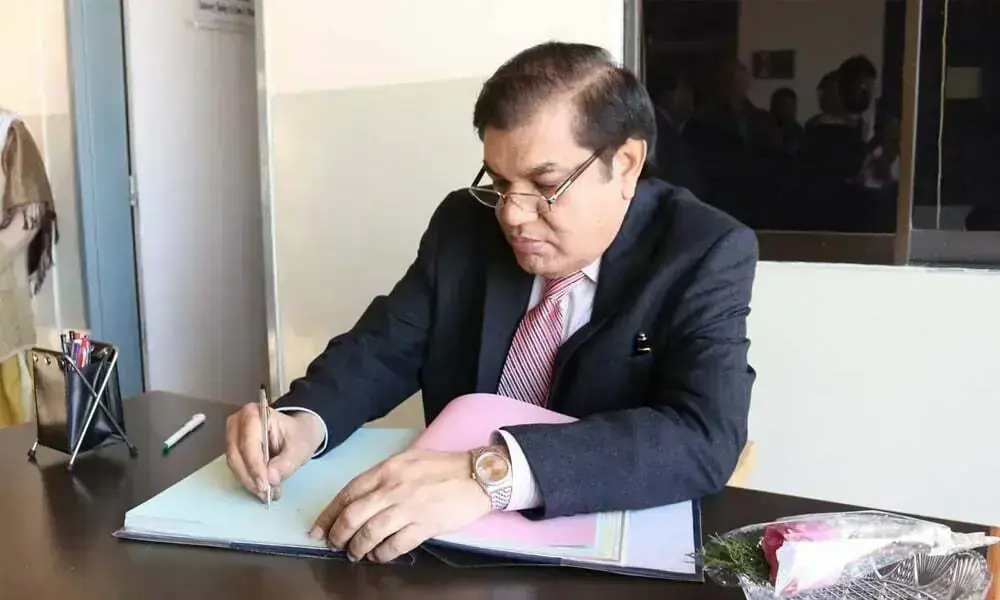

KARACHI: Mian Zahid Hussain, President Pakistan Businessmen and Intellectuals Forum (PBIF) & All Karachi Industrial Alliance (AKIA), Chairman National Business Group Pakistan (NBG) and Chairman FPCCI Policy Advisory Board has said that a permanent working mechanism comprising ministries, regulatory bodies, customs authorities, chambers of commerce, banking experts, logistics companies and private-sector representatives from Pakistan and Iran should be established to monitor the pace of implementation of decisions.
Hussain urged the Government of Pakistan to move forward in a coordinated manner on the economic agenda agreed during the recent and previous visits of the Iranian president.
He said that the USD 10 billion bilateral trade target can become a reality, provided that announcements are linked with practical steps, clear timelines, private-sector participation and facilitation of border trade.
He said that the economic benefits of this process can directly reach the people, traders, industrialists, residents of border areas and the national exchequer.
He termed the recent visit of Iranian President Dr Masoud Pezeshkian to Pakistan an important development in the continuity of Pakistan-Iran relations, confidence-building and the implementation of the already agreed economic cooperation agenda.
He said that under the leadership of Prime Minister Muhammad Shehbaz Sharif, Pakistan has played an active and responsible role for peace, economic connectivity and diplomatic balance in the region, while the effective role of Field Marshal Syed Asim Munir in regional security, border stability and peace initiatives has further highlighted Pakistan’s strategic importance.
Hussain said that the historical, cultural, religious and geographical proximity between Pakistan and Iran must now be transformed into a practical economic partnership so that bilateral trade, gas pipeline, energy cooperation, border connectivity and private-sector collaboration can be expanded on solid foundations.
He further added that during the 2025 visit of Iranian President Dr Masoud Pezeshkian to Pakistan, both countries exchanged 12 agreements and memorandums of understanding in various sectors, while the target was also set to increase bilateral trade from around USD3 billion to USD10 billion.
He said that following the recent Iran-US conflict, the current visit has given fresh diplomatic importance to this economic roadmap and has sent a clear message that both countries want to move beyond announcements and give practical shape to cooperation in trade, investment, border facilitation, energy, agriculture, information technology, communications and people-to-people contacts.
Hussain said that early finalisation of the Free Trade Agreement would be an important milestone for the business communities of both countries.
He said that unless the ground-level problems of trade are resolved, achieving the USD10 billion bilateral trade target will remain difficult and strengthening border markets and border trade facilities at Gabd-Rimdan, Mand-Pishin and other crossing points can increase legal trade, reduce smuggling, create lawful employment opportunities for the local population and promote economic activity in border areas.
Hussain also welcomed the decision of the Federal Board of Revenue to declare Taftan Railway Station as a land customs station, saying that this step would facilitate import and export clearance through rail, reduce transportation costs, accelerate customs procedures and promote Pakistan-Iran border trade in a more organised manner.
Hussain further said that barter trade, or trade through exchange of goods, is a practical option for both countries, especially in circumstances where international payments, currency exchange and banking channel issues continue to affect the pace of trade.
He said that Pakistan is facing serious challenges including energy shortages, high production costs, expensive electricity and pressure on industry, while Iran can become an important partner for Pakistan in energy, petroleum products, border electricity, transit trade and regional connectivity. If this cooperation is advanced in a transparent, legal and sustainable manner, Pakistan’s industry, agriculture and export sectors can benefit significantly.
He said that Pakistan and Iran are natural trade bridges between South Asia, Central Asia and the Middle East. Therefore, Gwadar and Chabahar should be viewed in the context of regional connectivity, transit trade and economic cooperation rather than competition.
He said that the progress made and protocols agreed during the 22nd Pakistan-Iran Joint Economic Commission should also be pursued rapidly.
Copyright Business Recorder, 2026

























Comments