


A nation failing its children
Pakistan's child labor crisis sees 8.6 million children working, fueled by poverty and systemic neglect. A unified national strategy is crucial to ensure education and protect future generations.
- The staggering scale of child labor in Pakistan.
- Underlying causes like poverty, lack of education, and weak enforcement.
- The urgent need for a unified national response and social safety nets.
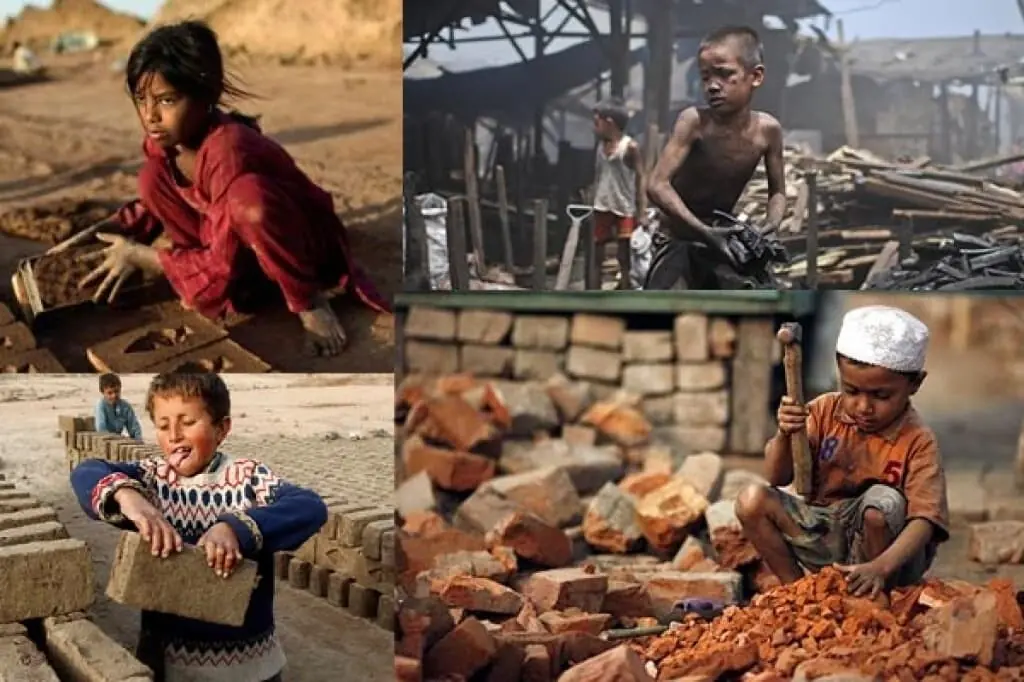
EDITORIAL: The scale of Pakistan’s child labour crisis came into sharp focus at the International Labour Organisation’s briefing held in Islamabad to commemorate the World Day against Child Labour.
The discussion underscored a damning reality: an estimated 8.6 million children aged five to 17 are engaged in child labour nationwide, meaning nearly one in every 10 Pakistani children is deprived of a safe and secure childhood. These figures serve as a sobering reminder that child labour remains one of the most glaring manifestations of systemic deprivation and state neglect in the country. They are, in fact, an indictment of national priorities as they reflect a crisis that has festered for decades despite repeated commitments, policy interventions and international scrutiny.
Given the sheer scale of the problem and its devastating implications for future generations and the toll it exacts on the country’s development trajectory, alongside the reputational cost Pakistan has long borne on this count before international bodies, one would have expected a far more sustained, coordinated and effective national response.
Instead, child labour remains entrenched across sectors and regions, raising uncomfortable questions about the country’s commitment to protecting the next generation of Pakistanis. This reality is reflected most clearly in the hazardous and exploitative conditions in which children are working, often beyond the reach of formal monitoring systems, across agriculture, brick kilns, domestic work, waste-picking, construction and other segments of the informal economy. Around 88 percent of cases are concentrated in rural areas, even as the phenomenon persists in urban centres in equally concerning forms.
As the ILO country director for Pakistan rightly observed at the briefing, child labour is deeply intertwined with structural deprivation – poverty, informality, unequal access to opportunity, barriers to education and fragile social protection systems – and stressed that enforcement of labour laws alone cannot address the crisis. A durable response, he noted, must widen access to quality education, generate dignified employment for adults, lift household incomes and reinforce safety nets for vulnerable families.
The education gap remains a decisive factor: with around 25 million children aged five to 16 out of school in Pakistan, exclusion from classrooms feeds directly into vulnerability to early labour, reinforcing a cycle where work and learning become mutually exclusive.
Despite a range of legislations passed against child labour at both federal and provincial levels – the most recent one being the Sindh Domestic Workers Welfare Bill 2025, which bans the employment of children under 16 in domestic work – enforcement continues to be hampered by structural gaps in implementation. Fragmented coordination between federal and provincial authorities, limited labour inspection capacity and disjointed data systems have diluted accountability, while weak integration between education, labour and social protection policies has further constrained effectiveness.
The result has been a patchwork of isolated efforts, rather than a coherent nationwide response capable of matching the scale of the problem. What is needed is a unified, system-wide approach that aligns provincial action within a national framework, ensuring that enforcement, schooling access, income support and labour regulation operate in tandem.
With nearly 70 million Pakistanis now living below the poverty line as highlighted in the latest Economic Survey, the challenge of eliminating child labour becomes even more complex. Economic vulnerability continues to push households into difficult trade-offs, making it imperative to strengthen social safety nets and create credible routes that allow children to exit the workforce without undermining already fragile family incomes, while securing their right to education. The state can ill afford complacency in this regard, as at stake is the country’s development trajectory, the prospects of future generations and even its GSP Plus eligibility. What is required now is a coherent and nationwide policy framework at scale.
Copyright Business Recorder, 2026




















Comments