


Slow death of a city of teeming millions
Karachi's decline into one of the world's least liveable cities is due to decades of institutional paralysis, political neglect, and unchecked commercialization, leading to severe infrastructure collapse and environmental degradation.
- Institutional paralysis and political neglect.
- Unchecked commercialization in residential areas.
- Deteriorating infrastructure and environmental degradation.
- Lack of long-term urban planning and governance.
- Economic impact of Karachi's urban decline.
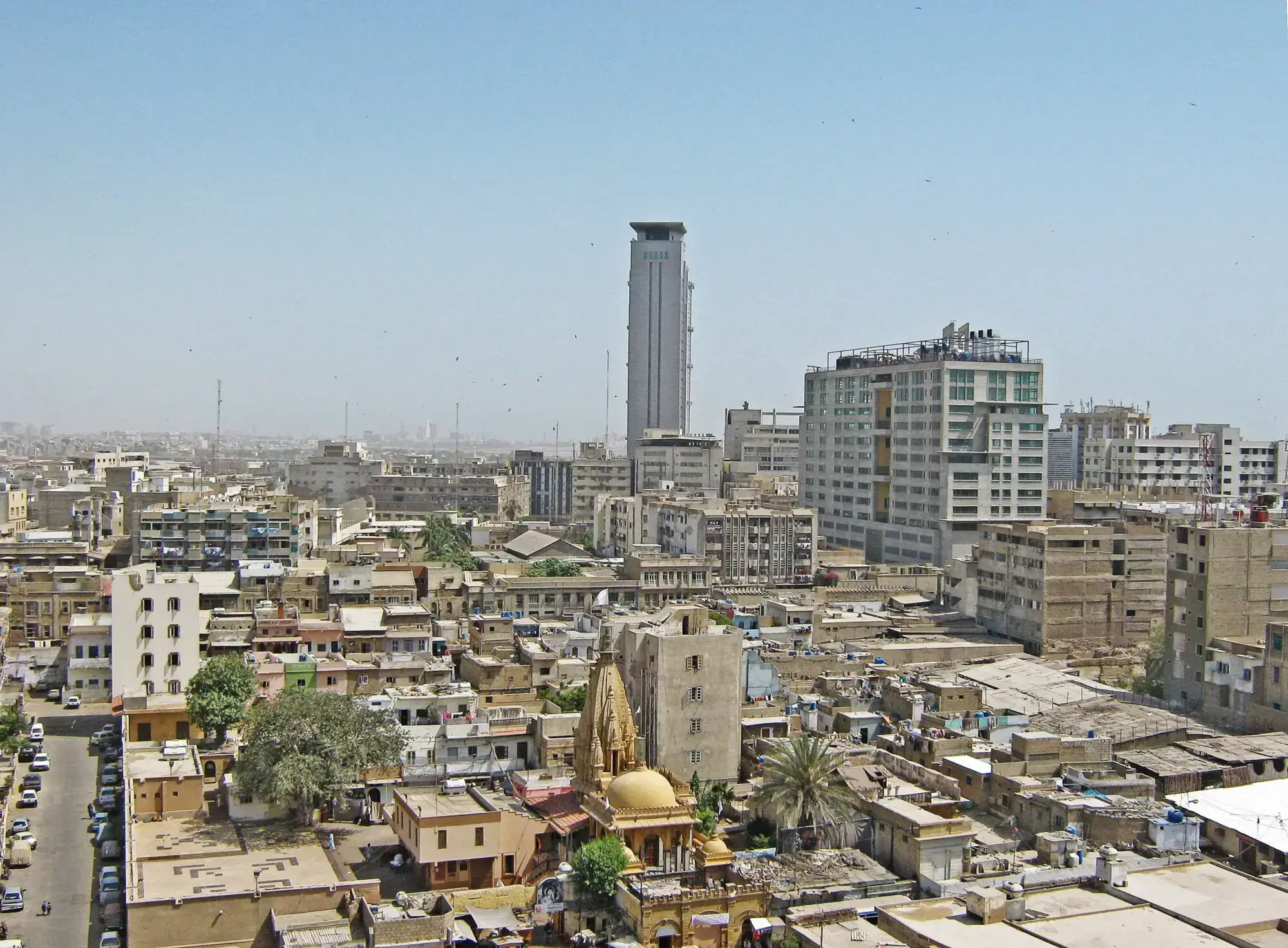
EDITORIAL: Karachi’s collapse into one of the world’s least liveable cities is no longer merely an urban planning failure; it is a decades-long indictment of institutional paralysis, political neglect and uncontrolled commercial greed that has steadily transformed Pakistan’s largest city from the “City of Lights” into a sprawling and increasingly unmanageable urban crisis.
The latest warnings by residents, activists and legal experts over unchecked commercialisation in residential areas simply expose another layer of a breakdown that has been visible for years.
The tragedy is that none of this is new. Karachi’s infrastructure has been deteriorating under relentless pressure for decades while governments, civic bodies and regulators moved from one temporary arrangement to another without addressing the city’s structural problems.
Roads collapsed under uncontrolled expansion, drainage systems deteriorated, water shortages intensified and untreated sewage continued flowing into the sea while the population exploded far beyond the capacity envisioned in planning frameworks dating back to the 1950s.
The consequences are now impossible to disguise. Karachi ranking near the very bottom of the global liveability index alongside conflict-ridden cities should have triggered national outrage long ago.
Instead, the city’s dysfunction has become so normalised that every new crisis simply blends into the next. Traffic paralysis, overflowing drains, power failures, water mafias, collapsing roads and mounting pollution are now treated almost as routine features of urban life rather than symptoms of a governance catastrophe.
Unchecked commercialisation threatens to deepen that crisis further. Residential areas designed for families and neighbourhood life are increasingly being converted into offices, restaurants, clinics, warehouses and commercial outlets without corresponding upgrades in infrastructure.
Roads built for residential traffic now absorb commercial congestion. Sewerage systems already operating beyond capacity face additional strain. Parking chaos spills into streets never designed for such density. The result is not urban development. It is urban exhaustion.
The warnings issued by urban planners and environmental experts therefore deserve serious attention. Karachi’s drainage and sewerage systems are already collapsing under existing pressure.
Even moderate rainfall regularly overwhelms the city because stormwater and sewage networks were allowed to deteriorate simultaneously. Introducing heavier commercial activity into these same spaces without infrastructure expansion will inevitably worsen flooding, pollution and public health risks.
Environmental degradation adds another layer to the emergency. The continued discharge of untreated sewage into the sea is destroying marine ecosystems and mangrove forests that once served as natural buffers against coastal erosion and climate shocks.
Karachi’s worsening environmental profile now intersects dangerously with climate vulnerability, rising temperatures and increasingly unpredictable rainfall patterns.
Perhaps the most alarming aspect of the situation is the complete absence of long-term planning.
Karachi’s population has expanded from under two million during the era of its original master planning framework to roughly 25 million today, yet the city still operates without coherent metropolitan governance capable of managing modern urban realities. Institutions overlap, jurisdictions conflict and accountability dissolves into bureaucratic fragmentation.
This institutional vacuum has encouraged precisely the kind of unchecked commercial expansion now alarming residents.
When regulation weakens and enforcement becomes inconsistent, land use gradually shifts according to commercial incentives rather than urban sustainability. The city effectively begins consuming itself piece by piece.
There is also a broader economic cost often ignored in these discussions. A dysfunctional Karachi weakens the national economy itself.
Pakistan’s commercial capital cannot continue operating with collapsing infrastructure, chronic congestion and deteriorating liveability without damaging productivity, investment confidence and long-term growth prospects. Urban decline on this scale eventually becomes a national economic liability.
The most frustrating aspect of the crisis is that the problems are thoroughly documented and widely understood.
Experts, planners, environmentalists and civil society groups have warned repeatedly about over-commercialisation, infrastructure collapse and environmental degradation. Yet meaningful intervention rarely moves beyond meetings, reports and temporary crackdowns.
That pattern is what makes the future appear increasingly bleak. Karachi’s deterioration is no longer happening gradually.
Population pressures, climate stress and infrastructure decay are now accelerating simultaneously. Without serious metropolitan reform, transparent urban planning and strict enforcement of land-use rules, the city risks becoming even more unliveable in the years ahead.
Karachi was once celebrated as a symbol of opportunity, energy and economic dynamism. Watching it drift steadily toward dysfunction while authorities continue managing crises piecemeal is not merely unfortunate. It is a national disgrace.
Copyright Business Recorder, 2026

























Comments