


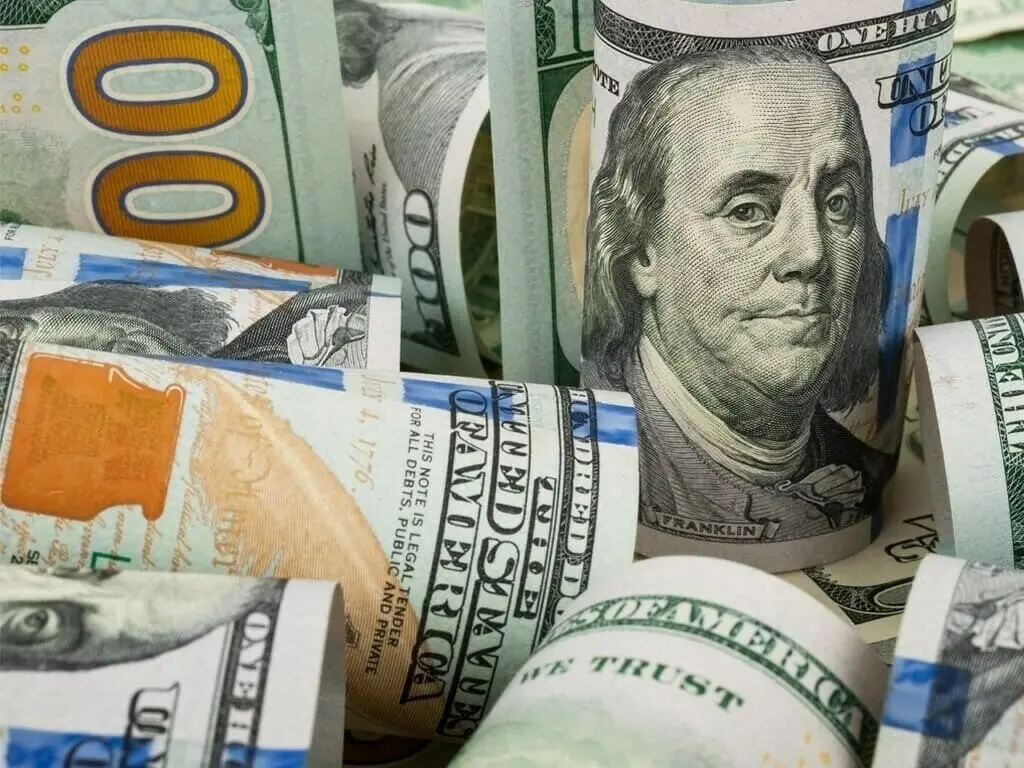

NEW YORK: The dollar was roughly flat on Monday, as it retreated from earlier highs after US President Donald Trump rebuffed Iran’s response to a US peace proposal, which pushed oil prices higher and kept concerns about an extended war intact.
Trump’s swift rejection came days after Washington floated an offer aimed at reopening negotiations, while Iran on Sunday released a response focused on ending the war on all fronts, including Lebanon, where US ally Israel is fighting Iran-backed Hezbollah.
US crude rose 1.15 percent to USD96.52 a barrel and Brent rose to USD103.03 per barrel, up 1.72 percent on the day after Trump said the offer was “unacceptable,” raising supply fears as the Strait of Hormuz stayed largely closed.
The dollar index, which measures the US currency’s strength against a basket of six others, was little changed at 97.977. Oil prices jumped, with Brent crude up 2.5 percent at USD103.80 a barrel.
“When the US rejects Iran’s counter proposal what does that mean - does that mean the ceasefire is going to end? Or does it mean this is a new phase of negotiations?” said Marc Chandler, chief market strategist at Bannockburn Capital Markets in New York.
The dollar index, which measures the greenback against a basket of currencies, edged up 0.05 percent to 97.89, with the euro up 0.01 percent at USD1.1785.
Trump and Chinese President Xi Jinping are set to discuss Iran, Taiwan, artificial intelligence, nuclear weapons and critical minerals when they meet later this week, according to US officials.
The Chinese yuan strengthened 0.08 percent against the greenback to 6.791 per dollar after reaching 6.7885, its strongest level since February 2023.
Data earlier in the day showed China’s producer prices smashed expectations to hit a 45-month high in April on rising global energy costs. That followed figures released over the weekend showing China’s export growth accelerated last month as factories raced to meet AI-related demand.
US inflation data for April is due this week, with the consumer price index scheduled for Tuesday and the producer price index on Thursday.
Last week, the US jobs report released Friday showed that non-farm payrolls increased 115,000 in April, almost twice as much as expected, which further increased expectations the Federal Reserve was unlikely to cut interest rates this year. Sterling weakened 0.04 percent to USD1.3627.
Prime Minister Keir Starmer promised to be bolder to turn around Britain’s fortunes, making an impassioned plea to both his Labour Party and voters to stick with him and avoid a leadership contest he said would only bring chaos after last week’s local elections brought about one of the worst defeats for Labour.
Against the Japanese yen, the dollar strengthened 0.24 percent to 157.02.














Comments