


KP drops MHPP from World Bank-funded energy project
The Khyber Pakhtunkhwa government is dropping the Madyan Hydropower Project from a World Bank-financed initiative due to a massive financing shortfall, restructuring the project to focus on other renewable energy developments.
- Massive financing shortfall leading to the project's cancellation.
- World Bank's increased funding and project restructuring details.
- Environmental and social implications of the revised plan.
- Progress and remaining challenges for the GabralKalam project.
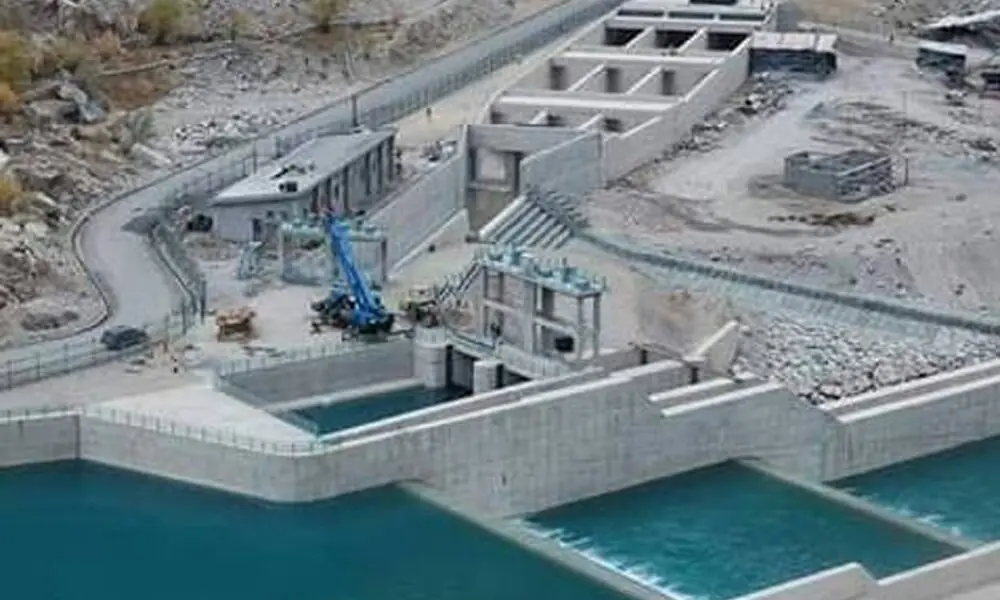

ISLAMABAD: The Khyber Pakhtunkhwa (KP) government has decided to drop the 215-megawatt Madyan Hydropower Project (MHPP) from the overall World Bank-financed Khyber Pakhtunkhwa Hydropower and Renewable Energy Development Project after a massive financing shortfall rendered the original project design financially unsustainable.
According to official documents of the World Bank, the provincial government sought a major overhaul of the USD727 million project to address a financing gap of USD452.5 million, comprising USD267.5 million in cost overruns and USD185 million in commercial financing that is unlikely to materialize.
The World Bank has agreed in principle to restructure the project by discontinuing financing for the Madyan project, extending the project completion deadline by three years, and revising the financing structure, implementation schedule, and results framework.
READ MORE: PEDO opposes exclusion of two hydropower projects from IGCEP
The project, approved by the World Bank in September 2020 and effective since January 2021, was originally designed to support the development of the 88MW GabralKalam Hydropower Project (GKHPP), the 215MW Madyan Hydropower Project and a solar photovoltaic initiative in KP.
Under the restructuring proposal, all activities linked to MHPP will be cancelled, while the GabralKalam hydropower project, solar energy investments, and technical assistance programmes will continue.
The World Bank document notes that despite more than five years having elapsed since the project’s effectiveness, project disbursements stand at only four percent, reflecting significant implementation delays caused by procurement bottlenecks and the redesign of the Madyan project following the devastating floods of August 2022, which raised dam safety concerns. However, project implementation has recently gained momentum. Key contracts for GabralKalam have been awarded, land acquisition has been completed, and approximately 70 percent of the work on the project colony has been executed. Procurement processes for major electro-mechanical and civil works packages have also advanced.
The restructuring will reduce the overall project size from USD727 million to approximately USD480.6 million. Out of the World Bank’s total financing envelope of USD450 million, around USD277.7 million will be allocated to GabralKalam, including civil works, environmental and social measures, and project implementation support. Another USD25 million will be used for institutional strengthening and capacity building.
The remaining USD147.3 million will be reserved for potential new renewable energy investments, including hydropower projects, solar photovoltaic schemes, and contingency financing.
As part of the revised financing arrangement, the World Bank’s share in the project will increase dramatically. Following restructuring, the Bank will finance about 93.7 percent of the remaining project cost while the KP government will contribute only 6.3 percent. The originally envisaged commercial borrowing component will be eliminated.
To facilitate completion of the remaining activities, the project closing date will be extended from November 30, 2027, to November 30, 2030. The extension is based on updated implementation schedules showing that the GabralKalam project alone requires nearly 56 months for completion, including contingency provisions.
The restructuring also outlines significant environmental and social implications arising from the cancellation of the Madyan project. The KP government has been advised to discontinue the ongoing land acquisition process for MHPP, allowing the identified land to remain with the existing owners.
At the same time, environmental and social safeguards for the GabralKalam project will remain fully intact. The project will continue to be classified as a Category-A operation with substantial environmental and social risks, requiring implementation of approved resettlement, biodiversity, and community development plans.
The World Bank noted that complaints had been received regarding the environmental and social impacts of the Madyan project, and efforts were underway to address concerns raised by affected stakeholders.
Despite the downsizing, the Bank maintains that the project remains aligned with Pakistan’s clean energy agenda and the World Bank Group’s objectives of promoting affordable, reliable, and sustainable energy. The restructured project is expected to contribute to renewable energy generation, institutional capacity building, and reductions in greenhouse gas emissions.
The Bank has retained an overall “Substantial” risk rating for the project, citing technical complexity, implementation capacity constraints, environmental and social challenges, fiduciary risks, and uncertainties surrounding the project’s inclusion in future national power generation expansion plans.
Copyright Business Recorder, 2026






















Comments