


Govt decides anti-dumping measures to protect local auto industry
The government is implementing a new auto policy with anti-dumping measures to protect local manufacturing, discourage imports, and promote electric vehicles through tariffs and incentives.
- Proposed carbon levy on larger petrol and diesel vehicles.
- Gradual tariff reductions and localization incentives for manufacturers.
- Measures against under-invoicing and disguised auto part imports.
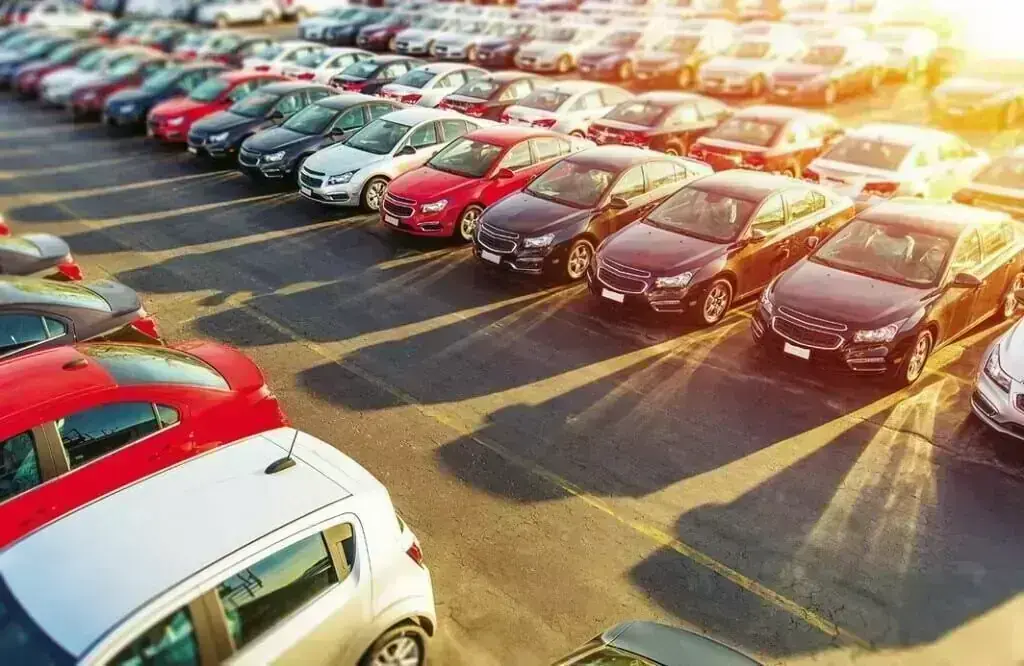

ISLAMABAD: In a move to encourage local automotive manufacturing and discourage imported vehicles, the government has decided to introduce specific anti-dumping measures to protect the local auto industry, it is learnt.
According to the new auto policy document, cheap imported vehicles pose a direct threat to local manufacturing and 2.5 million jobs. Under the plan, the government has decided to gradually reduce different tariffs on imported vehicles, and this exercise will be carried out in a cautious and phased manner.
The government also decided to provide special incentives to local electric vehicle producers, while also discouraging the use of petrol and diesel vehicles.
A decision is under consideration to impose a carbon levy between 10 and 19.5 percent on the above 1000 cc petrol and diesel vehicles. A special committee has been constituted to further deliberate on the proposal regarding the imposition of a carbon levy on petrol and diesel vehicles.
Sources said that the government has estimated to generate up to Rs142 billion over the next five years if the carbon levy is imposed on above 1000 cc petrol and diesel vehicles.
The document notes that major automotive-producing countries, including China and the United States, also maintain protective tariffs on imports. Tariff Rates: Tariffs on completely built units (CBUs) in Pakistan will be maintained between 40 percent and 75 percent. Special incentives will be provided to promote local parts manufacturing and localisation. Companies that fail to meet localisation targets will not be eligible for concessional benefits.
Strict measures have been proposed to discourage the practice of importing auto parts by declaring them as scrap. The Federal Board of Revenue (FBR) has been directed to make the valuation system for imported vehicles more effective. The trend of evading duties by under-invoicing (understating the value of) imported vehicles will be strictly discouraged. Concessional import facilities will only be granted to genuine manufacturers.
The policy also includes plans to establish an auto testing and safety system in line with international standards. Under this policy, there will be strict oversight regarding vehicle safety and technical standards. Only companies that localise their production within Pakistan will be entitled to these incentives. Commercial Tariffs: Companies engaged solely in the import business will be required to pay the full commercial tariff.
According to Ministry of Industries and Production officials, under the new auto policy, the government has decided to introduce the following measures: (i) Calibrated, not sudden tariff reduction in the policy, which states “CBU tariffs reduced gradually over five years - from 57-197 percent (2024-25) toward 40-75 percent by 2030-31”. Reductions are tied to localisation progress and reviewed at each policy period end. (ii) Localisation-Linked Tariff Differential, which states “a 35 percent gap between CKD Input costs and the localised CKD rate is maintained as a structural floor, ensuring domestic assembly always retains a commercial incentive over import substitution”. (iii) Penalty for Failure to Localise: Penalty for failure to localise, which states, “Original equipment manufacturers (OEMs) importing parts at concessional rates are contractually obligated to meet localisation targets. Failure triggers commercial-rate tariffs on an escalating share of CKO - preventing firms from using import concessions without building genuine domestic manufacturing”. (iv) The policy explicitly addresses the practice of importing auto parts disguised as scrap to evade customs - a known route for flooding the market with cheap foreign parts that undercut domestic manufacturers. (v) the FBR directed to review valuation rulings to curb under-invoicing on imported vehicles and parts, closing a loophole used to artificially lower declared import values and evade effective tariff protection. (vi) Complete Built Units (CBU) import at concessional rates for the L7 category is capped at 100 units per variant per company until June 2027, only for manufacturers who subsequently localise production - preventing pure import trading under the NEV Incentive umbrella. (vii) The government is not going to provide any new blanket concessions on CBUs, and the existing ad hoc 25 percent CD concession on EV CBUs is discontinued; no new blanket exemptions are introduced. (viii) NEV 4-wheelers (cars/SUVs) CBU tariff maintained at 50 percent in 2026-27, decreasing gradually to 40 percent by 2030-31 - ensuring that even the prioritised NEV segment cannot be used as a cheap CBU import channel at the expense of domestic assembly. (ix) Pakistan has already notified 62 automotive standards aligned with WP-29, with a plan to set up domestic testing facilities - setting binding safety, emissions, and technical thresholds for all vehicles sold or assembled in Pakistan.
Copyright Business Recorder, 2026
















Comments