


Most Gulf bourses end higher; UAE shares extend losses
- Dubai’s main share index closed 1.3% lower after falling as much as 4.2% earlier in the session
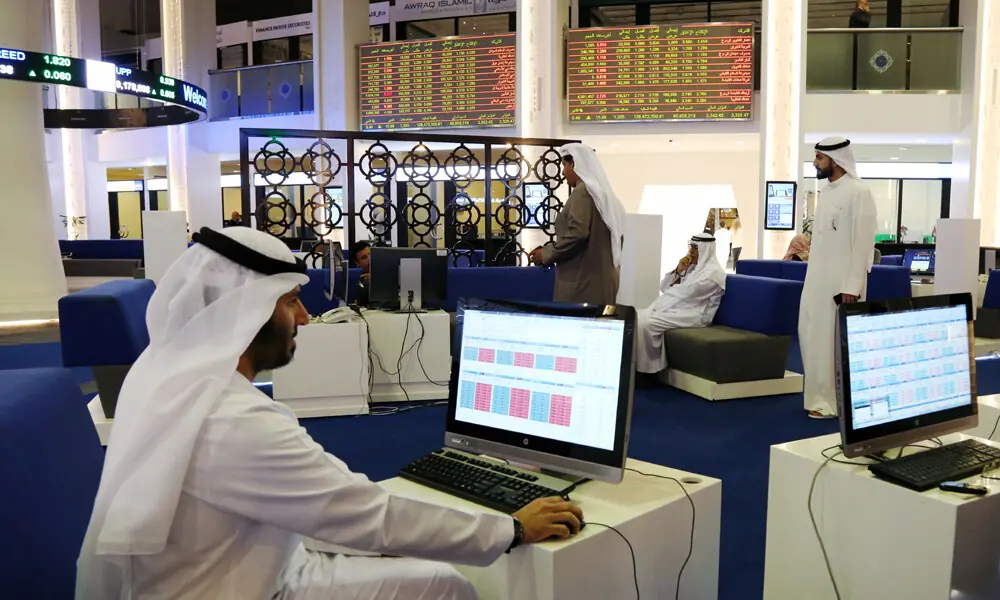

Most Gulf stock markets ended higher on Thursday, though UAE equities fell again, extending losses from the prior session when its exchanges reopened after a two-day suspension prompted by Iran’s weekend missile-and-drone barrage on the Emirates.
Following the reopening, the Dubai and Abu Dhabi exchanges temporarily set a 5% lower price limit on securities to try to reduce volatility.
Israel launched another large wave of strikes on Tehran on Thursday, targeting what it said was infrastructure belonging to the Iranian authorities, after Iranian missiles sent millions of Israelis rushing into bomb shelters.
Dubai’s main share index closed 1.3% lower after falling as much as 4.2% earlier in the session, with top lender Emirates NBD and blue-chip developer Emaar Properties both losing 4.9%.
Budget airline Air Arabia dropped 4.9%, but utility firm Dubai Electricity and Water Authority advanced 5.3%.
XTB MENA analyst Milad Azar said that while the market may remain sensitive to regional developments, Dubai’s underlying fundamentals are strong and could support a rebound.
Abu Dhabi’s index retreated 2.2%, with First Abu Dhabi Bank falling 1.2% and Aldar Properties down 5%. Abu Dhabi Commercial Bank tumbled 4.7%.
Saudi Arabia’s benchmark index finished 0.8% higher, with Al Rajhi Bank rising 1.7%.
The Saudi index posted a weekly gain of 0.6%.
Al Moammar Information System surged 10% to its daily maximum limit on a deal with AI firm HUMAIN to design and build a data centre.
ACWA Power and Dallah Healthcare gained 3.5% and 6.1% respectively, following increases in full-year net profit.
The Saudi market bounce was driven by higher oil prices after the initial jolt from recent geopolitical tensions. Azar said stocks looked set to build on the recovery, supported by expectations of firmer energy prices as disruptions persist in the Strait of Hormuz, a vital energy transport route.
Oil prices surged more than 3%, extending a rally as the war raised fears of prolonged disruptions to Middle Eastern oil and gas supplies.
Shares in oil major Saudi Aramco, however, eased 0.7%.
The Qatari benchmark rose 1%, with Qatar National Bank, the Gulf’s biggest lender by assets, up 3.2%.
Gains were limited by a 2.5% fall in petrochemical maker Industries Qatar and a 7% slide in Qatar Aluminum Manufacturing Co.
Qatar, the Gulf’s biggest liquefied natural gas producer, declared force majeure on gas exports on Wednesday, with sources saying a return to normal production may take at least a month.
Oman’s and Kuwait’s indexes both advanced 1.3%, while the Bahraini index fell 1.1%.
Outside the Gulf, Egypt’s blue-chip index climbed 2.3%, snapping a four-day losing streak, led by a 3.7% gain in Commercial International Bank.
However, the Egyptian index recorded a weekly decline of 3.5%, its steepest drop since June.


























Comments
Comments are closed for this article.