


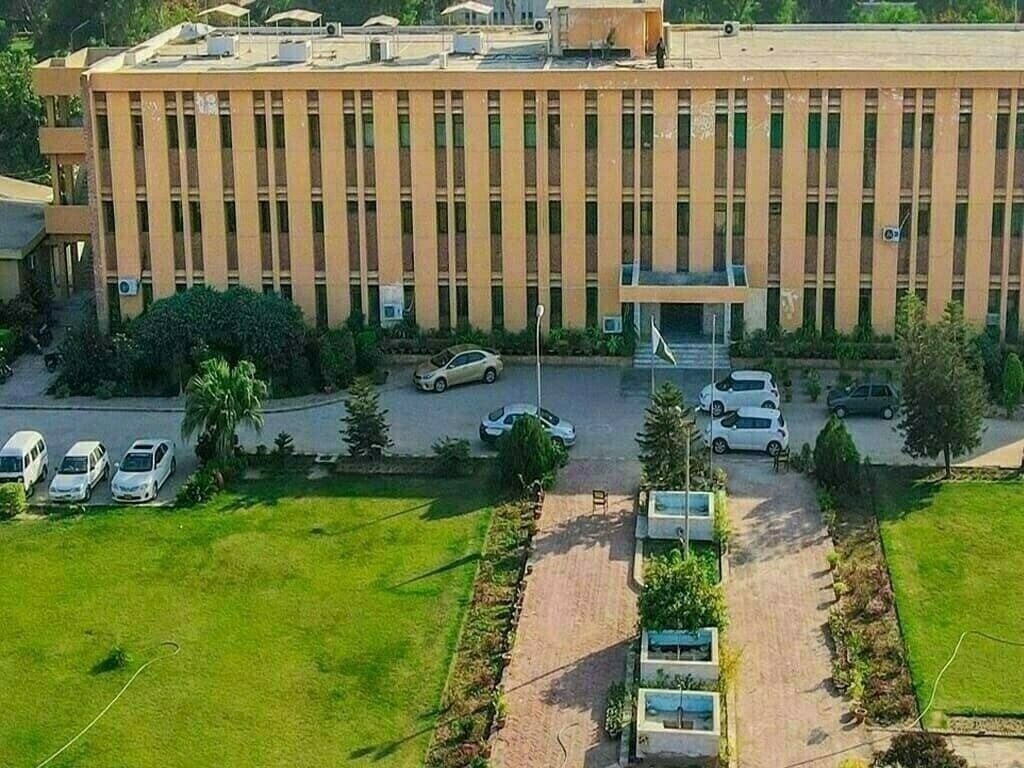

HYDERABAD: Sindh Agriculture University (SAU), Tandojam, successfully hosted a four-day International Capacity Building Training for government officials from the Sindh Irrigation Department, SIDA, and the On-Farm Water Management Department. The programme was conducted under the FAO-led project, “Transforming the Indus Basin with Climate-Resilient Agriculture and Water Management.”
The training aimed to enhance the capacity of officials to address the impacts of climate change on agriculture and water resources while equipping them with modern knowledge, technical skills, and technologies to strengthen farmers’ resilience.
During the inaugural session, Professor Dr Jam Ghulam Murtaza Sahito, the organizer of the training, highlighted that climate change is affecting all sectors, including agriculture, and emphasized the need for officials and farmers to be well-informed.
“This project provides practical tools, technical expertise, and adaptive strategies to mitigate the adverse effects of climate change on agriculture and water management,” he added.
International FAO experts, Matthijs Bonte from the Netherlands and Jiro Ariyama from Japan, delivered online lectures, offering global perspectives on sustainable water management and climate-resilient agricultural practices. Experts from the University of Agriculture Faisalabad, Dr Rana Ammar Aslam, Dr Sikandar Ali, and Muhammad Ali Hassan, conducted sessions on risk assessment, groundwater vulnerability, and adaptation strategies for climate change.
Participants engaged in practical exercises and discussions, focusing on risk-based groundwater vulnerability assessment in Sanghar and Umerkot districts, and exchanged ideas on developing locally relevant solutions. The programme represents a collaborative effort between SAU, the University of Agriculture Faisalabad, and FAO to design sustainable water management and climate adaptation strategies for the Indus Basin.
Participants appreciated the comprehensive approach of the training, which combined theoretical knowledge with practical tools, and highlighted its importance in building the technical capacity of officials to support farmers in coping with climate challenges.
Copyright Business Recorder, 2025

























Comments
Comments are closed for this article.