


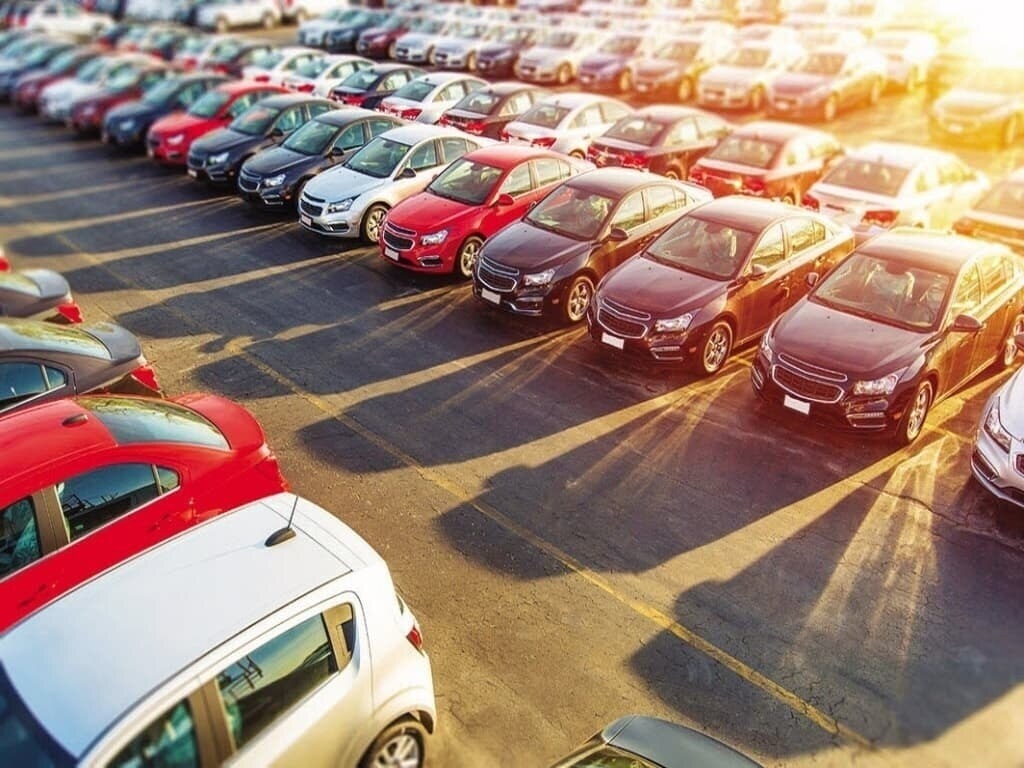

ISLAMABAD: Pakistan has emerged as the only auto-manufacturing country in Asia where used vehicles now occupy a major share of the domestic market - a trend industry leaders warn is eroding local capacity.
According to a statement of Shehryar Qadir, Senior Vice Chairman of the Pakistan Association of Automotive Parts & Accessories Manufacturers (PAAPAM) issued on Monday, used vehicles accounted for nearly 25 percent of all automobile sales between December 2024 and December 2025, a level unmatched by any regional competitor.
Qadir says fresh data compiled for the period December 2024 to October 2025 clearly reflects a sharp resurgence in used-vehicle inflows. In contrast, he points out that comparable Asian markets have virtually shut the door on such imports: India maintains nearly zero used-car inflows, Vietnam stands at 0.3 percent and Thailand at 1.2 percent.
“This disparity is the result of policy direction,” he argues. “Where other countries have protected their automotive value chains, Pakistan has opened space for used imports — most significantly after Notification 1895 issued on September 30, 2025 — allowing vehicles up to five years old. By June 2026, this restriction may be scrapped altogether, enabling even older units to enter freely.”
According to Qadir, Pakistan’s auto ecosystem today spans around 1,200 production units, supports 2.5 million jobs, contributes roughly Rs 500 billion in government revenues every year and holds foreign investment of around $5 billion. “Import-friendly policies risk diluting these hard-won gains at a time when industrial revival and localisation are supposed to be national priorities,” he cautions.
He adds Pakistan imported 45,758 vehicles in the past year, and almost 99 percent came from Japan, owing to right-hand-drive compatibility. The rest were marginal — 130 from Thailand, 55 from the US, 49 from Jamaica, 47 from Germany, 22 from Australia, 20 from China, and only 5 from the UAE.
A majority of these units, he notes, enter through Gift, Baggage, and Transfer of Residence schemes, frameworks originally designed for overseas Pakistanis.
Qadir highlights a glaring mismatch: although Pakistan has only 25,000 citizens living in Japan, imports originating from Japan were nearly double that figure. Industry sources believe many vehicles are procured from Japan while paperwork is processed through expatriates based in the UAE — a left-hand-drive jurisdiction — raising questions on compliance and misuse.
Former PAAPAM Chairman Abdul Rehman Aziz echoes this concern, citing weak coordination among SBP, FBR and provincial excise departments, which allows vehicles to be imported under one individual’s credentials and registered under another. “Ninety-nine per cent of used cars go directly from port to showroom. There is no evidence of actual personal use, defeating the purpose of facilitating returning Pakistanis,” he says.
Qadir estimates the loss to local vendor enterprises at Rs 50 billion in one year, while the foreign-exchange disparity is equally alarming. Local manufacturers require about USD 10,138 in documented imports per unit, whereas used-vehicle importers draw an estimated USD 14,010 per unit — much of it through informal channels, he says.
As the government drafts the next Auto Policy, PAAPAM believes the bigger question for policymakers is not whether imports should continue, but what share they should occupy — and whether Pakistan’s current trajectory aligns with employment, manufacturing and fiscal stability.
Copyright Business Recorder, 2025.

























Comments
Comments are closed for this article.