


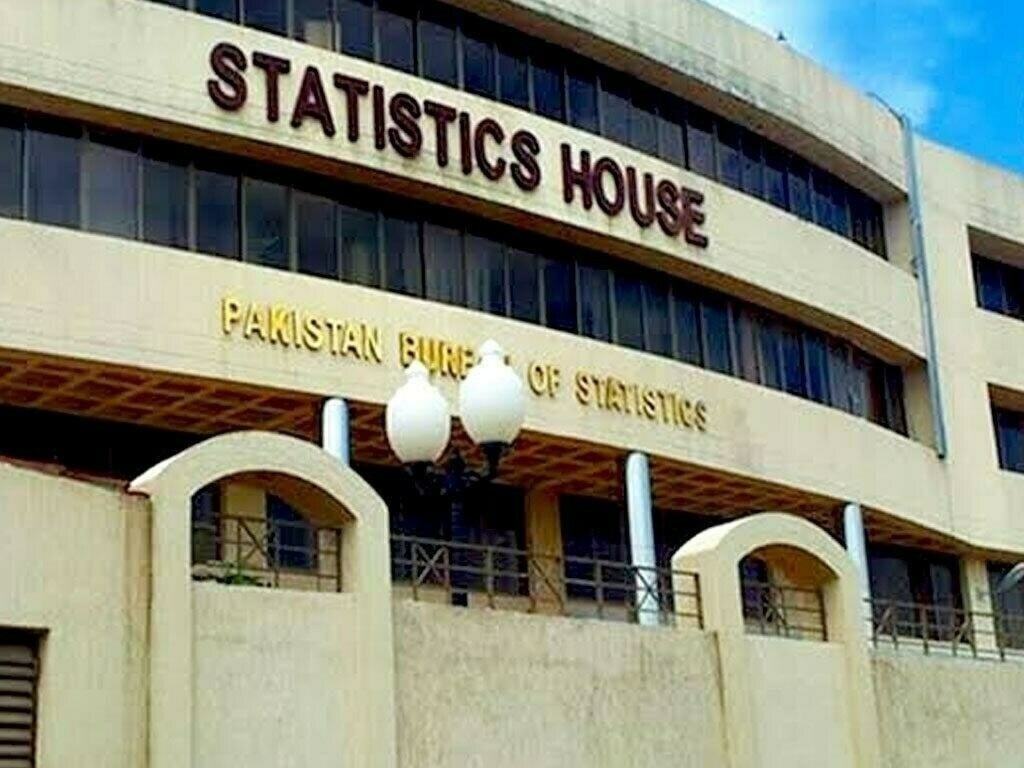

ISLAMABAD: The Pakistan Bureau of Statistics (PBS) and the Pakistan Institute of Development Economics (PIDE) on Wednesday pledged to strengthen their cooperation and promote data-driven policy research to support the country’s transition towards an evidence-based governance framework.
The commitment was made during a specialised seminar titled “PIDE and PBS Deliberations on Data for Policy Research,” where Dr Nadeem Javaid, Vice Chancellor PIDE, and Dr Naeem Uz Zafar, Chief Statistician of PBS, highlighted significant gaps in the country’s data ecosystem.
Speaking as a keynote speaker Dr Naeem Uz Zafar pointed out that although social indicators are prioritised but the actual economy, including value chains, productivity, and industrial clusters remained insufficiently researched.
PBS chief stressed the importance of adopting international classification standards and geo-tagging frameworks to enhance structural analysis. Referring to the economic census, he observed that the new geo-tagged economic framework enables better mapping of economic activity and service delivery across regions.
A significant part of his address concentrated on agriculture, where systematic data collection on crops, livestock, and machinery now better aligns with rural decision-making cycles.
He highlighted ongoing productivity gaps, including limited adoption of certified seeds, unequal access to machinery, and the dominance of small subsistence farms. He emphasised how understanding demand-supply gaps and economies of scale can lead to more effective policy interventions.
Discussing governance and public service delivery, Dr Naeem illustrated how combining census data with geo-tagged information on schools, health facilities, and public infrastructure can help identify mismatches between supply and community needs. He underscored the importance of digitised monitoring systems and improved evaluation frameworks for better public spending.
He encouraged young researchers to adopt modern analytical tools such as R, Python, and geospatial software to deepen Pakistan’s analytical capacity.
He appreciated PIDE’s efforts to bridge the gap between data producers and data users, calling such collaborations essential for strengthening Pakistan’s policy ecosystem.
Dr Nadeem Javaid, Vice Chancellor of PIDE, in his remarks, highlighted that official statistics are essential for effective public policy.
He noted that without reliable data, discussions become abstract, planning turns into guesswork, and reforms have difficulty implementing.
While praising the collaboration between PIDE and PBS, he recognized the significant potential to foster evidence-based decision-making, guide resource distribution, and support research that can genuinely shape development priorities.
Moderated by Dr Faheem Jehangir, Dean of Policy at PIDE, the session brought together researchers, policymakers, and students.
Copyright Business Recorder, 2025

























Comments
Comments are closed for this article.