


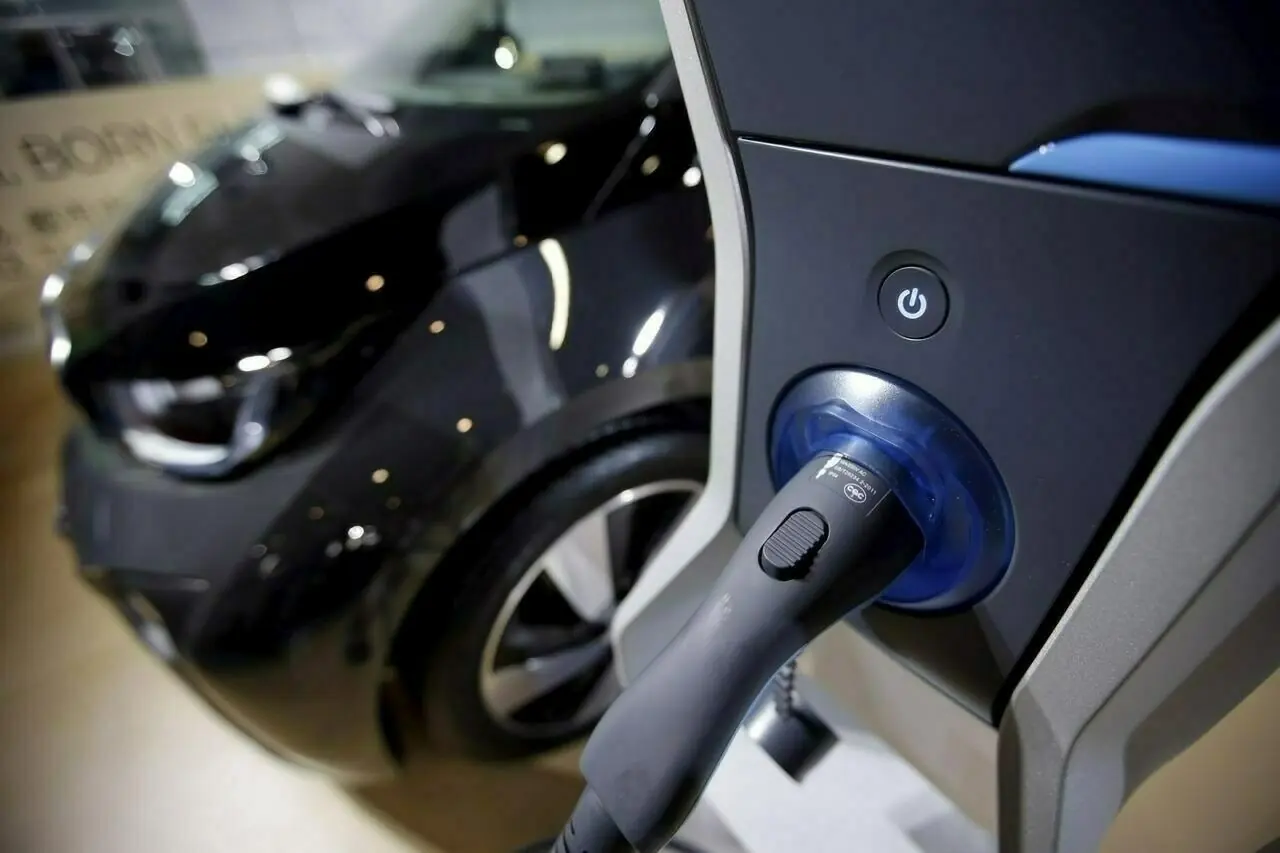

Experts from industry and finance have warned that structural challenges, including lack of financing options, weak standardisation, and insufficient infrastructure, are slowing Pakistan’s transition to electric vehicles (EVs).
Speaking at the third Electric Vehicles Conference organised by the Climate Action Center (CAC) in Multan, stakeholders urged the government to address key policy bottlenecks to unlock the potential of the country’s EV market.
The event was sponsored by the Bank of Punjab (BoP) and supported by Horwin, a global EV bike manufacturer.
“Things are moving in the right direction, and the government has started taking the EV transition seriously,” said CAC Director Yasir Husain, noting that the new EV policy would phase out petrol and diesel vehicles. “Smog kills, and electric mobility is no longer a distant dream,” he said.
Naeem Javid, BoP’s Head of Project Finance and Equity Advisory, said the EV Policy 2025-2030 offers substantial tax relief, including 1% GST on EVs compared with 17% for conventional vehicles, and 1% import duty on parts, along with a Rs100 billion subsidy for two- and three-wheelers over five years.
“The EV market in Pakistan looks promising, but cost and financing remain major hurdles,” Javid said. “Long-term, affordable financing is essential to make EV ownership viable.”
Horwin’s General Manager Nauman Alvi said Pakistan spends around $15 billion annually on fuel imports, 60-70% of which is consumed by two- and three-wheelers.
“Electrifying this segment should be a top priority. It will reduce the import bill and improve air quality,” he said.
Alvi emphasised the need for standardised charging and battery systems, saying that “a lack of uniformity across manufacturers hinders scalability.”
Capital Smart Motors CEO Farrukh Raza said consumer skepticism was the biggest early challenge, while Nexcell CEO Jamshed Iqbal warned that substandard imported batteries were undermining user confidence and called for better quality control.
Punjab Mass Transit Authority’s Muhammad Yasin said 69 electric buses are already operating in Multan but called for urgent expansion of charging infrastructure to sustain growth.
Wrapping up the conference, CAC representatives said collaboration between policymakers, financiers, and industry players was vital to ensure a clean and inclusive EV transition.
“The road ahead is uneven, but the direction is clear, the future of transport is electric,” they concluded.






















Comments
Comments are closed for this article.