


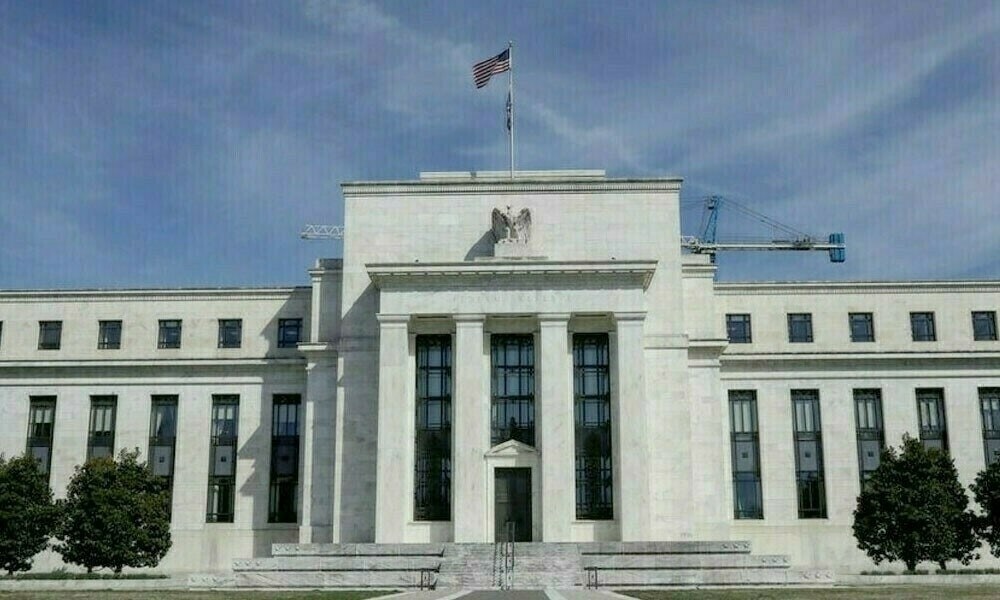

WASHINGTON: The US central bank is widely expected to hold off slashing interest rates again at its upcoming meeting, as officials gather under the cloud of an intensifying pressure campaign by President Donald Trump.
Policymakers at the independent Federal Reserve have kept the benchmark lending rate steady since the start of the year as they monitor how Trump’s sweeping tariffs are impacting the world’s biggest economy.
With Trump’s on-again, off-again tariff approach — and the levies’ lagged effects on inflation — Fed officials want to see economic data from this summer to gauge how prices are being affected.
When mulling changes to interest rates, the central bank — which meets on Tuesday and Wednesday — seeks a balance between reining in inflation and the health of the jobs market.
But the bank’s data-dependent approach has enraged the Republican president, who has repeatedly criticized Fed Chair Jerome Powell for not slashing rates further, calling him a “numbskull” and “moron.”
Most recently, Trump signaled he could use the Fed’s $2.5 billion renovation project as an avenue to oust Powell, before backing off and saying that would be unlikely.
Trump visited the Fed construction site on Thursday, making a tense appearance with Powell in which the Fed chair disputed Trump’s characterization of the total cost of the refurbishment in front of the cameras.
But economists expect the Fed to look past the political pressure at its policy meeting.
“We’re just now beginning to see the evidence of tariffs’ impact on inflation,” said Ryan Sweet, chief US economist at Oxford Economics.
“We’re going to see it (too) in July and August, and we think that’s going to give the Fed reason to remain on the sidelines,” he told AFP.
Since returning to the presidency in January, Trump has imposed a 10 percent tariff on goods from almost all countries, as well as steeper rates on steel, aluminum and autos.
The effect on inflation has so far been limited, prompting the US leader to use this as grounds for calling for interest rates to be lowered by three percentage points.
Currently, the benchmark lending rate stands at a range between 4.25 percent and 4.50 percent.
Trump also argues that lower rates would save the government money on interest payments, and floated the idea of firing Powell. The comments roiled financial markets.
“Powell can see that the administration floated this trial balloon” of ousting him before walking it back on the market’s reaction, Sweet said.
“It showed that markets value an independent central bank,” the Oxford Economics analyst added, anticipating Powell will be instead more influenced by labor market concerns.
Powell’s term as Fed chair ends in May 2026.
Analysts expect to see a couple of members break ranks if the Fed’s rate-setting committee decides for a fifth straight meeting to keep interest rates unchanged.
Sweet cautioned that some observers may spin dissents as pushback on Powell but argued this is not necessarily the case.
“It’s not out-of-line or unusual to see, at times when there’s a high degree of uncertainty, or maybe a turning point in policy, that you get one or two people dissenting,” said Nationwide chief economist Kathy Bostjancic.
Fed Governor Christopher Waller and Vice Chair for Supervision Michelle Bowman have both signaled openness to rate cuts as early as July, meaning their disagreement with a decision to hold rates steady would not surprise markets.

























Comments
Comments are closed for this article.