


India’s aggressive posture threatening regional peace, Masood Khan
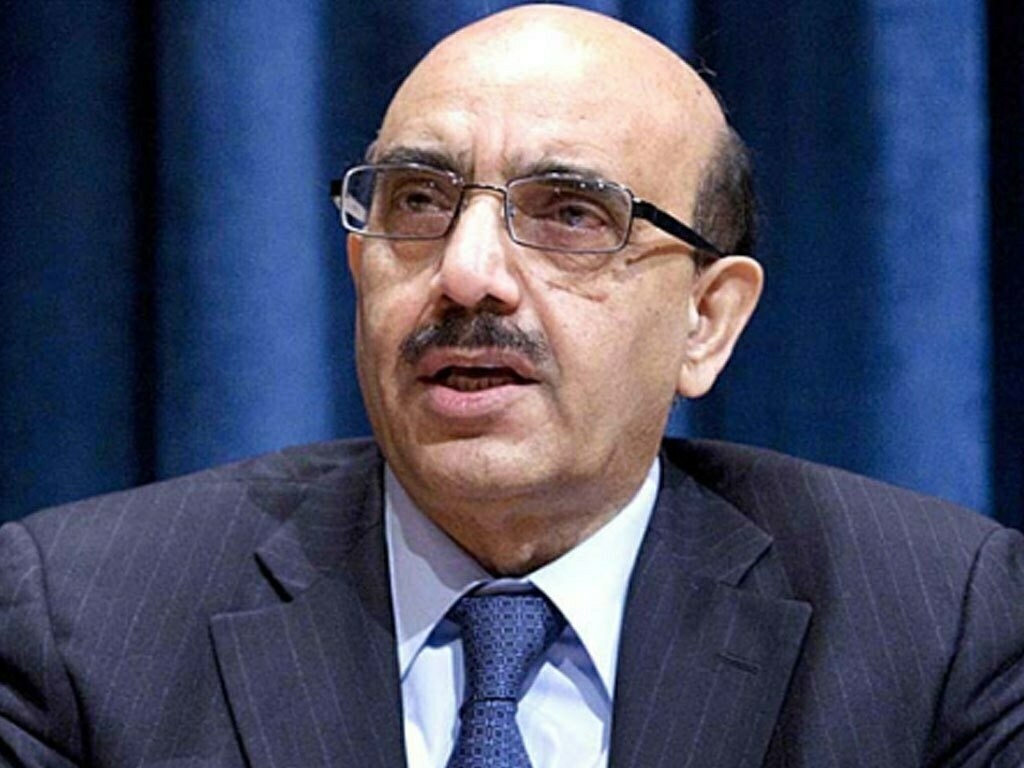

MUZAFFARABAD: Former AJK President and senior diplomat Sardar Masood Khan has warned that India’s hostile policies pose a serious threat to peace in South Asia and beyond.
In an interview on Wednesday, Khan said India maintains a war-like posture under Prime Minister Narendra Modi, who has declared that any act of terrorism in India or Kashmir will be blamed on Pakistan and met with retaliation.
“Pakistan must remain fully prepared to respond to any potential escalation, it would be dangerous to harbour any illusions about the intentions of Indian leadership,” he cautioned.
India’s Prime Minister Narendra Modi, Khan said, has publicly stated that any act of terrorism in India or Indian occupied Kashmir will be attributed to Pakistan and met with retaliatory strikes.
Masood Khan provided an in-depth analysis of Pakistan-India relations, the prospects for dialogue, and the prevailing Indian narrative. He stressed that recent tensions have sent a clear signal to the international community that any conventional conflict in South Asia holds the potential to spiral into a nuclear confrontation, with consequences extending far beyond the region.
Khan noted that while India persistently accuses Pakistan of sponsoring terrorism, it has never presented credible evidence. Conversely, he asserted that Pakistan possesses irrefutable proof of India’s overt and covert involvement in terrorist activities within its borders- particularly through proxy networks operating in Balochistan and the tribal regions. He reiterated Pakistan’s longstanding commitment to resolving all outstanding disputes, including the Kashmir issue, through dialogue- whether via direct bilateral engagement or third-party mediation.
However, he lamented that India has consistently avoided serious negotiations. On occasions when it has shown a nominal willingness to engage, it has diverted the discourse toward secondary issues, effectively sidestepping the core dispute.
Referring to the Pehalgam incident, Khan accused India of unjustly blaming Pakistan, heightening tensions, and subsequently committing acts of military aggression. He stated that Pakistan responded with a measured and resolute counteraction, effectively thwarting India’s designs.
Following this, he added, New Delhi faced mounting diplomatic pressure that compelled it to express readiness for a ceasefire and talks. Yet, it now appears to be retreating from that stance.
Commenting on India’s proposed “new normal” doctrine, Sardar Masood Khan warned that if India establishes a precedent of blaming Pakistan for every incident and justifying military responses as routine, sustainable peace in the region would become impossible.


























Comments
Comments are closed for this article.