


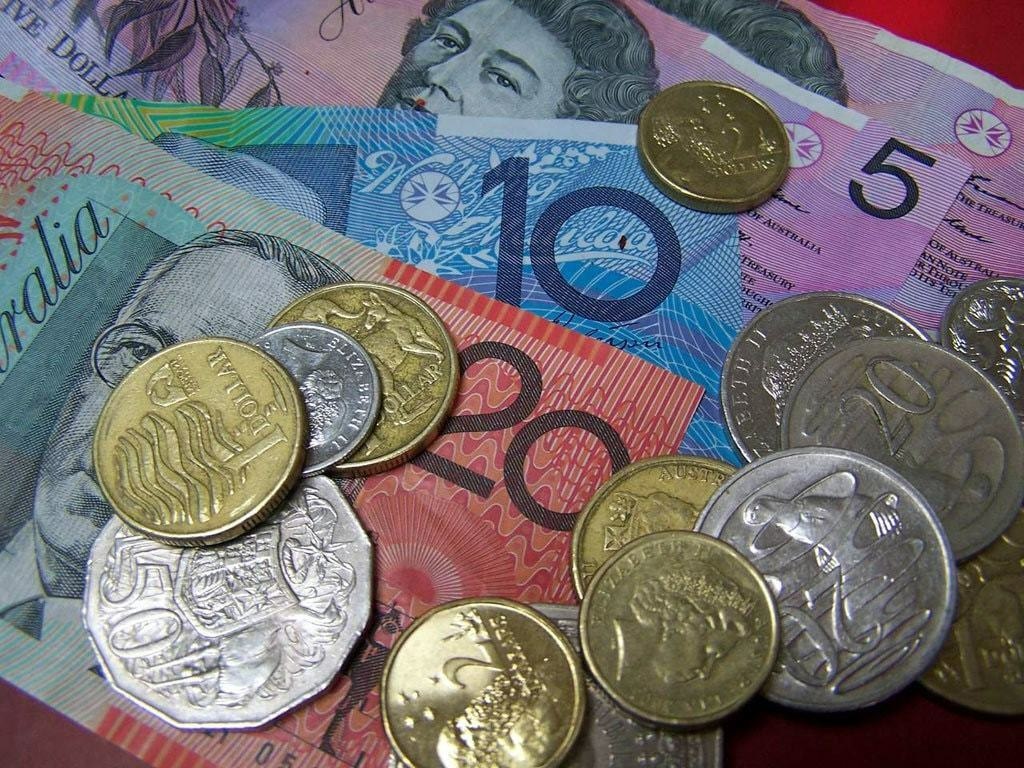

SYDNEY: The Australian and New Zealand dollars were boxed-in on Tuesday as an increasingly hawkish outlook for US interest rates overshadowed upbeat news on the domestic economy.
The Aussie was a shade firmer at $0.7182, but sandwiched between support at $0.7130 and resistance around $0.7203. A break above $0.7276 is needed to end the deadlock of the past few weeks.
The kiwi dollar edged up to $0.6769, but again was trapped in a tight $0.6733/$0.6782 band. It faces more resistance at $0.6795 and $0.6835, with major support down around $0.6702.
The Aussie found only fleeting comfort in data showing retail sales surged 7.3% in November, far above forecasts of a 3.9% increase and evidence the economy had a lot of momentum ahead of the latest coronavirus outbreak.
"Retail sales are now running at 5.8% over the year, which is very high and well above the trend in spending that was occurring before the pandemic," said Diana Mousina, a senior economist at AMP Capital.
Sales will take a hit this month as the rapid spread of Omicron has deterred shoppers and put many workers into self isolation in a renewed blow to supply chains.
Still, the sheer strength of spending in November should reassure the Reserve Bank of Australia (RBA) that the economy has the momentum to weather the disruptions. Markets have long been wagering that growth and inflation will be strong enough to see the RBA hike rates by June, even as policy makers insist a move is unlikely until 2023.
Futures are fully priced for a hike to 0.25% in June and rates of at least 0.75% by year end.
However, the market is even more hawkish on the Federal Reserve where a first rise is expected in March.
Several major banks think investors are still not aggressive enough.
"The market needs to keep pushing its terminal estimate for Fed rates higher," said Tom Porcelli, chief US economist for RBA Capital Markets.
Futures have the funds rate topping out at around 1.75% and not until early 2024.
"The reality is that's too low and we see real scope for the Fed to easily go four times this year and four next year," warned Porcelli. "That means funds are easily sitting north of 2% by the end of next year."

























Comments
Comments are closed for this article.