


Asia stocks fight back, gold slides and oil takes a spill
- That took the US currency index up to 92.882 and nearer to the July peak of 93.194
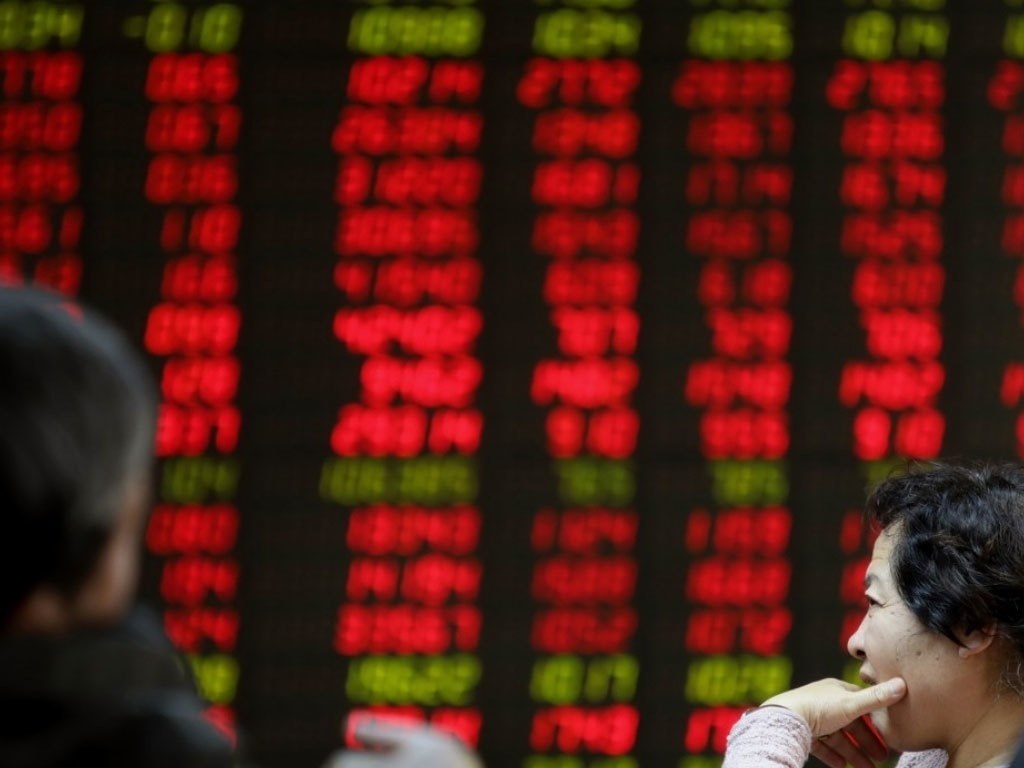

SYDNEY: Asian shares fought back from early losses on Monday as sharp falls in gold and oil prices briefly spooked sentiment, while the dollar reached four-month highs on the euro after an upbeat US jobs report lifted bond yields.
Markets were shaken early by a sudden dive in gold as a break of $1,750 triggered stop loss sales to take it as low as $1,684 an ounce. It was last down 1.3% at $1,740.
Brent also sank 2% on concerns the spread of the Delta variant of the coronavirus would temper travel demand.
Most Asian markets fall as traders struggle to track Wall St record
Holidays in Tokyo and Singapore made for thin trading conditions, adding to the volatility. Yet after an initial fall, MSCI's broadest index of Asia-Pacific shares outside Japan recovered to be up 0.1%.
They were helped by China's blue chips index which added 1.3%.
Japan's Nikkei was shut but futures were trading a modest 20 points below Friday's close.
Nasdaq futures slipped 0.3% and S&P 500 futures 0.2%. EUROSTOXX 50 futures and FTSE futures both dipped 0.2%. Chinese trade data out over the weekend undershot forecasts, while figures out Monday showed inflation slowed to 1% in July offering no barrier to more policy stimulus.
The US Senate came closer to passing a $1 trillion infrastructure package, though it still has to go through the House.
Investors were still assessing whether Friday's strong US payrolls report would take the Federal Reserve a step nearer to winding back its stimulus.
"There is not a lot of disagreement on a taper announcement coming sometime between September-December followed by actual tapering sometime between November and January," said Rodrigo Catril, a senior FX strategist at NAB.
However, the pace of tapering was still up in the air and would decide when an actual rate hike came, he said. The Fed is currently buying $120 billion of assets a month, so a $20 billion taper would end the programme in six months whilst a $10 billion tapering approach would take a year.
The spread of the Delta variant could argue for a longer taper with US cases back to levels seen in last winter's surge with more than 66,000 people hospitalised.
Figures for July CPI due this week are also expected to confirm inflation has peaked, with prices for second hand vehicles finally easing back after huge gains.
There are four Fed officials speaking this week and will no doubt offer enough grist for markets looking for clues on the timing of tapering.
In the meantime, stocks have been mostly underpinned by a robust US earnings season. BofA analysts noted S&P 500 companies were tracking a 15% beat on second quarter earnings with 90% having reported.
"However, companies with earnings beats have seen muted reactions on their stock price the day following earnings releases, and misses have been penalized," they wrote in a note.
"Guidance is stronger than average but consensus estimates for two-year growth suggest a slowdown amid macro concerns."
Financials firmed on Friday as a steeper yield curve is seen benefiting bank earnings, while also penalising the tech sector where valuations are sky high.
Yields on US 10-year notes were up at 1.30% in the wake of the jobs report, having hit their lowest since February last week at 1.177%.
That jump gave the dollar a broad lift and knocked the euro back to $1.1760, and briefly to its lowest since April at $1.1740. The dollar likewise climbed to 110.22 yen and away from last week's trough of 108.71.
That took the US currency index up to 92.882 and nearer to the July peak of 93.194.
Oil prices eased further after suffering their largest weekly drop in four months amid worries coronavirus travel restrictions would threaten bullish expectations for demand. Brent fell $1.29 to $69.41 a barrel, while US crude lost $1.34 to $66.94.


























Comments
Comments are closed for this article.