


Telesat taps Thales Alenia Space for $3bn deal to build low earth orbit satellites
- LEO satellites operate 36 times closer to the earth than traditional ones so they take less time to send and receive information.
- We are extremely bullish on the opportunity to get into the market and capture the really surging demand for global broadband connectivity.
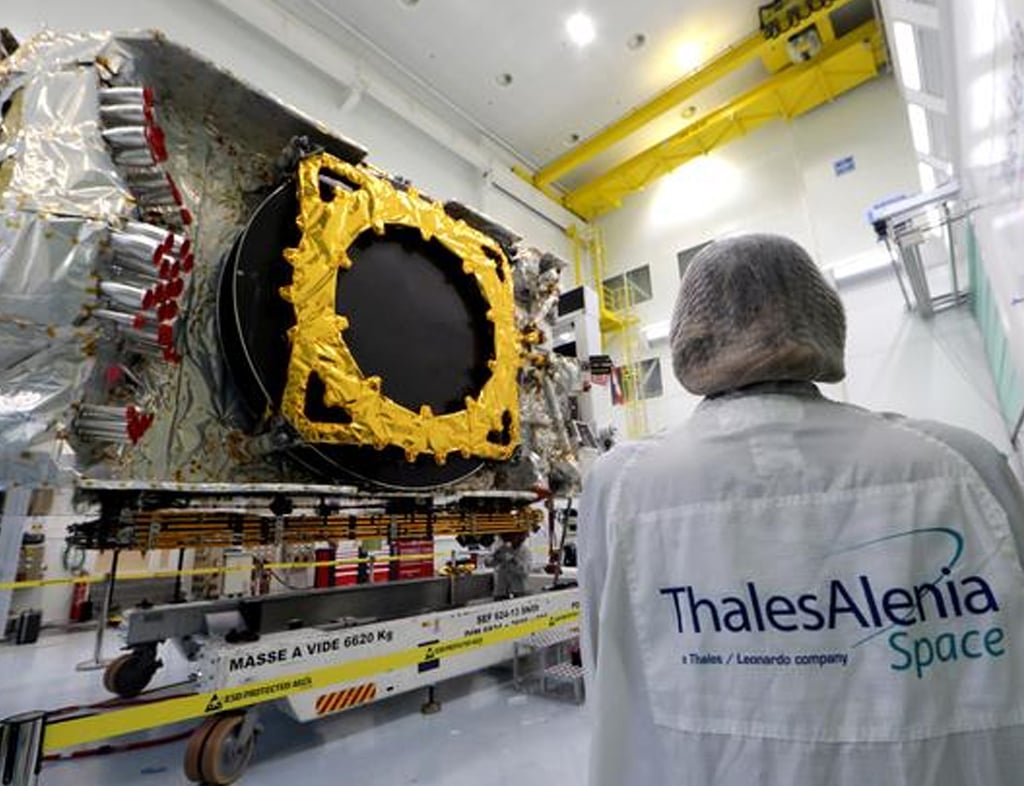

OTTAWA: Canadian satellite company Telesat on Tuesday tapped Thales Alenia Space to build 300 low earth orbit (LEO) telecommunications satellites in a contract worth about $3 billion, saying the first launch would be in about two years.
LEO satellites operate 36 times closer to the earth than traditional ones so they take less time to send and receive information, leading to better and faster broadband service even in remote areas.
"We are extremely bullish on the opportunity to get into the market and capture the really surging demand for global broadband connectivity," Telesat President and Chief Executive Dan Goldberg said in an interview.
"We're going to start launching our first satellites in about two years time. We'll be in service in the higher latitudes in late 2023, and then we'll have full global service in 2024," Goldberg said.
Thales Alenia Space (TAS) is going to build the first 13 satellites at its facility in Toulouse, Hervé Derrey, TAS president and CEO, said in an interview. TAS is a joint venture between Italy's Leonardo and France's Thales .
Telesat's satellites will create a "revolutionary new constellation program that will really outperform all existing and conceived programs," Derrey said.
Telesat is moving into the competitive new realm of LEO networks with the aim to service so-called enterprise customers who include mobile operators, governments, aircraft and shipping companies.
"This is not a consumer broadband play," Goldberg said.
Most of the LEO competition - which includes Elon Musk's SpaceX and its Starlink constellation and Jeff Bezos' Blue Origin and its Project Kuiper - is focused on the consumer market.
Financing will be finalized in the "coming months", Goldberg said, adding that about $2 billion will be in equity and $3 billion in debt for the total $5 billion project.
The privately-held Telesat, owned by Canada's Public Sector Pension Investment Board and Loral Space & Communications Inc , will become a public entity on the Nasdaq as planned at about mid-year, Goldberg said.
"We could issue equity that would be used to support the financing around this LEO project," Goldberg said of the Nasdaq listing.
A further domestic listing on the Toronto Stock Exchange "would make a lot of sense", he added without providing details.




















Comments
Comments are closed for this article.