



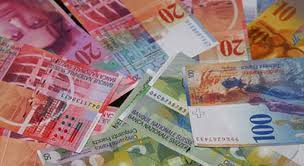
 LONDON: The Swiss franc rose to a one-week high against the euro and jumped 0.8 percent against the dollar on Friday, after the Swiss National Bank unveiled record losses that raised questions about how long it can keep intervening to check the strength of the franc.
The euro fell to 1.05315 francs while the dollar dropped to 0.96165 francs, retreating from a three-month high hit earlier this week on expectations that the Federal Reserve will raise interest rates later this year.
Switzerland's central bank posted a first-half loss of 50.1 billion Swiss francs ($51.8 billion) as it stepped up intervention in the currency market, buying euros whose value has fallen as the European Central Bank embarked on its one-trillion euro asset purchase buying programme in March.
Having stunned financial markets in January by abandoning its cap on the value of the franc versus the euro, it has continued to intervene to weaken the franc. In fact, data from the International Monetary Fund suggests the SNB may have been the sole buyer of the euro at a time when other global central banks are cutting exposure.
The intervention has come at a considerable cost to the central bank, which posted its biggest quarterly loss on record in April and warned its shareholders, which include the federal government and cantons, that it may mot be able to maintain its regular payout policy.
"As the SNB has little manoeuvre margin on its policy rate strategy, the foreign exchange interventions remain the main option to prevent the franc from strengthening," said Ipek Ozkardeskaya, analyst at London Capital Group. "Unfortunately for the SNB, the cost of fighting against the franc appreciation is becoming high. As a kneejerk reaction to the SNB results, the franc has gained."
The Swiss franc was boosted by safe-haven inflows during the Greek debt crisis, even overtaking its peer among safe-haven currencies, the yen, with investors such as asset managers stepping up exposure. The upward pressure on the franc was so acute that last month the SNB broke its silence by issuing an unusual public confirmation that it had intervened to weaken the franc.
"The SNB will continue to intervene but it will be on a more proactive basis and not a pre-emptive one," said Petr Krpata, FX strategist at ING. "A lot depends on how euro/dollar behaves, and if that pair weakens then euro/Swiss franc can fall further."

























Comments
Comments are closed for this article.