



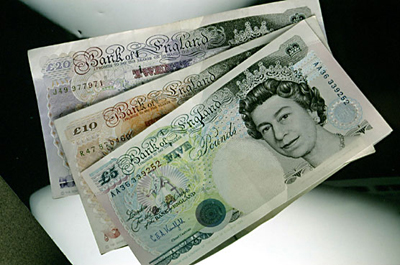
 LONDON: Sterling fell to a 20-month low against a buoyant dollar on Wednesday, with weaker-than-expected UK industrial data slightly dimming some of the recent optimism about the British economy.
Industrial output fell by a monthly 0.1 percent, compared with a forecast for a 0.2 percent increase from economists taking part in a Reuters poll. Manufacturing output slid 0.5 percent in January from December.
The National Institute of Economic and Social Research (NIESR) later kept growth forecasts for the three months to February flat at 0.6 percent, disappointing some traders who were expecting a higher number.
Sterling fell 1 percent to $1.4929, its lowest since July 2013. It also cut gains against the euro, having hit a 7-year high of 70.145 pence against the struggling euro earlier in the day.
The euro has been hit broadly since the European Central Bank kicked off its 1.1 trillion euro asset-buying programme at the start of the week. That sent yields on the debt of nearly all euro zone countries to record lows on Wednesday, widening the gap over British bonds.
While sterling's gains against the euro kept it higher against a trade-weighted basket of currencies, it slipped against the dollar after the British data.
"The NIESR GDP data was weak; it is not usual that it would knock sterling but it could be the reason it is weaker," said Simon Smith, chief economist at FX Pro.
"The move on sterling/dollar is interesting. The pound moved below $1.50 which triggered a few stops since we haven't seen it move below that since early February and (even then) always fleetingly so."
Analysts and traders said with the closest general election in decades looming, sterling was likely to weaken against the resurgent dollar in coming weeks.
Options market pricing showed a jump in the cost of hedging against volatility around the May 7 election date and the weeks after, with the two-month sterling/dollar implied volatility rising to 10.85 percent, the highest since late 2011.
Opinion polls show the ruling Conservatives and the opposition Labour neck-and-neck, making a hung parliament a strong likelihood and spelling a lengthy period of uncertainty.
"It is also not clear which alternative political outcome is better for sterling, given uncertainty around the possibility of an EU referendum in the event of a Conservative government and Labour's poor fiscal record the last time they were in office," said Roger Hallam, Chief Investment Officer for Global Currencies, J.P. Morgan Asset Management.
The Conservatives, under pressure from the anti-EU UK Independence Party, have promised a referendum on EU membership within two years if they win.

























Comments
Comments are closed for this article.