


India bond purchases seen likely as govt cuts spending

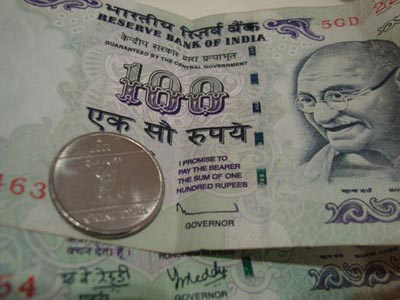 MUMBAI: India's central bank will likely have to resort to government bond purchases through open market operations (OMOs) in February and March to offset government spending cuts that are expected to exacerbate tight cash conditions in the banking system.
Market expectations for government bond purchases had waned after the Reserve Bank of India (RBI) on Tuesday unexpectedly opted to inject liquidity into the banking system by cutting the cash reserve ratio (CRR), the amount of cash deposits that lenders must hold.
Traders had worried that the CRR cut was made instead of bond purchases.
However, the liquidity deficit is poised to come under further pressure in the next two months as New Delhi slashes spending to meet its fiscal deficit target of 5.3 percent of gross domestic product for the fiscal year ending in March.
Finance ministry officials told Reuters cuts in welfare, defence and road projects would reduce spending by about 1.1 trillion Indian rupees ($20.68 billion) for the current fiscal year.
This week's cut in CRR will inject about 180 billion rupees in liquidity, putting a small dent in the cash deficit as banks have been borrowing about 1 trillion rupees a day from the RBI's repo window.
That is far above the central bank's comfort zone of 600-650 billion rupees, which is plus or minus 1 percent of deposits.
"It looks like there will be more OMOs till March-end as the liquidity deficit will be above the 1 percent comfort zone," said one official with direct knowledge of policymaking.
The official said the RBI has not yet decided on the timing of possible OMOs.
With the government planning to reduce spending, analysts doubt the RBI can continue to hold off on OMOs, even after this week's CRR cut.
"The government not spending is not great news," said Laxmi Iyer, head of fixed income and products at Kotak Mutual Fund.
"To that extent, we are already seeing the impact on the market. RBI may have to restart OMOs once the impact of the CRR cut fades out, somewhere in the second or third week of February," she said.
The 10-year government bond yield nearly touched a month high at 7.93 percent on Friday as investors sold bonds to prepare for a series of weekly auctions scheduled this month, starting later on Friday.
Market players say the bulk of OMOs is likely to come in February, a month that marks the last leg of government borrowing ahead of the end of the fiscal year.
They estimate the RBI will conduct at least 200 billion rupees in OMOs over the next two months.
The RBI uses OMOs as a tactical liquidity tool, stepping in when cash conditions are getting too tight.
The RBI's last OMOs were conducted in the first week of January.
It has injected around 1.26 trillion rupees of liquidity through OMOs and secondary market bond purchases thus far in the fiscal year which is unlikely to offset the government's proposed 1 trillion-rupee spending cuts.
A series of CRR cuts in 2012/13 to 4 percent, the lowest since 1974, has barely helped the liquidity situation.
India also has yet to borrow 480 billion rupees out the 5.7 trillion rupees planned for the whole fiscal year. The RBI has previously conducted OMOs tied to bond sales to ensure liquidity is not too affected.

























Comments
Comments are closed for this article.