


Dollar sways near 10-day lows as attention turns to BOJ and RBA
- The euro was at $1.159, just below the 10-day high of $1.1622 it touched on Monday
A US-Iran peace deal buoyed risk appetite, weakening the dollar, as markets now focus on central bank meetings from Japan and Australia to assess inflation and interest rate outlooks.
- Impact of the US-Iran peace deal on global markets.
- Upcoming interest rate decisions from Japan and Australia.
- Market expectations for future inflation and central bank policies.


SINGAPORE: The US dollar held near 10-day lows on Tuesday as a deal to end the Middle East war buoyed risk appetite, with attention turning to central bank meetings in Japan and Australia to gauge if the peace deal came a little too late to ease near-term inflation concerns.
The Bank of Japan is widely expected to raise rates later in the day, while the Reserve Bank of Australia is seen holding steady.
US President Donald Trump said a preliminary agreement to end the war has been signed by the US and Iran. Details have yet to be made public but that didn’t stop global markets from cheering and sending oil prices down.
The agreement would extend a tenuous ceasefire announced in April by another 60 days and reopen the Strait of Hormuz, which Tehran has effectively blocked since the US and Israel attacked Iran in February.
The currency market reaction was constrained compared to other parts of the market as investors awaited a flurry of central bank meetings this week, with the Bank of England and the U.S. Federal Reserve also due later in the week.
The euro was at $1.159, just below the 10-day high of $1.1622 it touched on Monday.
Sterling last bought $1.3413 in early trade on Tuesday.
The dollar index , which measures the US currency against six other units, was at 99.66.
The index is up 2% since the conflict first erupted at the end of February in a volatile reaction to a fragile ceasefire and regular tit-for-tat attacks.
“While energy markets moved quickly to price out the immediate risk of prolonged supply disruptions, the path back to normal flows remains far from straightforward,” said Tony Sycamore, market analyst at IG.
Questions around supply chain normalization are likely to keep investors on edge with the near-term pathway for inflation and interest rates still uncertain.
ING analysts said the market reaction has been faster than realities on the ground, and it can be altered by the prospects of a deal.
“A more durable repricing requires safe, predictable and insured shipping through the Strait of Hormuz,” they said in a note. “And demand could likely to be higher than usual as depleted reserves need to be replenished. Re-escalation risks are reduced, but not off the table.”
RBA and boj up next
The Australian dollar was at $0.7069 ahead of the Reserve Bank of Australia policy meeting where the central bank is expected to stand pat on rates after three consecutive hikes even as inflation remains elevated.
Charu Chanana, chief investment strategist at Saxo, said market attention will be on whether the RBA statement keeps a tightening bias or starts to acknowledge that the inflation threat is easing.
“The RBA may not want to sound too dovish yet. Inflation is still not fully back in the comfort zone and markets are still pricing a meaningful chance of one final hike by year-end.”
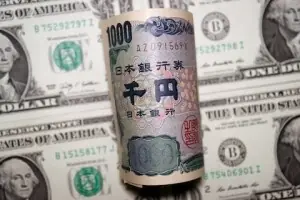
The Japanese yen fetched 160.24 per U.S. dollar, hovering near the 160 milestone that has kept traders wary of another bout of interventions from Tokyo, with even the peace deal unlikely to provide relief for the battered yen.
The Bank of Japan is set to raise interest rates to a 31-year high on Tuesday but with the hike broadly expected investor focus will be on the tone on when the next hike would come and the pace of the tightening cycle.
Deputy Governor Shinichi Uchida’s press briefing after the meeting will be in spotlight, where he is likely to reiterate the BOJ’s resolve to continue raising rates, but avoid giving explicit hints on the next rate-hike timing.
Yuxuan Tang, head of rates & FX strategy for Asia at J.P. Morgan Private Bank, said any dovish read of BOJ communication risks reigniting yen and JGB shorts, making market stabilization efforts increasingly costly.
“That said, the BOJ has not typically leaned hawkish in its communication, particularly given the recent stabilization in inflation and downside growth risks from elevated energy prices.”























Comments