


‘Mirage’ of PSX: Why a rising index does not equal recovery?
Pakistan's rising stock market index is a dangerous illusion, not a sign of economic recovery, as it's shallow, concentrated, and influenced by a few, masking deep-seated economic weaknesses.
- Why the PSX rally doesn't reflect broad economic health.
- Market concentration and influence by powerful players.
- State-linked money's role in artificial market momentum.
- Dangers of political complacency from misleading market optics.
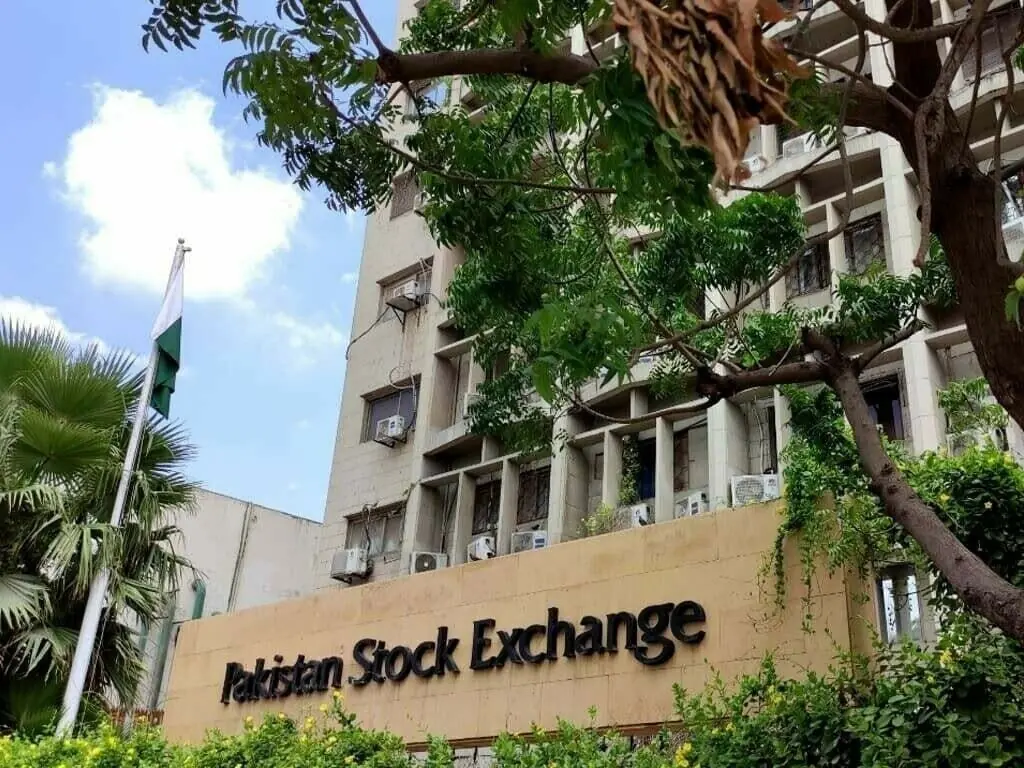

Pakistan loves a good headline, and few headlines are more seductive than a stock market touching new highs. A rising index is quickly presented as proof that the economy is healing, investors are returning, confidence has revived, and the country has finally turned a corner. It is a convenient story. It is also a dangerous one.
The Pakistan Stock Exchange (PSX) may be rising, but a rising index in a shallow, concentrated, and heavily influenced market is not the same thing as recovery. At times, it is closer to theatre: the lights are bright, the applause is loud, but the building behind the stage is still cracked.
The problem is not that the PSX has risen. Markets are allowed to rise. The problem is the meaning being attached to that rise. In a healthy economy, a sustained bull market reflects broad-based confidence in corporate earnings, household savings, investment, productivity, exports, and future growth. It shows that many investors are putting real money behind a real economic story.
Pakistan’s market is not that kind of market. It is narrow, shallow, and dominated by a small number of powerful players. When a market can be pushed by a handful of brokers, large institutions, and government-linked funds, the index becomes less a thermometer of economic health and more a mirror held at a flattering angle.
A stock index is only as meaningful as the market beneath it. Pakistan’s listed universe is small relative to the size and complexity of the economy. Large parts of the productive economy are barely represented on the exchange.
Many companies that dominate the index operate in sectors shaped by regulation, administered prices, state protection, or public-sector flows. A few heavyweight stocks can therefore move the overall index sharply even when the broader economy remains weak.
In such a structure, a rally can say more about liquidity, positioning, and influence than about investment, productivity, or prosperity.
This is why Pakistan must stop treating the PSX as a national report card. The stock market is not the economy. It does not automatically reflect factory output, export competitiveness, real wages, household purchasing power, employment quality, or the health of small and medium enterprises.
A man paying impossible electricity bills does not become richer because the index crosses another psychological barrier. A factory operating below capacity does not become competitive because a few blue-chip shares gain value. A youth looking for work does not find employment because television tickers are green. The index can rise while real life remains stuck in the mud.
The role of state-linked money makes the picture even more complicated. Pakistan has large pools of public-sector capital, pension funds, state-owned institutional investors, and government-influenced financial vehicles.
In a deep market, such flows may be absorbed without distorting the overall picture. In a shallow market, even routine buying can send powerful signals. If that buying is coordinated, encouraged, or politically celebrated, it can create an artificial sense of momentum.
The state can borrow credibility from captive or semi-captive capital and then market that movement as proof of national recovery. That is not confidence. That is stage management.
A market influenced in this way produces an illusion of prosperity. Asset owners feel wealthier. Brokers become louder. Officials become more confident. Television panels discover new adjectives. But the gains remain concentrated, and the public narrative outruns the public reality.
Pakistan’s households are still squeezed by inflation, high energy costs, weak public services, and stagnant incomes. Businesses still face policy uncertainty, tax harassment, import constraints, expensive credit, and uncompetitive utility tariffs.
Exporters still struggle with energy pricing, delayed refunds, inconsistent rules, and a tax system that often exhausts the compliant while letting the informal escape. None of these structural weaknesses disappears because the market has rallied.
The greater danger is political complacency. A rising market can become an excuse to declare victory before the hard work has even begun. It tempts policymakers into believing that optics are a substitute for reform. Pakistan has seen this film before, and frankly, the plot is getting tired.
Temporary stabilisation is dressed up as transformation. IMF discipline is treated as domestic success.
Lower default risk is presented as growth. A change in sentiment is sold as structural reform. Then, once the headline glow fades, the same weaknesses return: low productivity, narrow exports, energy sector circular debt, tax complexity, poor governance, and dependence on external financing.
Markets can anticipate better days, but anticipation must eventually be validated by fundamentals. If earnings rise because firms are more productive, exports expand, costs fall, governance improves, and investment returns, then a market rally has substance. If earnings rise mainly because of accounting effects, price increases, protected margins, tax arbitrage, or financial engineering, then the rally is not a national recovery story. It is a narrower story of who is positioned to benefit from the current structure. That structure may reward certain listed firms while punishing the wider economy. Pakistan should be mature enough to understand the difference.
A real bull market would look very different from a managed or narrow rally. It would be supported by broad-based corporate earnings across sectors, not just a handful of index heavyweights.
It would coincide with new listings from productive industries, especially export-oriented manufacturing, technology, logistics, value-added agriculture, and competitive services. It would attract long-term institutional capital rather than speculative inflows chasing short-term momentum.
It would be accompanied by higher private investment, rising export orders, stronger capacity utilisation, and credible energy and taxation reforms. It would not require daily cheerleading. Real strength does not need a public relations department.
The late arrival of the small investor is another uncomfortable truth. Retail investors typically enter when the story has already become fashionable. They are drawn in by headlines, informal tips, WhatsApp enthusiasm, and the fear of missing out. In a deep and transparent market, retail participation can be healthy.
In a shallow market where exits are narrow and large players can move early, the small investor often becomes the last passenger on a crowded bus. When sentiment turns, the big players have already stepped off.
The small investor is left holding the ticket and wondering why the destination changed.
Media coverage also needs discipline. Too often, market rallies are reported as though they are national achievements rather than financial developments requiring context.
A rise in the index is announced with drums; the underlying breadth, volume, concentration, foreign participation, valuations, and earnings quality receive far less attention. That is lazy reporting. A serious discussion would ask harder questions. How many stocks actually drove the rally? Who were the net buyers? What role did public-sector institutions play?
Regulators should be asking the same questions with more authority. The goal of regulation is not to celebrate index levels. It is to ensure market integrity, disclosure, fair dealing, and confidence based on rules rather than influence.
Pakistan needs clearer disclosure of institutional flows, tighter scrutiny of market manipulation, stronger governance standards, and credible enforcement. If a few players can dominate direction and narrative, the market is functioning less like a fair platform for capital formation and more like a private club.
The deeper issue is that Pakistan has repeatedly confused financial signals with economic substance. Exchange-rate stability is treated as competitiveness. A primary surplus is treated as fiscal health. A stock market rally is treated as recovery. These are indicators, not outcomes.
The outcome that matters is whether Pakistan can produce more, export more, employ more, invest more, and govern better. The country needs factories that can compete, energy prices that make sense, taxes that are simple enough to comply with, courts and regulators that are predictable, and a state that stops punishing formal enterprise while rewarding rent-seeking.
A genuine recovery would be visible outside the trading screen. It would show up in rising industrial production, stronger exports, lower energy distortions, revival of private investment, and a wider base of profitable firms.
It would show up in new entrepreneurs choosing formalisation because the state made it worthwhile, not suicidal. It would show up in households feeling that wages can keep up with costs. It would show up in businesses planning expansion rather than survival. A stock index can confirm such a recovery; it cannot manufacture it.
The PSX should not be dismissed. A functioning stock market can mobilise savings, finance companies, improve transparency, and provide investment opportunities. But for that to happen, the market must become deeper, broader, cleaner, and less vulnerable to direction by a few.
More productive companies must list. Governance must improve. Retail investors must be educated, not seduced. Above all, the state must stop treating the market as a billboard for economic success.
Pakistan needs confidence, but confidence built on managed signals is fragile. The country does not need cosmetic optimism; it needs credibility. It does not need a rally that creates a false sense of well-being while factories, exporters, households, and small businesses continue to suffer. It needs reform that is boring, difficult, and real; the kind that does not trend on television but changes balance sheets, investment decisions, and household lives.
The PSX may be rising, but Pakistan must ask what exactly is rising with it. Are productivity, exports, investment, governance, and incomes rising too? Or is the index simply reflecting liquidity, concentration, and the behaviour of a few powerful investors? Until the answer is clear, the rally should be treated with caution, not worship.
A shallow market cannot prove that the economy is well. It can only reflect the forces acting upon it. Sometimes it is a mirror. Somet imes it is a mirage. Pakistan must check carefully before mistaking sand for water.
Copyright Business Recorder, 2026

PUBLIC SECTOR EXPERIENCE: He has served as Member Energy of the Planning Commission of Pakistan & has also been an advisor at: Ministry of Finance Ministry of Petroleum Ministry of Water & Power
PRIVATE SECTOR EXPERIENCE: He has held senior management positions with various energy sector entities and has worked with the World Bank, USAID and DFID since 1988. Mr. Shahid Sattar joined All Pakistan Textile Mills Association in 2017 and holds the office of Executive Director and Secretary General of APTMA.
He has many international publications and has been regularly writing articles in Pakistani newspapers on the industry and economic issues which can be viewed in Articles & Blogs Section of this website.

























Comments