


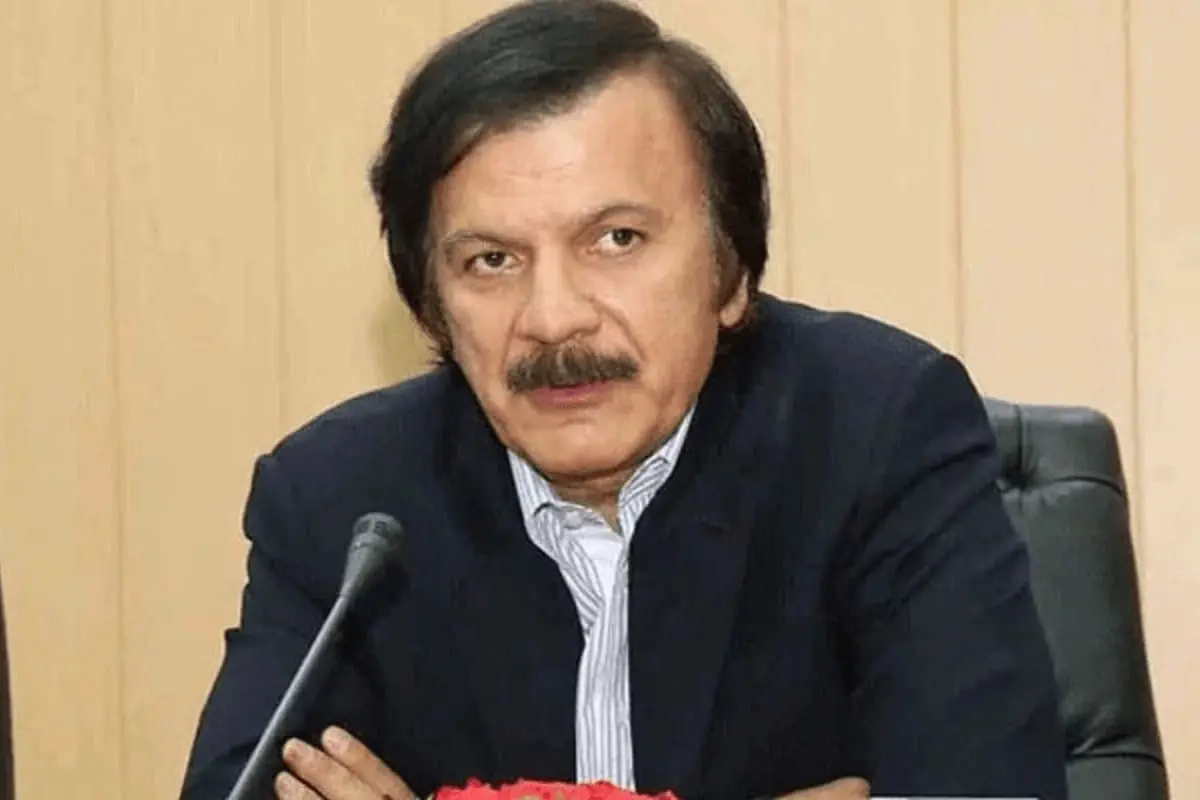

ISLAMABAD: The government is lowering production costs and enhancing competitiveness by rationalising tariffs, simplifying concessionary regimes, and creating predictability in trade policy.
This was stated by Special Assistant to the Prime Minister for Industries and Production, Haroon Akhtar Khan, while addressing the ‘Japan–Pakistan Business Seminar 2026’ here on Tuesday.
The seminar was hosted by Akamatsu Shuichi, Ambassador Extraordinary and Plenipotentiary of Japan to Pakistan, and was attended by government officials, business representatives, relevant institutions and universities, Japanese companies including members of the Japan Chamber of Commerce and Industry in Pakistan, the Japan International Cooperation Agency (JICA), and the Japan External Trade Organization (JETRO).
READ MORE: Committee formed to oversee implementation of new Industrial Policy, says Haroon Akhtar
Addressing concerns raised by Japanese investors, Khan assured the forum that the government is serious, proactive, and fully engaged in resolving issues related to tax refunds, exports, and regulatory hurdles.
“Pakistan is listening, and Pakistan is acting,” he emphasised, adding that continuous dialogue with investors remains a priority to ensure a stable and enabling business environment.
SAPM said Pakistan has embarked on a comprehensive process of industrial reforms aimed at making growth sustainable, inclusive, and export-led. He explained that the National Industrial Policy places the private sector at the center of economic development, focusing on reviving sick units, improving access to credit, strengthening SMEs, and enhancing competitiveness.
He further highlighted that Special Economic Zones, offering one-window facilitation, along with regulatory reforms under the “Regulatory Guillotine” initiative, are eliminating unnecessary laws and red tape to create a more investor-friendly framework. The National Tariff Policy, he added, provides the foundation for export-oriented industrial growth by rationalising tariffs and reducing production costs.
The SAPM highlighted the growing contribution of women entrepreneurs, stating that women are actively driving Pakistan’s economy forward. He reaffirmed that small and medium enterprises are the real strength of the national economy and are being fully supported through targeted policies and institutional backing. He also shared that the National Gemstones Policy aims to transform Pakistan’s rich mineral resources into a globally competitive, export-oriented sector.
Khan said Pakistan offers a safe, transparent, and attractive market for Japanese investors. He expressed Pakistan’s strong desire to further expand collaboration with Japan in key sectors including automobiles, information technology, clean energy, manufacturing, and infrastructure.
“Pakistan stands ready to work with Japan to build a future of shared growth, innovation, and prosperity,” he said, calling for deeper partnerships between governments, private sectors, and business communities of both countries.
Khan reaffirmed that relations between Pakistan and Japan are not limited to diplomacy but represent a strong, mature, and forward-looking economic partnership built on mutual trust and shared prosperity. Japan’s journey stands as living proof of how vision, discipline, and continuous improvement can transform a nation into a global economic leader.
He further said Japan’s economic rise stands as living proof that when a nation opens its eyes, invests in its people, values discipline, and commits to continuous improvement, it can rise from adversity to global leadership.
The Japan-Pakistan relationship is not merely diplomatic; it is economic, developmental, cultural, and strategic. For over 70 years, both countries have stood together through challenges and opportunities, forging partnerships that have strengthened our societies and enriched our economies.
One of the most visible and impactful areas of economic cooperation between Japan and Pakistan has been the automotive sector. From the early 1980s, Japanese automakers have been at the forefront of Pakistan’s automotive industry, creating jobs, transferring technology, and supporting local supply chains.
Today, Japanese brands dominate the automotive landscape in Pakistan. With companies such as Toyota, Suzuki, Honda, and others operating for decades, they have contributed not only to vehicle production but also to the wider industrial ecosystem including parts manufacturing, logistics, dealerships, and service networks, he added.
He further said that according to industry estimates, over 80 Japanese companies operate in Pakistan, providing employment to tens of thousands of Pakistani workers and contributing significantly to government revenues. These investments have translated into local economic activity, technology spill-overs, and consumer choice. Japanese automakers have introduced quality standards, assembly processes, and management practices that have benefited Pakistan’s industrial culture. Communities around assembly plants have experienced enhanced economic activity, from small suppliers to transportation and services.
However, productive cooperation also requires continuous dialogue. Recent engagements with Japanese automakers have highlighted concerns about tax refunds and export-related hurdles, reaffirming the need for an enabling policy environment and streamlined processes to support long-term investment and growth, Khan added. “Pakistan is listening and Pakistan is acting. We are committed to addressing these concerns in partnership with stakeholders, ensuring that Japan’s industrial participation in Pakistan remains robust, competitive, and mutually beneficial.”
He said duty-free access to raw materials and capital goods, alongside targeted facilitation for green and emerging technologies, is laying the foundation for industrial expansion, job creation, and export growth.
In a bold stride toward sustainability, Pakistan has also unveiled the National New Energy Vehicle Policy 2025–2030. By 2030, the government aim for 30 percent of all new vehicles sold to be electric, reducing carbon emissions by 4.5 million tonnes annually and saving billions in foreign exchange.
In line with unlocking untapped potential, Pakistan has also finalised a National Gemstones Policy, aimed at transforming its rich mineral heritage into a vibrant, export-oriented industry. With formalisation of the value chain, international certification, modern quality standards, and streamlined export facilitation, this sector has the potential to shine globally — turning hidden wealth into shared prosperity.
Pakistan is moving boldly, reforming wisely, and investing in its people. As we work to improve the overall investment climate, forums like the Pakistan-Japan Business Forum serve as bridges. They not only facilitate business partnerships but also underscore the strategic importance of dialogue, mutual understanding, and shared economic vision, Khan added. Pakistan stands ready to work with Japanese partners in sectors such as automotive, IT, clean energy, value-added manufacturing, and infrastructure. Pakistan’s promise lies in its young population, dynamic workforce, and strategic geographic location, offering global investors a compelling platform for growth. Continued partnership with Japan can unlock new avenues from joint ventures to innovation ecosystems that benefit both economies, he added.
He said governments, private sectors, and partners to build a future that is prosperous, inclusive, and enduring. “We have a future where Pakistan not only absorbs the lessons of Japan’s success but also translates them into tangible outcomes for our people, our industries, and our shared economies.”
Ambassador Akamatsu stated: “Japanese automotive companies have created more than 100,000 jobs in Pakistan and have established domestic supply chains to localise automotive components. All companies’ localisation rate for parts by far exceeds 60 percent. Furthermore, they continue to invest in new technologies to advance industrial upgrading and reduce the negative impacts towards the environment. Indeed, those countries which can manufacture automobiles are quite limited in the world. Their contribution to Pakistan’s economy is substantial and will remain so in the future.” The Ambassador said Japan and Pakistan have had diplomatic and economic relations for 74 years. Starting with the cotton trade in early times, there have been diversified investments in the automotive industry like a Suzuki, Toyota, Honda, energy, textiles and IT, etc. The total investment from Japan into Pakistan has exceeded USD1.3 billion to date. Currently, nearly 80 Japanese companies are operating in Pakistan, contributing to economic development, tax revenues and employment of the country.
He said that recently; however, Japanese automotive companies in Pakistan sometimes face those misunderstandings, such as they try to monopolise vehicle sales and get higher profits without sufficiently contributing to Pakistani economy, but this is not true. All companies’ localisation rate for parts by far exceeds 60 percent. Furthermore, they continue to invest in new technologies to advance industrial upgrading and reduce the negative impacts towards the environment. Indeed, those countries which can manufacture automobiles are quite limited in the world. Their contribution to Pakistan’s economy is substantial and will remain so in the future.
Copyright Business Recorder, 2026






















Comments
Comments are closed for this article.