


Investors want evidence of seriousness from Pakistan before making major commitments: SIFC official
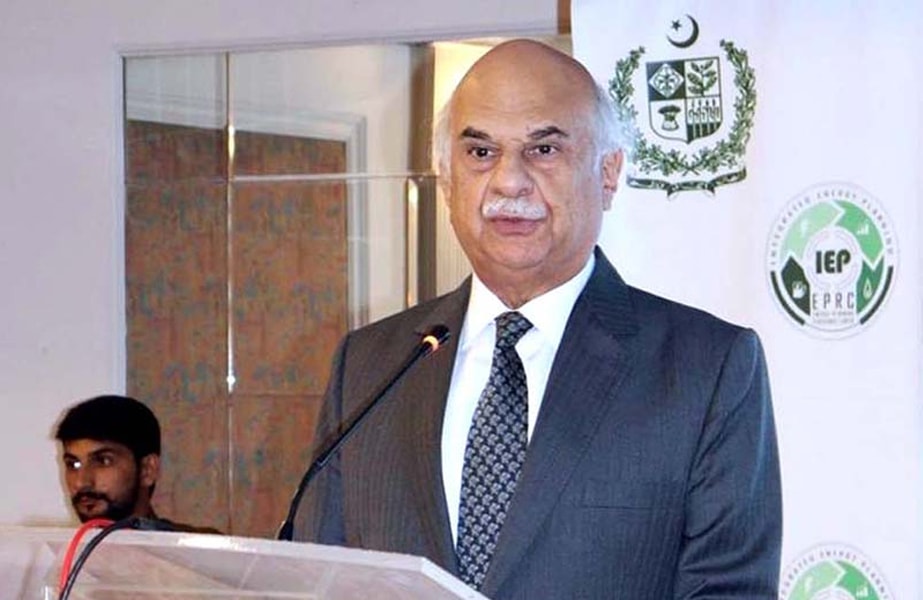

ISLAMABAD: Secretary of the Apex Committee of the Special Investment Facilitation Council (SIFC), Dr Jehanzeb Khan, Thursday said that potential investors, particularly from the Gulf, continue to seek clarity on Pakistan’s medium-term macroeconomic framework, exchange-rate stability and long-term reform commitments.
He stressed that investors want evidence of seriousness before making major commitments.
Speaking at a session on Foreign Direct Investment in Pakistan: Challenges and Opportunities organised by the Pakistan Business Council (PBC), Dr Khan said Pakistan must break its recurring cycle of import substitution and protectionism and instead pursue a 5–10-year transition toward global economic integration that supports both domestic and foreign investors.
Aurangzeb unveils tariff overhaul plan to strengthen industry
He clarified that Pakistan’s core challenge is not a shortage of investor interest, but a lack of policy coherence and administrative continuity.
He also pushed back on widely circulated claims of $20–30 billion investment pledges, saying these were investor-quoted figures and that Pakistan must remain selective, prioritizing efficiency-seeking FDI in manufacturing, exports, and private-sector growth. Market - seeking investments and public-sector infrastructure projects — especially in power and transport, where liabilities are already heavy must be approached with caution.
Dr Khan observed that Pakistan has repeatedly failed to learn from past policy mistakes because the country lacks effective information systems to monitor and correct course. Key policies—investment, tax, fiscal, monetary, agriculture, and energy—operate in isolation, leading to a decade of fragmentation that has discouraged investors.
He said the SIFC has helped stabilize the macroeconomic environment by improving coordination across ministries, regulators, and provincial governments, although institutional mobilization remains “a weak area.” Investment facilitation, he emphasized, cannot succeed without a sound investment plan, macroeconomic stability, and policy continuity. Gulf partners, he added, want assurance that today’s stability will not be followed by future volatility.
The goal, he stressed, is sustainable, inclusive growth aligned with the SDGs 2030, not merely capital inflows. Investment confidence, he said, depends as much on administrative continuity as on political stability. “Countries survive political upheavals because their civil service ensures continuity,” he remarked, noting that much of SIFC’s work is intentionally quiet but geared toward maintaining a credible reform path.
He said many investor-proposed projects have been market-oriented or infrastructure-heavy and misaligned with Pakistan’s long-term economic priorities. With existing public-sector liabilities already high, Pakistan must avoid commitments that add further fiscal strain.
Fawad Mukhtar, CEO of Fatima Group, highlighted Pakistan’s significant untapped potential and the need for confidence-driven growth through collaboration between government and business. He cited success stories in the financial sector where institutions grew hundreds of millions of dollars despite economic turbulence.
Mukhtar pointed to Pakistan’s strengths: a population of 250 million with 60% under 30, one of the world’s largest freelance IT communities, and a strategic geographic location. He noted that, for the first time, SIFC has enabled direct engagement between Pakistani private enterprises and Saudi investors, who are actively exploring major project proposals.
With USD3 trillion in GCC funds seeking global opportunities, and Saudi Arabia alone indicating interest up to USD30 billion in infrastructure, agriculture, and renewable energy, Mukhtar said Pakistan can attract far more capital if trust and policy stability improve. He also rejected the perception that domestic investors are inactive, citing large-scale commitments in mining, real estate, agriculture, and potential interest in SOE privatization.
Copyright Business Recorder, 2025





















Comments
Comments are closed for this article.