


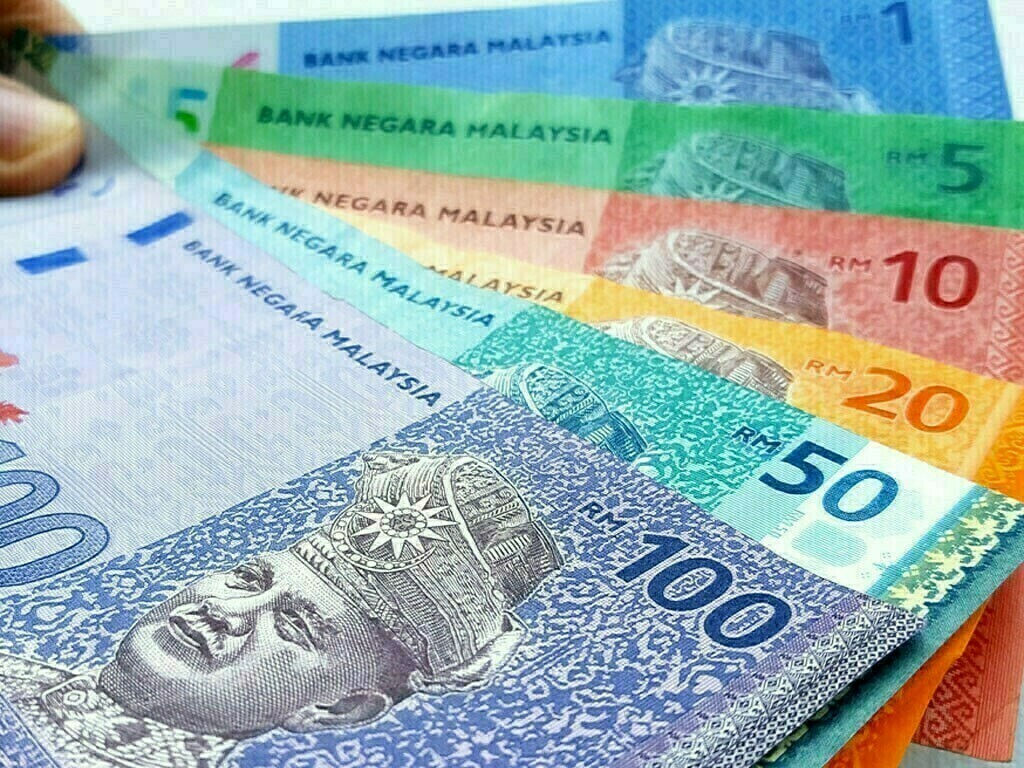

The Malaysian ringgit led losses across muted Asian currencies on Thursday ahead of the central bank’s expected rate pause, while the greenback stabilised after the US Federal Reserve maintained its benchmark interest rate.
The ringgit touched its lowest level since May 2, weakening 0.7% to 4.266 per dollar, extending its decline to a third consecutive session. The Philippine peso and South Korean won each retreated 0.2%.
The dollar index, which measures the currency against six major counterparts, edged down 0.2% but remained near Wednesday’s levels when a three-day slide ended with its strongest daily performance in two weeks.
“We view that the investors’ risk appetite will improve in the near future as tariff negotiations will be proceeding successfully, which may cause Asian currencies to rise against USD,” said Ryota Abe, an economist at Sumitomo Mitsui Banking Corp.
As expected, the Fed maintained rates on Wednesday, but Chair Jerome Powell cautioned that economic growth remained uncertain through persistent trade tensions and inflation risks.
Regional equities largely stabilised, buoyed by optimism over China’s planned stimulus measures and the start of high-level US-China trade talks on Saturday.
Stocks in Seoul, Shanghai, Taipei advanced over 0.3% each, while those in Jakarta and Manila traded flat.
Asian currencies have seen dramatic volatility in recent days, with the Taiwan dollar posting a historic 6% two-day surge against the greenback before steadying in the last two sessions.
The unit was last trading flat.
Asian stocks, FX climb as dollar struggles
Taiwan’s dollar-heavy, unhedged market saw a sudden capital influx, that triggered a record two-day rally on Friday.
With the surge coinciding with the end of US-Taiwan trade talks, investors speculated on the possibility of an agreement to weaken the greenback in return for trade concessions - a notion that has been denied vigorously by Taiwan’s central bank and president.
Bank Negara Malaysia is poised to maintain rates at Thursday’s policy meeting, its first since US President Donald Trump announced his sweeping tariffs.
Analysts do not expect the Malaysian central bank to lower rates until later this year even with inflation at a four-year low and economic momentum slowing.
BNM’s approach stands in contrast with peers in Indonesia, Korea, Thailand and the Philippines, which have already eased rates more than once to stimulate their economies.
Despite Thursday’s retreat, the ringgit remains among Asia’s stand-out performers with a nearly 5% gain this year.
The US dollar index has lost more than 8% so far in 2025.
The Indian rupee strengthened 0.3% after the currency posted its steepest one-day percentage decline in nearly a month following India’s missile strikes on Pakistan and Pakistan-administered Kashmir on Wednesday.
Investors await Taiwan’s trade figures later in the day and China’s export data on Friday for insights into how tariffs are reshaping Asia’s economic landscape.























Comments
Comments are closed for this article.