


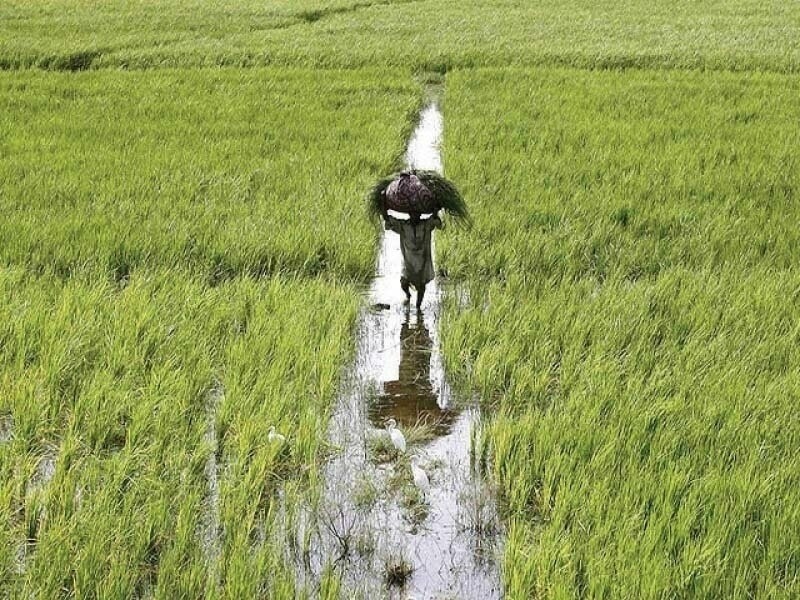

ISLAMABAD: The IRSA Advisory Committee (IAC) on Monday declared a 21% water shortage for the early Kharif season, warning that the deficit could reach up to 70% in late Kharif amid concerns on sudden reduction in water flow from India in the Chenab River at Marala (Sialkot). According to an official statement, the IAC convened to approve the anticipated water availability criteria for the remainder of the Kharif season (May–September 2025), under the chairmanship of IRSA Chairman Sahibzada Muhammad Shabir.
The committee reviewed the water situation for the remaining months of early Kharif (May–June 10) and late Kharif (June 11–September). Members expressed unanimous concern over the abrupt drop in Chenab River inflows at Marala, attributing the shortfall to reduced upstream supply by India. The IAC confirmed an initial 21% water shortage for early Kharif, contingent upon a return to normal river flows. However, IRSA noted that if the reductions continue, the shortage figures will be reassessed. For late Kharif, a 7% shortage is projected.
Sindh: Zardari stresses water conservation
“In light of the crisis caused by Indian short supplies in the Chenab River, it was decided that a pragmatic conjunctive use of reservoirs would be implemented to ensure indented water supplies to the provinces. The participants demonstrated a spirit of unity and national resolve, setting aside internal reservations to confront the challenge,” the statement said.
The meeting was attended by IRSA members, the Chief Engineering Advisor of the Ministry of Water Resources, provincial irrigation secretaries from Punjab and Sindh, senior officials from Khyber Pakhtunkhwa and Balochistan, Wapda general managers, representatives from the Tarbela and Mangla Dams, officials from provincial agriculture departments, and senior technical personnel from IRSA. Meanwhile, media reports indicate that India has begun construction of additional infrastructure at the Baglihar Hydroelectric Project to divert water bound for Pakistan, allegedly in violation of the Indus Waters Treaty (IWT), which was brokered by the World Bank. Similar developments are reportedly being prepared at the Kishanganga project.
Copyright Business Recorder, 2025

























Comments
Comments are closed for this article.